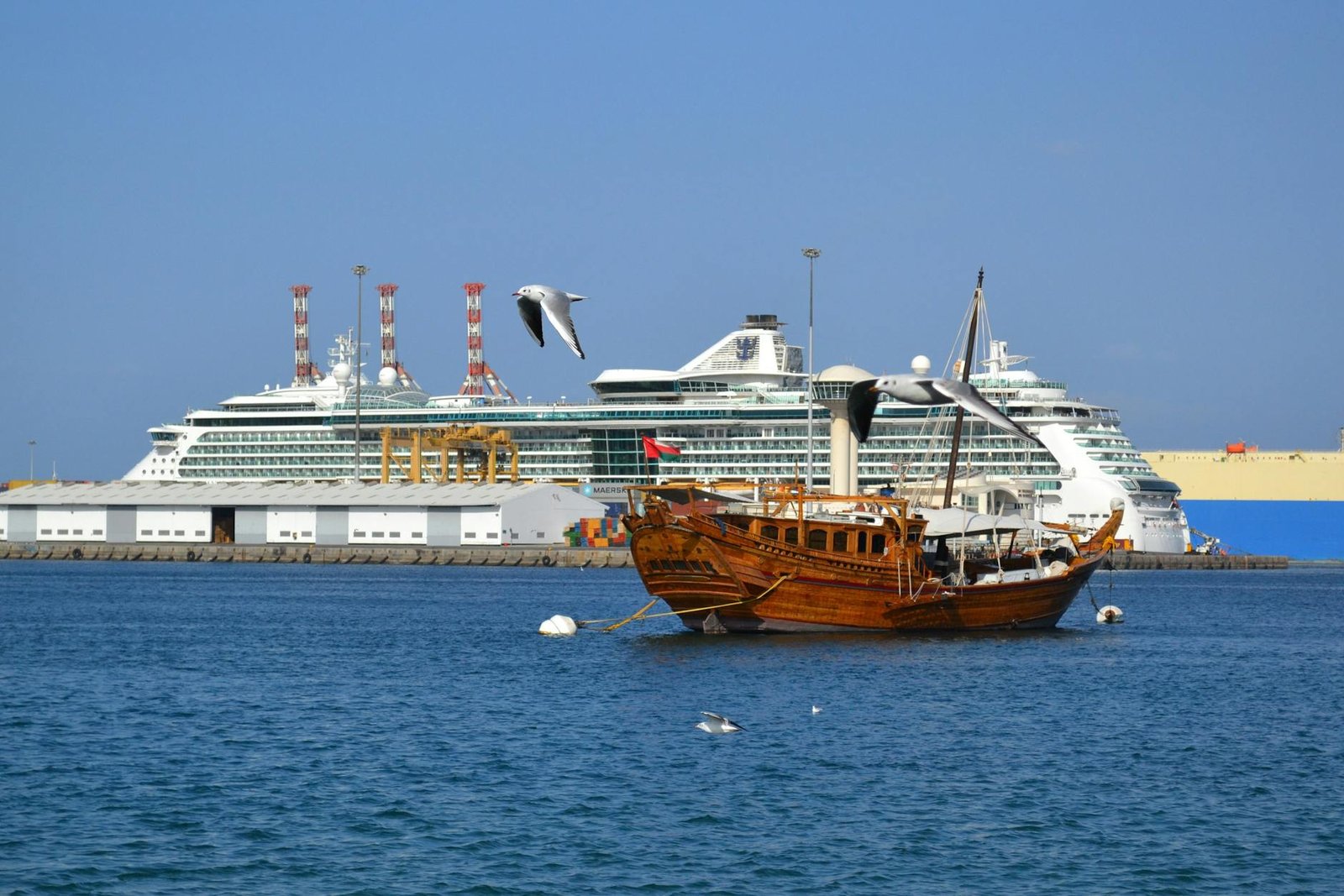
Muscat defies every expectation you arrive with — a Gulf city that’s simultaneously ancient and immaculate, dramatic and unhurried. Frankincense-scented souqs sit in the shadow of snow-white mosques, and jagged volcanic mountains tumble down to a glittering harbour. Give it even a few hours, and this city will get under your skin.
—
Arriving by Ship
Cruise ships dock at the Port Sultan Qaboos, a working commercial port located around six kilometres from the heart of Muscat. You’ll berth at a proper quay — no tendering required — and shuttle buses or taxis are available just outside the terminal gate.
The port area is functional rather than picturesque, so don’t linger. The old districts of Muttrah and Old Muscat are a short 10–15 minute taxi ride away, and prices are very reasonable, typically 3–5 OMR (around USD 8–13) for a metered cab.
—
Things to Do

Muscat rewards walkers and wonderers equally, but with limited time, prioritise ruthlessly — the city spreads across several distinct neighbourhoods. A half-day private tour is one of the smartest ways to cover ground efficiently. 🎟 Book: Half-Day Private Tour in Muscat City Oman
Culture & History
- Sultan Qaboos Grand Mosque — one of the world’s largest mosques and genuinely breathtaking; visit before 11am (closed Friday mornings to non-Muslims), entry is free, and modest dress is mandatory.
- Royal Opera House Muscat — even if you can’t catch a performance, the exterior and surrounding gardens are stunning and free to stroll around at any time.
- Al Alam Palace — the Sultan’s ceremonial palace isn’t open to visitors, but the ornate facade flanked by twin forts makes for a dramatic photograph from the public square.
- Mutrah Fort — this 17th-century Portuguese-built fort towers over the corniche and offers panoramic views across the harbour; entry costs around 0.5 OMR.
Coast & Nature
- Mutrah Corniche — a beautifully maintained waterfront promenade ideal for an early morning walk before the heat builds, completely free and lined with incense sellers.
- Dolphin watching cruise — pods of spinner and bottlenose dolphins frequent the waters off Muscat, and a two-hour boat trip is one of the most memorable things you can do here. 🎟 Book: Oman Dolphin Watching Tours
- Bander Khayran — a sheltered natural inlet around 45 minutes from port, popular for snorkelling and kayaking if you want to escape the city entirely.
Families
- Children’s Museum — interactive science exhibits in a well air-conditioned building near the Grand Mosque; entry around 1 OMR per person, great for kids aged 5–12.
—
What to Eat
Omani cuisine borrows from Persia, East Africa, and the Indian subcontinent, making it one of the most underrated food cultures in the Middle East. Muttrah’s backstreets and the Ruwi district are your best hunting grounds for authentic, wallet-friendly meals.
- Shuwa — slow-cooked lamb marinated in spices and roasted in an underground clay oven for up to 48 hours; find it at Al Boom restaurant in Ruwi for around 3–4 OMR.
- Mashuai — grilled kingfish served alongside saffron rice, a coastal Omani staple; try it at Kargeen Caffe or most traditional restaurants for 4–6 OMR.
- Harees — a comforting porridge of slow-cooked wheat and meat, earthy and warming; common at local cafeterias for under 2 OMR.
- Omani kahwa — cardamom-spiced coffee served with dates, offered almost everywhere as a gesture of hospitality; it’s an experience, not just a drink.
- Halwa — Oman’s signature sweet, a dense gelatinous confection flavoured with rose water and saffron; sold at every souq stall for around 3 OMR per 250g box.
- Laban — a salted, chilled buttermilk drink that sounds strange and tastes essential when the midday heat arrives; available at any small shop for under 0.5 OMR.
—
Shopping

Mutrah Souq (also called the Muttrah Souq or Blue Souq) is the undisputed highlight — a labyrinth of covered alleyways selling frankincense, silverware, khanjar daggers, pashminas, and handicrafts. Arrive ready to browse slowly, and don’t be afraid to negotiate politely on unpriced items.
The best things to buy are Omani frankincense (look for Hojari resin, the highest grade), hand-crafted silver jewellery, and carved khanjar replica daggers as souvenirs. Avoid cheap mass-produced “Omani” goods that are clearly imported from elsewhere — look for local craft certificates or ask vendors directly about provenance.
—
Practical Tips
- Currency — the Omani Rial (OMR) is one of the world’s most valuable currencies; 1 OMR equals roughly USD 2.60, so double-check your mental maths before agreeing to prices.
- Dress code — cover shoulders and knees throughout the city; this is a matter of respect and, inside mosques, a strict requirement.
- Best time ashore — head out early, before 9am, to beat the heat and the tour-group crowds at the Grand Mosque.
- Taxis — always agree on a fare before you get in, or insist on the meter; apps like OTaxi work reliably across Muscat.
- Safety — Muscat is exceptionally safe by any measure; solo travellers and families alike can move around with complete confidence.
- Time needed — four to six hours covers the key highlights comfortably; a structured half-day tour saves planning stress. 🎟 Book: Muscat City Tour -Half-Day- Mystic Muscat
- Photography — always ask before photographing local people, and avoid pointing cameras at government buildings or the palace.
Pack your curiosity alongside your sun cream, because Muscat is the kind of port that makes you wish you’d booked a longer stay.
🎟️ Things to Book in Advance
These highly-rated experiences fill up fast — book before you arrive to avoid missing out.


This page contains affiliate links. If you book through them, we may earn a small commission at no extra cost to you.
📍 Getting to Muscat, Oman
Use the interactive map below to explore the port area and plan your route from the terminal.
Leave a Reply