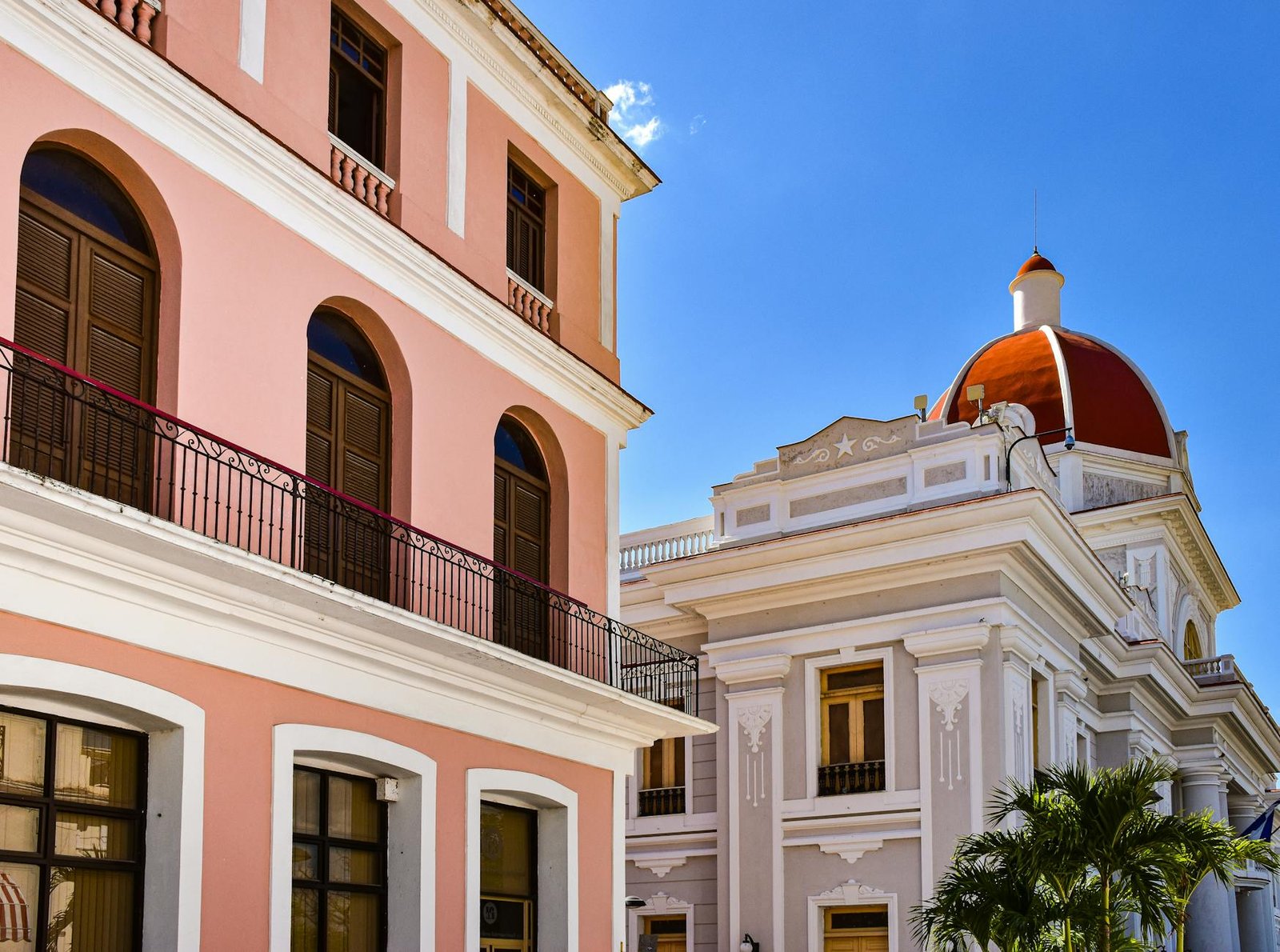
Cienfuegos is Cuba’s most quietly confident city — French-influenced, UNESCO-listed, and blissfully less chaotic than Havana. Its pastel colonnades, sweeping bay, and effortless cool make it one of the Caribbean’s most underrated cruise stops. Come with curiosity and leave your itinerary loose.
Arriving by Ship
Cruise ships dock directly at the Terminal de Cruceros, a working port about 2 kilometres from the historic city centre. You won’t need a tender, and the walk into town is flat and straightforward — though horse-drawn taxis called coches will happily collect you at the port gates for a few Cuban pesos.
The city unfolds quickly once you’re through the port perimeter. There’s no sprawling tourist strip to navigate — just a clean boulevard leading straight to Parque José Martí and the heart of everything.
Things to Do

Cienfuegos punches well above its size. Its compact historic core means you can cover serious ground in a single day without feeling rushed.
History & Culture
- Parque José Martí is the city’s grand centrepiece — stroll the colonnaded perimeter, find the bronze bust of José Martí, and take in the José Martí arch, Cuba’s only triumphal arch, built in 1902.
- Catedral de la Purísima Concepción sits directly on the park and is free to enter; look up at the stunning French stained-glass windows depicting the 12 apostles.
- Teatro Tomás Terry (entry around $2 CUC) is a jaw-dropping 19th-century opera house with an ornate Italian interior — guided tours run most mornings and are well worth the hour.
- Palacio de Valle is a wildly eclectic Moorish-Gothic-Venetian mansion on the Punta Gorda peninsula, now functioning as a restaurant and bar — climb to the rooftop terrace for sweeping bay views.
- Museo Histórico Provincial on Parque Martí charges around $2 entry and walks you through Cienfuegos’ founding by French settlers in 1819, with strong exhibits on the city’s colonial and revolutionary past.
Beaches & Nature
- Playa Rancho Luna, roughly 18 km from the city centre, is the closest beach to town — clear water, fine sand, and a local vibe far removed from resort crowds; shared taxis run there for a few pesos.
- Jardín Botánico de Cienfuegos, one of Cuba’s oldest botanical gardens, sprawls across 94 hectares of bamboo groves and rare palms just outside the city ($3 entry, open daily 8am–5pm).
Families
- Laguna Guanaroca, a protected flamingo lagoon about 12 km east of Cienfuegos, offers boat tours where you can spot flamingos, crocodiles, and migratory birds in a genuinely wild setting.
What to Eat
Cienfuegos has a growing paladares (private restaurant) scene that rivals anything in Trinidad or Havana. Come hungry — portions are generous and prices are startlingly low by Caribbean standards.
- Ropa vieja (shredded slow-cooked beef) at Paladar Bahía on the Malecón — a classic Cuban staple done well, around $6–8 for a full plate with rice and plantains.
- Langosta a la plancha (grilled lobster) can be found at several waterfront paladares for $10–15, a fraction of what you’d pay anywhere else in the Caribbean.
- Canchánchara, a warming rum cocktail made with honey and lime, is the local drink of choice — try it at any bar near Parque Martí for under $2.
- Tostones (twice-fried plantain chips) served with garlic sauce appear as a side dish almost everywhere and cost next to nothing; don’t skip them.
- Cuban pizza from a street window — thin, slightly sweet, topped with processed cheese and tomato — is a local staple that costs about 10–20 pesos and is utterly addictive.
- Helado (ice cream) from Coppelia, the state-run ice cream parlour just off the main park, is a Cuban institution; join the local queue and pay in pesos for the full experience.
Shopping

The pedestrianised Boulevard (Calle 37) between Parque Martí and the waterfront is the main shopping drag, lined with craft stalls selling hand-rolled cigars, oil paintings, embroidered linens, and carved wooden trinkets. Quality varies wildly — spend time comparing before you commit. Handmade lace and guayabera shirts are among the most genuinely local buys.
Avoid mass-produced Che Guevara merchandise if you’re looking for something with real craft behind it. Instead, seek out individual artists selling original work along the boulevard — prices are negotiable and you’ll take home something far more interesting.
Practical Tips
- Currency: Cuba operates a single peso system (CUP); carry cash as cards rarely work for foreign visitors.
- Tipping: Always tip in cash — $1–2 USD or equivalent is appreciated and meaningful for local workers.
- Transport: Horse-drawn coches from the port to town cost around 10–20 CUP; agree the price before you climb in.
- Safety: Cienfuegos is one of Cuba’s safer cities — standard street-sense applies, but there’s no need for anxiety.
- Time ashore: Give yourself at least 6 hours to do the city justice; 8 is better if you’re adding a beach trip.
- Best time to go ashore: Aim to be off the ship by 9am before the midday heat peaks.
- Wi-Fi: Internet access requires purchasing a ETECSA card ($1–2/hour) from a hotel lobby or designated hotspot — don’t count on staying connected.
Cienfuegos rewards the traveller who slows down just enough to notice the details — and you’ll step back on board wondering why you don’t hear more people talking about it.
📍 Getting to Cienfuegos, Cuba
Use the interactive map below to explore the port area and plan your route from the terminal.
Leave a Reply