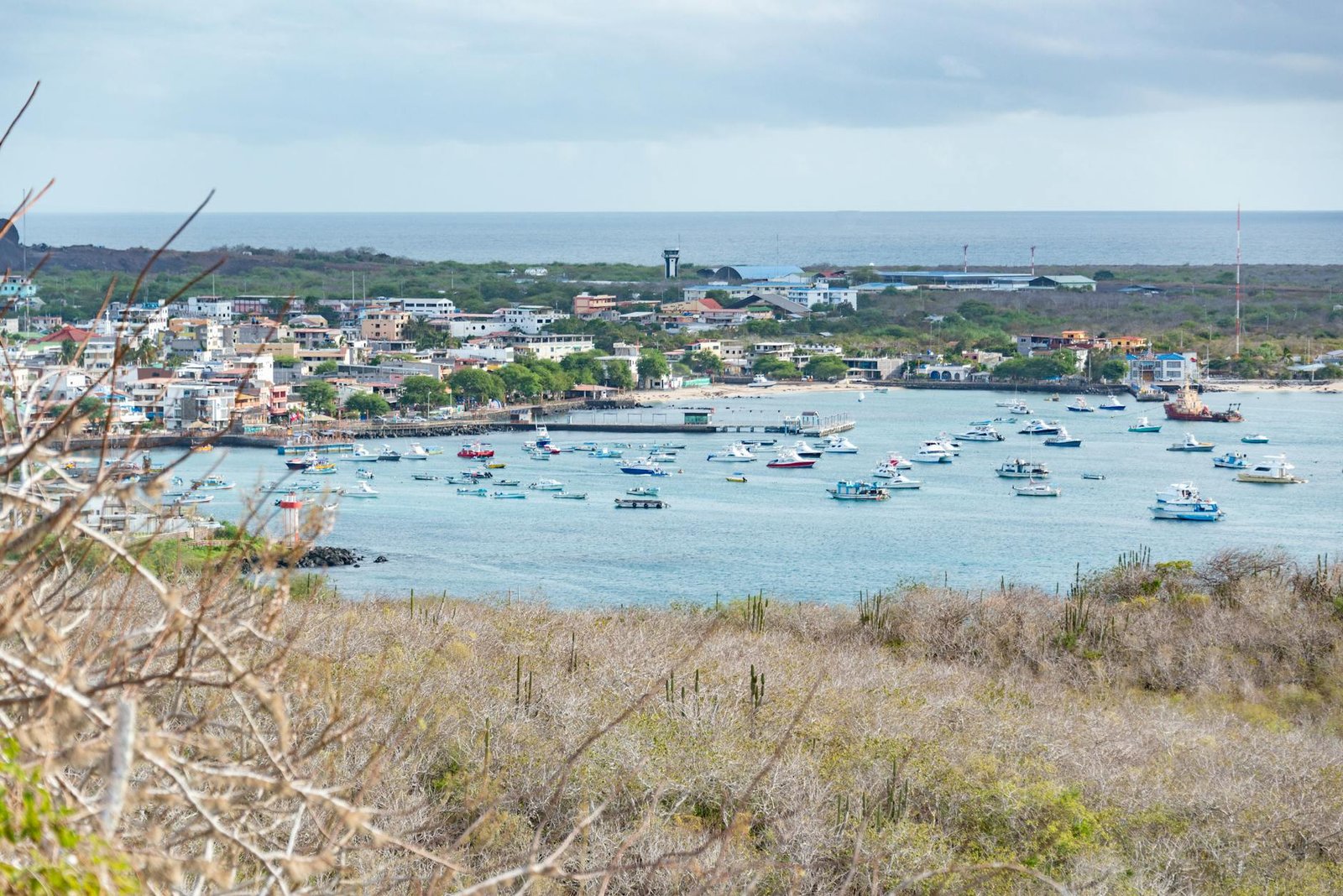
Rabida Island is one of the Galapagos’ most visually arresting stops — a volcanic outcrop streaked in deep crimson, surrounded by water so blue it looks edited. You won’t find a town here, no restaurants, no souvenir stalls — just raw, unfiltered nature pressing in from every direction. This is the Galapagos stripped back to its essentials.
Arriving by Ship
There is no dock at Rabida. You’ll arrive by zodiac tender from your expedition vessel, landing on a beach the colour of dried blood — the iron-rich volcanic soil that gives the island its signature look. The whole island is a protected visitor site managed by the Galapagos National Park, so access is strictly controlled and always guided.
Your ship will anchor just offshore, usually in the calm bay on the island’s north side. The tender ride takes only a few minutes, and sea lions will almost certainly be sprawled across your landing point before you even step ashore.
Things to Do

Rabida packs an extraordinary amount of wildlife and landscape into a small, walkable area. There are no towns to explore — every minute here is spent outdoors, and that’s exactly the point.
Wildlife & Nature
- Sea lion colony on the red beach — A large, year-round colony hauls out directly on the landing beach; pups born between July and November make this especially magical.
- Flamingo lagoon walk — A short trail behind the beach leads to a brackish lagoon where up to 12 flamingos feed; arrive early morning for the best sightings and stillness.
- Pelican nesting trees — Brown pelicans nest in the salt bush fringing the lagoon, often within arm’s reach of the trail.
- Nazca and blue-footed boobies — The cliffs above the bay host nesting colonies of both species; your guide will point out courtship dances if you’re lucky.
- Galapagos hawks — One of the island’s apex predators circles the ridgeline regularly; keep your eyes on the thermals above the red cliffs.
Snorkelling & Water
- Snorkelling in the bay — The waters off Rabida Beach are considered among the best snorkel sites in the archipelago, with sea turtles, white-tipped reef sharks, and Galapagos penguins all possible. This is included as part of most Galapagos cruise itineraries. 🎟 Book: The Best of Ecuador & Galapagos 12 Days / 11 Nights
- Deep-water snorkelling off the cliffs — The eastern side of the bay drops sharply, attracting rays, large schools of fish, and the occasional hammerhead shark.
- Kayaking — Some expedition ships offer kayak launches directly into the bay; check with your vessel before departure.
Hiking
- Red beach to clifftop trail — A 1.5 km loop climbs to panoramic views over the bay and surrounding islands; it’s moderate, mostly dry, and takes about 45 minutes. If you want to extend your Galapagos adventure beyond the ship, a multi-day Ecuador and islands tour gives you more time in landscapes like this. 🎟 Book: Ecuadorian Adventure Quito – Galápagos Islands 8 Days 7 Nights
What to Eat
Rabida has no food vendors, cafés, or restaurants — all meals happen back on your ship or as part of your wider Galapagos tour package. Stock up on water and snacks before you tender ashore, and eat your fill at breakfast — landings here can run two to three hours.
- Fresh ceviche — A staple aboard most Galapagos liveaboards, made with locally caught fish and citrus; expect it at lunch after a morning landing.
- Seco de pollo — Ecuadorian braised chicken stew served over rice, often appearing as a ship dinner staple.
- Patacones — Twice-fried green plantains served as a side or snack; crispy, filling, and deeply satisfying after a morning in the sun.
- Encocado de pescado — Fish cooked in coconut sauce, a coastal Ecuadorian classic that appears frequently on expedition ship menus.
- Fresh tropical fruit plates — Papaya, pineapple, and passionfruit served at breakfast; the quality in the Galapagos region is exceptional.
Shopping

There is nothing to buy on Rabida itself — the island is a no-commerce zone, full stop. Any shopping happens in ports like Puerto Ayora on Santa Cruz or Baquerizo Moreno on San Cristóbal, where you’ll find handmade jewellery, wood carvings, and Galapagos-themed clothing. 🎟 Book: Most Popular 10-Day Ecuador and Galapagos Island Tour
Avoid buying anything made from black coral, tortoiseshell, or lava rock — all are either illegal to export or ecologically damaging to remove. The best souvenirs here are photographs, and there is no shortage of extraordinary subjects.
Practical Tips
- Currency — Ecuador uses the US dollar; bring small bills for any port shopping, though Rabida itself is cash-free.
- Tipping — Tip your naturalist guide at the end of your cruise, typically USD 10–15 per day is standard.
- Timing ashore — Morning landings are cooler, calmer, and better for wildlife activity; request early slots if your ship offers flexibility.
- What to wear — Lightweight, quick-dry clothing, a hat, and reef-safe sunscreen are non-negotiable; the equatorial sun is brutal even on overcast days.
- Water shoes — The wet landing on the beach means stepping into shallow surf; water shoes or old trainers protect both you and the ecosystem.
- Time needed — Allow two to three hours minimum; rushing a Rabida visit is a genuine waste.
- No touching the wildlife — Galapagos law requires a two-metre distance from all animals, though the animals themselves frequently ignore this rule.
Pack your sense of wonder and leave everything else behind — Rabida will do the rest.
🎟️ Things to Book in Advance
These highly-rated experiences fill up fast — book before you arrive to avoid missing out.


This page contains affiliate links. If you book through them, we may earn a small commission at no extra cost to you.
📍 Getting to Rabida Island, Galapagos
Use the interactive map below to explore the port area and plan your route from the terminal.
Leave a Reply