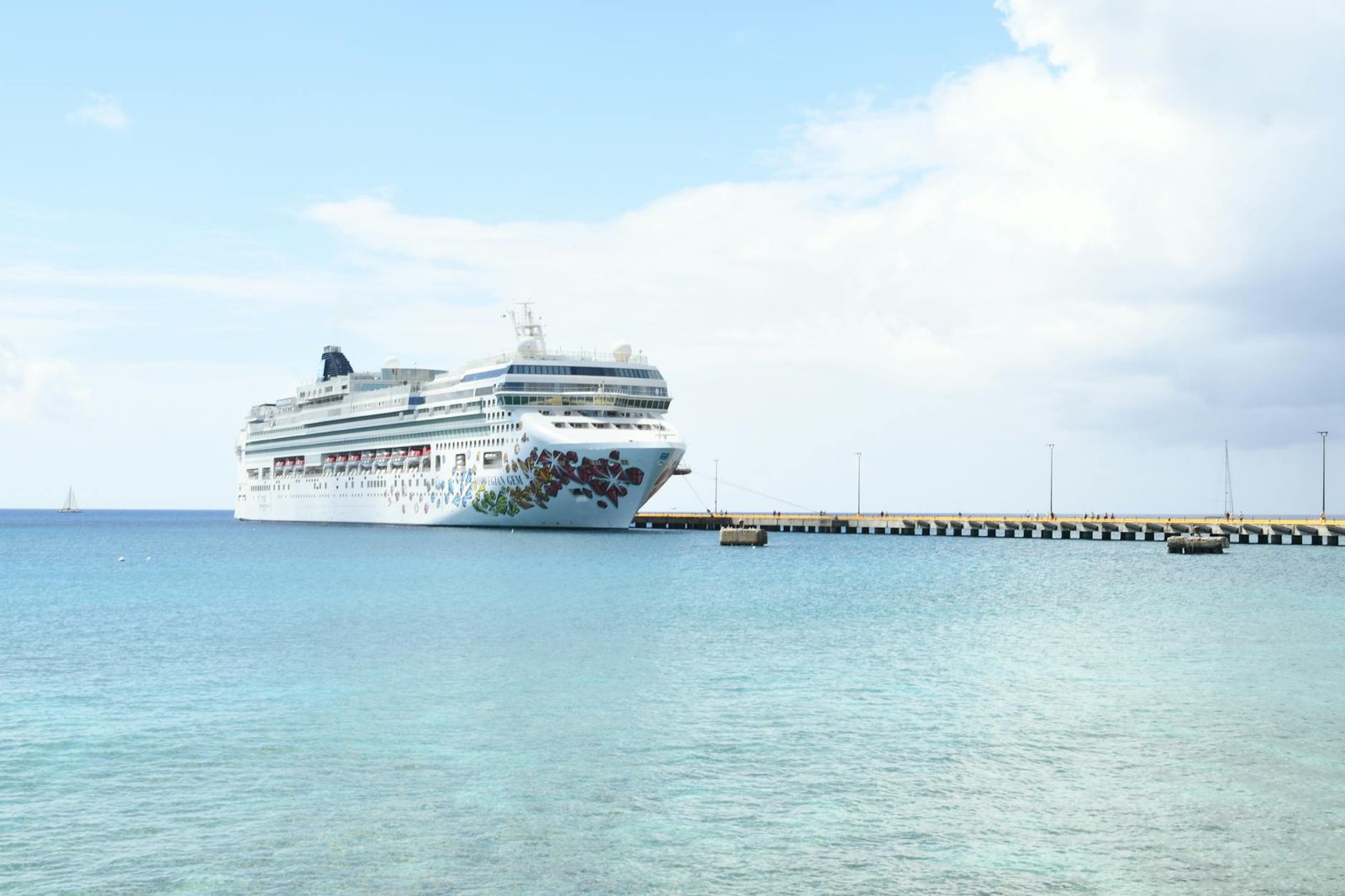
One of the most remote inhabited islands on Earth, Ascension Island greets you with a volcanic silhouette rising from an impossibly blue Atlantic, with no warning and no crowds. This British Overseas Territory sits roughly halfway between Africa and South America, making it one of cruising’s true rarities. If your ship calls here, drop everything — you’ve won the geographical lottery.
Arriving by Ship
There is no cruise terminal in any conventional sense. Ships anchor offshore at Georgetown, the island’s only settlement, and passengers are tendered ashore to the modest pier, so check sea conditions — swells can occasionally cause tender cancellations.
Georgetown itself is a short, flat walk from the landing point, a compact cluster of pastel colonial buildings that you can reach in under five minutes on foot. The island is small enough that almost everything worth seeing is accessible from the waterfront without needing to arrange transport in advance.
Things to Do

Ascension Island packs extraordinary natural drama and surprisingly deep history into just 88 square kilometres — plan your time carefully, because there’s more here than a quick look around town.
History & Culture
- Georgetown’s 200-year-old colonial streetscape is a living time capsule — the garrison church, the Law Courts, and the Governor’s Residence are all within easy walking distance of the pier.
- The Ascension Island Heritage Society Museum in Georgetown gives context to the island’s strategic role from Napoleon’s exile on nearby St Helena to the Falklands War; entry is free and the volunteer staff are excellent sources of local knowledge.
- Two Boats Village, the island’s only other settlement, is an 8km drive inland and sits at around 600m elevation — the contrast between the lunar lava fields below and the cloud-forest vegetation up here is genuinely startling.
- Devil’s Riding School, a flat volcanic plain covered in ancient cinder cones, looks like a scene from another planet and is reachable by road.
Nature & Wildlife
- Green Mountain National Park offers trails through lush cloud forest that Charles Darwin helped inspire — the summit at 859m delivers panoramic views on clear days and takes about 90 minutes to hike.
- Comfortless Cove holds the haunting remnants of a 19th-century plague cemetery alongside rock pools teeming with marine life — free to visit, no facilities.
- Long Beach is one of the Atlantic’s most important nesting sites for green turtles; depending on your visit timing (May–November is peak season), you may spot nesting females or hatchlings heading for the water.
- Boatswain Bird Island, a small rock stack just off Georgetown, hosts the world’s largest colony of frigate birds — you can watch them from the shore without a boat.
- Snorkelling off Georgetown Pier rewards you with warm, clear water and abundant reef fish with minimal effort or equipment hire cost (ask at the pier).
What to Eat
Dining options are limited by design — Ascension has no tourist industry to speak of, so eat where the islanders eat, and you’ll be rewarded with fresh fish and no-nonsense cooking.
- The Exiles Club in Georgetown is the closest thing to a local pub-restaurant; expect hearty meals of grilled wahoo or tuna for around £10–12, and cold beers that taste extraordinary after a hike.
- Wahoo is the island’s signature catch — firm, white, and delicious grilled with lemon; it appears on most menus when available.
- The Two Boats Club in Two Boats Village serves simple lunches including sandwiches and local fish dishes, usually under £8, and is worth the drive for the highland setting alone.
- Freshly baked bread is sold at the small island supermarket in Georgetown most mornings — grab a loaf for picnic provisions before heading to the lava fields.
- St Helena Coffee (imported from the neighbouring island) is served at several spots; it’s a genuinely exceptional single-origin coffee and worth seeking out before you leave.
Shopping

Georgetown has a small supermarket and a post office that sells Ascension Island stamps — these are genuinely sought-after by philatelists worldwide and make a lightweight, meaningful souvenir. The island’s unique postmarks are an easy way to send an unforgettable postcard home.
Beyond stamps, look out for locally produced crafts at the Heritage Society and occasionally handmade jewellery incorporating volcanic rock or sea glass. Don’t expect boutiques or markets — this is a working community, not a tourist economy, and that’s precisely what makes it special.
Practical Tips
- Currency is the St Helena Pound, pegged to sterling; US dollars are sometimes accepted but carry GBP for reliability.
- Bring cash — card payment infrastructure is limited and ATM access is not guaranteed for visitors.
- Hire a taxi or local guide if you want to reach Green Mountain or Two Boats Village; ask at the pier on arrival as drivers typically wait for tender passengers.
- Tipping is not expected but always appreciated in such a small, close-knit community.
- Go ashore as early as possible — tender queues fill up and the island rewards those who give it the full day.
- Dress for sun and wind — UV levels are extreme this close to the equator, so sunscreen, a hat, and light layers are non-negotiable.
- Mobile roaming is limited — download offline maps before you leave the ship.
Ascension Island doesn’t perform for visitors — it simply exists, raw and astonishing, and the fact that you made it here at all is the real adventure.
📍 Getting to Ascension Island, Georgetown, St Helena UK
Use the interactive map below to explore the port area and plan your route from the terminal.
Leave a Reply