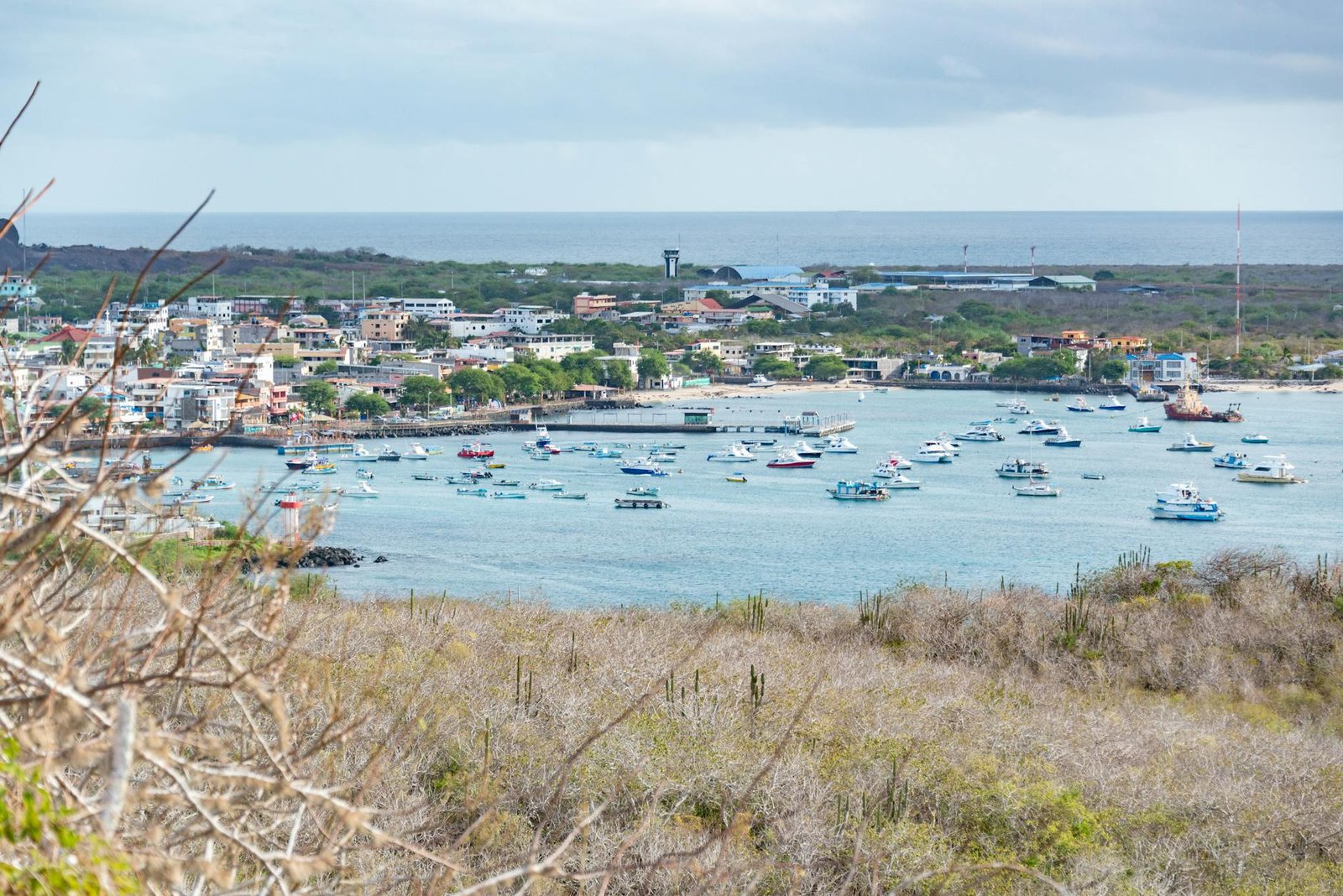
Santiago Island is one of the Galapagos’s most dramatically alive places — volcanic, untamed, and crawling with wildlife that has never learned to fear you. This is where Darwin himself camped for nine days, and the island hasn’t changed much since. Prepare to feel genuinely small.
Arriving by Ship
Santiago has no commercial dock, so all arrivals are made by Zodiac or panga tender to one of its landing sites — most commonly James Bay (Puerto Egas) on the western coast or Espumilla Beach. Your expedition team will handle the wet or dry landing briefing before you step off; dry landings keep your feet clean, wet ones don’t, so wear shoes you don’t mind dunking.
There is no town on Santiago and no permanent human population — the island was abandoned after failed colonisation attempts in the 20th century. Every experience here happens in nature, which means the moment you step ashore, the adventure has already started.
Things to Do

Santiago rewards the curious. Whether you’re snorkelling with sea lions or hiking across moonscape lava fields, every hour ashore feels like a scene from a nature documentary you’ve somehow walked into.
Wildlife & Nature
- Watch fur seals at Puerto Egas — the tidal grottos along the black lava coastline are home to a thriving colony of Galapagos fur seals; you can walk within a few metres without disturbing them.
- Snorkel at James Bay — the waters here are exceptionally rich, with sea turtles, white-tipped reef sharks, and playful sea lions sharing the same shallow cove; your cruise will provide equipment.
- Hike the Sullivan Bay lava fields — this 1897 pahoehoe lava flow on the island’s eastern side looks like a frozen ocean of rope; the two-hour trail is one of the most surreal walks in the archipelago.
- Spot the Galapagos hawk — Santiago is one of the best islands to see this apex predator; they often perch directly on rocks along the shore trail and watch you back with zero concern.
- Look for marine iguanas at Espumilla Beach — the pink-flamingo lagoon behind this beach is also a favourite haunt for marine iguanas and shorebirds, making it a strong wildlife double-header.
- Kayak or paddleboard in James Bay — some expedition cruises offer sea kayaking directly from the ship; the calm volcanic bay is perfect for it and offers a sea-level perspective of the cliffs.
History
- Explore the Puerto Egas salt mine ruins — a ghost-town remnant of a failed 1960s salt-harvesting operation sits crumbling near the shoreline, oddly beautiful against the black rock.
- Follow Darwin’s footsteps — Darwin collected finch specimens near James Bay in 1835; interpretive guides on most cruises will point out the exact habitats that fed his thinking about natural selection.
What to Eat
Because Santiago has no settlement, there are no restaurants or cafés on the island itself. All meals happen aboard your cruise ship, and Galapagos expedition vessels generally serve fresh, high-quality food inspired by Ecuadorian coastal cuisine. Stock up before you go ashore and treat dinner back on deck as your reward.
- Ceviche de pepino de mar (sea cucumber ceviche) — a Galapagos delicacy served on many cruise ships; citrus-cured with ají pepper, it’s unlike anything you’ll find on the mainland.
- Seco de pollo — a slow-braised chicken stew with beer and cilantro, common on ship menus as a hearty post-hike lunch.
- Encocado de pescado — fish cooked in coconut sauce, a Pacific coast staple; look for it as an evening dinner option on most mid-to-high-end vessels.
- Patacones with hogao — twice-fried green plantain topped with tomato-onion salsa; typically served as a starter or snack and universally satisfying.
- Fresh tropical fruit plates — Galapagos ships load up with papaya, pineapple, and tree tomatoes at Santa Cruz; breakfast fruit spreads are consistently exceptional.
Shopping

There is absolutely nothing to buy on Santiago Island itself, and that’s completely the point. Any souvenirs you pick up will come from other ports in your itinerary, most likely Puerto Ayora on Santa Cruz or Puerto Baquerizo Moreno on San Cristóbal.
When you do shop elsewhere, look for locally made items: hand-painted ceramic tiles, wooden carvings of Galapagos wildlife, and photography books by resident naturalist photographers make meaningful souvenirs. Avoid anything made from black coral, turtle shell, or sea lion products — these are illegal to export and a genuine conservation issue.
Practical Tips
- Currency is USD — the Galapagos operates entirely in US dollars; carry small bills for tips on other islands.
- Tipping your naturalist guide is customary and meaningful; USD $10–15 per person per day is the widely accepted benchmark on expedition cruises.
- Go ashore early — wildlife activity peaks in the first hours after sunrise before the heat builds, especially for bird and reptile watching.
- Wear reef-safe sunscreen only — standard sunscreens are damaging to the marine ecosystem and frowned upon by guides; biodegradable formulas are mandatory on most responsible operators.
- You need a full half-day minimum — Sullivan Bay and Puerto Egas are usually visited on separate excursions; budget 3–4 hours per landing site to do each justice.
- Sturdy closed-toe shoes are essential — the lava terrain is razor-sharp and uneven; sandals will not protect you.
- Respect the two-metre rule — Galapagos National Park regulations require you stay two metres from all wildlife, even when the animals ignore that boundary themselves.
Santiago doesn’t perform for tourists — it simply exists, ancient and indifferent and spectacular — and the best thing you can do is show up, be quiet, and let it amaze you.
📍 Getting to Santiago Island, Galapagos
Use the interactive map below to explore the port area and plan your route from the terminal.
Leave a Reply