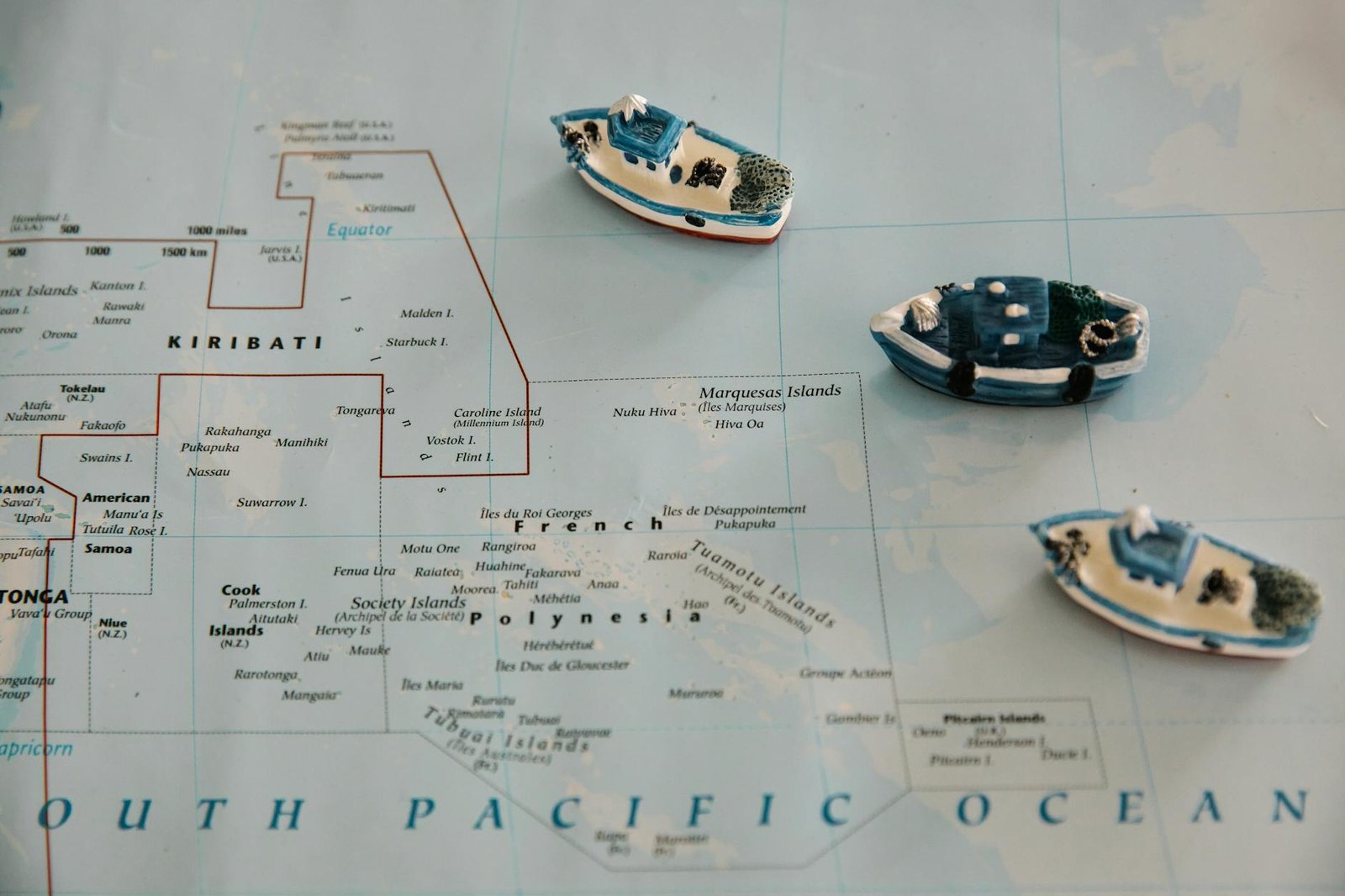
Kiritimati is the kind of place that makes you question everything you thought you knew about remote — this single atoll accounts for roughly 70% of Kiribati’s total land area, yet fewer than 12,000 people call it home. The reef-fringed lagoons, extraordinary seabird colonies, and world-class bonefish flats feel almost absurdly pristine. You’ve arrived somewhere genuinely untouched, and you need to make every hour count.
Arriving by Ship
Kiritimati has no deep-water cruise terminal, so expect a tender operation from your ship into the main settlement of London — yes, London — or occasionally Banana or Poland village, named by British colonial administrators with a curious sense of humour. The tender ride itself is a spectacle, passing over water so clear you’ll see coral formations beneath the hull before you even reach shore.
Once ashore, you’re effectively in a small Pacific town where roads are unpaved, Wi-Fi is scarce, and the pace is deliberately, beautifully slow. London village sits close to the main landing point, putting the island’s handful of shops, guesthouses, and services within easy walking distance.
Things to Do

Kiritimati isn’t a port that serves up manicured attractions — it rewards the curious and the outdoorsy with raw, spectacular nature and a genuinely authentic Pacific experience.
Nature & Wildlife
- Bird Island (Motu Tabu sanctuary) hosts the largest seabird colony in the Pacific, with millions of sooty terns, frigatebirds, and boobies — arrange access through the Environment and Conservation Division office in London; permits cost around AUD 10–15.
- Bonefish flats at Kiritimati’s lagoon are legendary among fly-fishers; day permits are available locally and guides can be arranged through the Captain Cook Hotel for approximately USD 150–200 per day.
- Snorkelling at Paris village reef delivers walls of staghorn coral and near-guaranteed sightings of reef sharks, Napoleon wrasse, and sea turtles — bring your own gear as rentals are limited.
- Lagoon kayaking lets you drift across hypnotically blue shallows; ask guesthouse owners in London about renting outriggers for roughly USD 10–20 for a half-day.
History & Culture
- Captain Cook’s Monument marks the spot where Cook made landfall in 1777; it’s a short walk from London village and free to visit — the plaque alone makes for a striking photo.
- Former nuclear test site at Malden Road area — Kiritimati was used for British and American nuclear tests in the late 1950s; local guides can explain the island’s complex Cold War history during a road tour.
- London village community centre occasionally hosts traditional I-Kiribati dance performances for visiting groups — ask your ship’s excursion desk if anything is scheduled during your call.
Beaches
- Joe’s Beach near Banana village is a quiet strip of white sand backed by pandanus palms, rarely visited and utterly idyllic for an hour of genuine solitude.
- Northwest coast beaches offer wave-exposed shoreline perfect for shell collecting; cone shells are beautiful but handle with caution — some species are venomous.
What to Eat
Eating on Kiritimati means embracing simplicity — this is Pacific subsistence cooking elevated by extraordinary fresh ingredients, particularly seafood pulled straight from the lagoon that morning.
- Grilled trevally (giant GT) is the island staple; find it at small family restaurants in London for around AUD 8–12 a plate — the fish is almost embarrassingly fresh.
- Coconut crab when in season is a rare delicacy; locals prepare it simply steamed or roasted, available at guesthouses if ordered ahead for roughly USD 15–20.
- Te bua bua (fried breadfruit) is a crunchy, satisfying street snack sold near the London market area for just a few dollars.
- Fresh coconut is available everywhere for under USD 1 — vendors hack them open roadside and they’re the perfect antidote to equatorial heat.
- Local toddy (kamaimai) is a sweet fermented sap tapped from coconut palms; try a cautious sip if a local offers — it’s cultural hospitality at its most genuine.
Shopping

The market in London is small but authentic — look for hand-woven pandanus baskets, mats, and fans made by local women, which make genuinely beautiful and lightweight souvenirs. Prices are negotiated gently and rarely exceed USD 20–30 for quality woven pieces; buying directly from the maker means your money stays exactly where it should.
Avoid purchasing shells, coral fragments, or any wildlife products — export rules are strict and the ecosystem here is simply too important to strip of even a single piece. Skip the few imported trinkets sold alongside local goods; they’re made nowhere near Kiribati.
Practical Tips
- Currency is the Australian Dollar (AUD); bring cash as card facilities are essentially non-existent on the island.
- Tipping isn’t traditional in I-Kiribati culture but is warmly appreciated by guides and boat operators — USD 5–10 is meaningful.
- Transport ashore means rented bicycles (around USD 5–8/day) or negotiating with local pickup truck drivers who operate informal taxis.
- Go ashore early — equatorial heat peaks severely by midday, and the best wildlife activity happens in the cool morning hours.
- Dress modestly in villages; covered shoulders and knees show respect for a deeply religious, conservative community.
- You need at least 4–6 hours to do the island justice beyond London village — don’t squander the day onboard.
- Sunscreen and insect repellent are essential — pack more than you think you need, as none is available ashore.
The moment your tender pulls away at the end of the day, you’ll be quietly certain that very few people on Earth have ever stood exactly where you just stood — and that feeling is worth everything.
📍 Getting to Kiritimati-Christmas Island, Line Islands, Kiribati
Use the interactive map below to explore the port area and plan your route from the terminal.
Leave a Reply