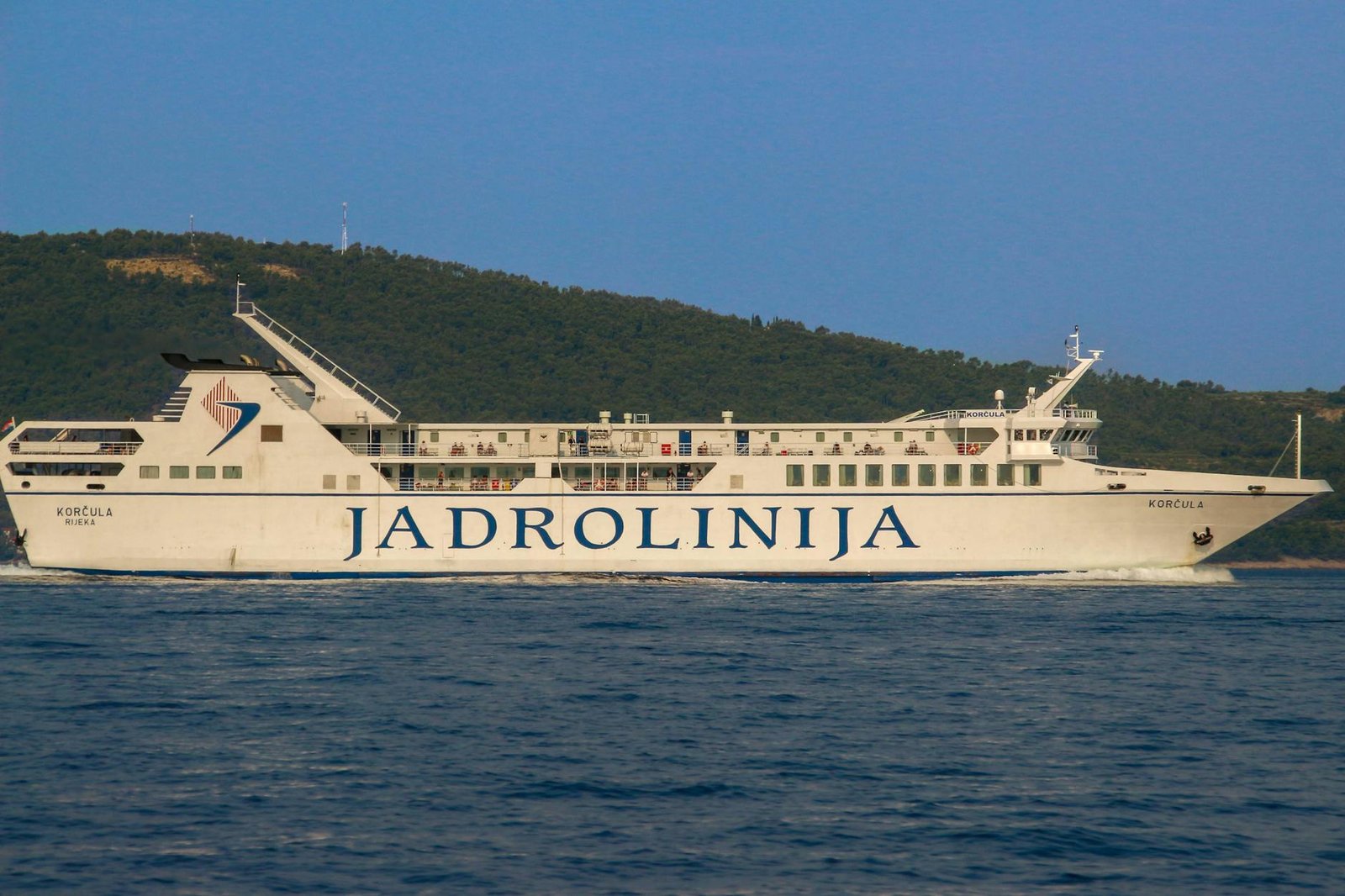
Few Croatian islands announce themselves as dramatically as Korčula — a dense medieval town rising from the sea like a fortress city frozen in time, its honey-coloured towers and terracotta rooftops glowing against the Adriatic blue. This island in southern Dalmatia is compact, charismatic, and endlessly rewarding. Whether you have four hours or a full day, Korčula punches well above its weight.
Arriving by Ship
Sailing into Korčula harbour is one of the most cinematic moments in Adriatic cruising. The town sits on a small peninsula jutting into the sea, its medieval walls practically skimming the waterline. As your ship glides closer, you’ll notice the old town’s distinctive fishbone street layout — intentionally designed so that narrow lanes catch sea breezes in summer and block winds in winter. It’s urban planning that’s nearly 2,400 years old, and it still works.
Tender boats typically ferry passengers to shore, depositing you right at the town gate. From that first step on the stone quayside, you’re immediately inside the old town’s rhythm — church bells, the scent of rosemary and grilled fish, local cats napping on sun-warmed steps. Unlike some Dalmatian towns, Korčula doesn’t feel overwhelmed by tourism, which makes the experience feel genuinely authentic.
Things to Do

Start by simply walking the old town’s lanes — they’re impossibly atmospheric and take only minutes to navigate, yet reward slow exploration. The Cathedral of St. Mark dominates the central square with its carved Pietà above the doorway and a remarkable interior that feels intimate rather than grand. If you’re feeling ambitious, climb the town’s defensive towers for sweeping views across to the Pelješac peninsula.
The legendary claim that Marco Polo was born here — in a house you can actually visit — is disputed by historians but embraced joyfully by locals. The Marco Polo Museum is worth a quick stop, more for the charming storytelling than definitive proof.
For a deeper immersion into the island’s history, a private walking tour brings everything to life, from the defensive walls to the ornate doorways of noble families. 🎟 Book: 1 Hour Private Walking Tour in Korcula If you’d rather explore the surrounding waters, a half-day boat tour through the Korčula archipelago reveals secluded coves, blue lagoons, and hidden villages unreachable by foot. 🎟 Book: Half-Day Boat Tour Korcula Archipelago For something genuinely unexpected, the Korčula semisubmarine tour lets you peer below the Adriatic’s surface without getting wet — a wonderful option if you’re travelling with children or simply want a different perspective on the island’s crystal waters. 🎟 Book: Korcula Semisubmarine Tour
Local Food
Korčula’s food culture is deeply rooted in both land and sea. The island produces exceptional olive oil — some of the finest in Croatia — and local lamb grazed on aromatic hillside herbs is legendary. You’ll find peka everywhere: a slow-cooked dish of meat or seafood sealed beneath an iron dome and buried in embers, resulting in extraordinary tenderness. Order it wherever you see it.
Seafood dominates most menus. Grilled sea bream, black risotto made with cuttlefish ink, and brudet (a rich, slightly spicy fish stew) are island staples done with real confidence here. Pair everything with locally produced Pošip or Grk — two white wines unique to the island that you likely won’t find back home. They’re crisp, complex, and utterly delicious alongside a plate of anything grilled.
Shopping

Korčula is an island of skilled craftspeople. The local olive oil shops are worth a serious stop — look for single-estate bottles from family producers rather than supermarket blends. You’ll also find intricate lacework made by local women, a tradition that dates back centuries. Small lace pieces make genuinely beautiful, genuinely local souvenirs.
Wine is perhaps the most compelling thing to take home, particularly bottles of Pošip or the rarer Grk grape varietal. To experience these wines properly before you buy, a wine and sightseeing tour of the island covers both heritage and vineyards in a single, satisfying afternoon. 🎟 Book: Wine & Sightseeing Tour Korcula If you want something more intimate and tailored, a private wine tour and tasting goes deeper into individual producers and the stories behind each bottle. 🎟 Book: Private Korcula wine tour and tasting
Practical Tips
The old town is small and entirely walkable on flat stone streets, though some lanes are uneven — comfortable shoes matter. Most ships dock in the morning and depart by late afternoon, so prioritise the old town early before day-tripper crowds build. The main square gets busy around midday; explore peripheral lanes instead. ATMs are available near the main gate, and most restaurants accept cards. English is spoken widely. The island is warm from May through September, so bring sunscreen even in spring.
Korčula stays with you long after your ship has sailed back toward the horizon. It’s the kind of place that makes you quietly start researching return flights the moment you’re back on board.
🎟️ Things to Book in Advance
These highly-rated experiences fill up fast — book before you arrive to avoid missing out.


This page contains affiliate links. If you book through them, we may earn a small commission at no extra cost to you.
📍 Getting to Korcula Croatia
Use the interactive map below to explore the port area and plan your route from the terminal.
Leave a Reply