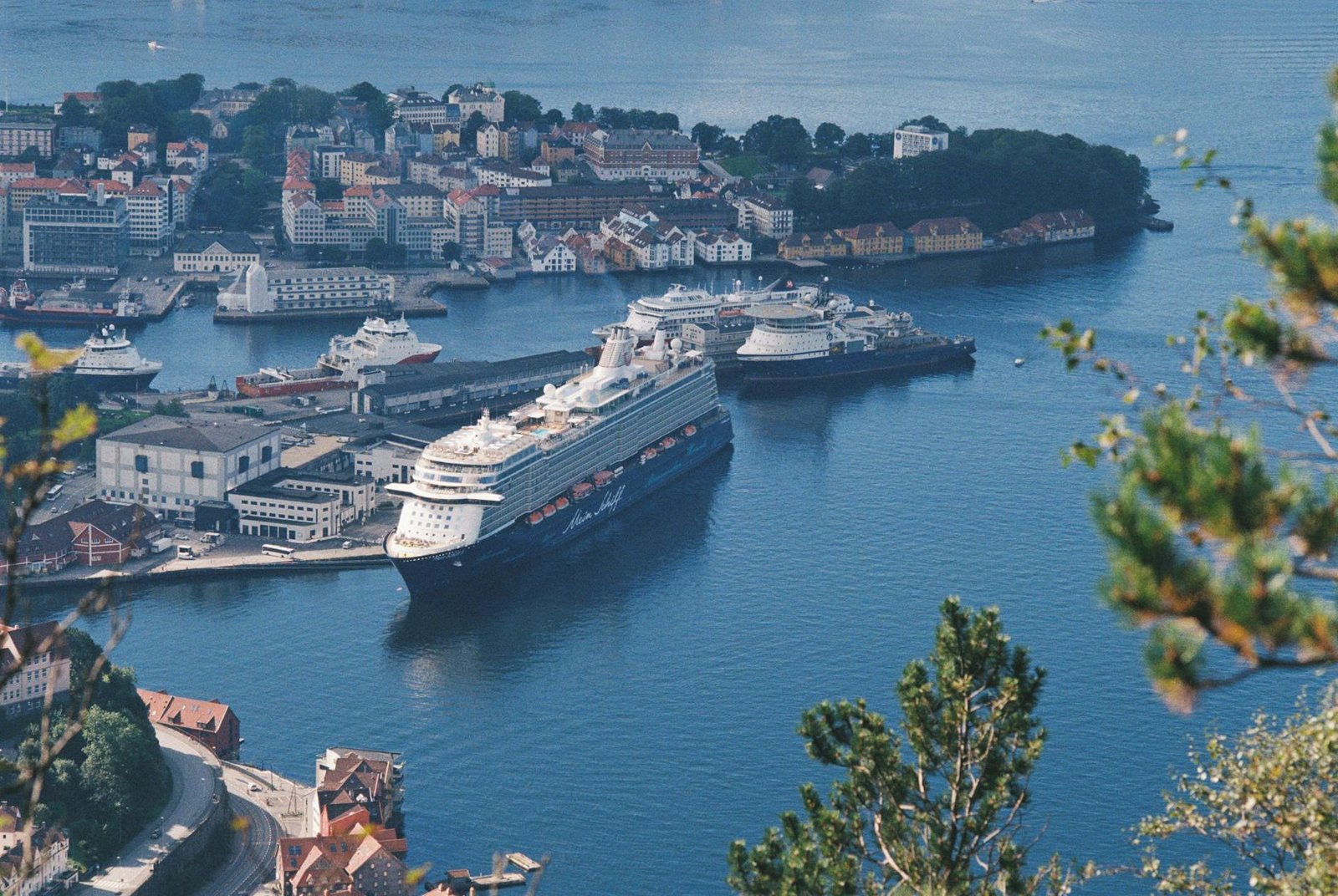
Tucked into the Hjørundfjord region of western Norway, Torvik is a village so small it barely registers on tourist radar — yet ships pull in here for a reason. The raw fjord scenery, the silence, and the complete absence of souvenir crowds make it one of the most genuinely Norwegian stops on any itinerary. Come prepared to explore, because Torvik rewards the curious.
Arriving by Ship
Most cruise ships anchor offshore and tender passengers into Torvik’s small quay, a process that typically takes 5–10 minutes each way. The village itself begins almost immediately at the waterfront, so there’s no lengthy transfer to worry about once you step ashore.
The quay area is compact and well-organised, with local guides and a small information point often set up dockside on cruise days. Water taxis and local ferries also operate from here, making it straightforward to push further into the surrounding fjords and islands.
Things to Do

Torvik’s appeal is entirely rooted in landscape, water, and authentic Norwegian rural life — this is not a port for museum-hopping. Pack comfortable shoes and a sense of adventure, because the best experiences here are found outdoors.
Nature & Fjords
- Hjørundfjord boat excursion — Take a local boat deep into Hjørundfjord, one of Norway’s most dramatic and least-visited fjords, with sheer mountain walls rising over 1,700 metres. Excursions typically run 2–3 hours; expect around 600–800 NOK (£45–60) per person.
- Kayaking on the fjord — Several operators offer guided sea kayaking from the Torvik waterfront, putting you right at water level with the mountains. Sessions usually last 1.5–2 hours and cost approximately 700 NOK (£52).
- Hiking to Blåbærfjellet — A well-marked trail from the village climbs to panoramic viewpoints above Torvik, taking roughly 1.5–2 hours return for a moderate fitness level. No charge; bring layers as conditions change fast.
- Norangsfjord valley walk — Follow the road or footpath into the Norangsdalen valley, a hauntingly beautiful landscape with abandoned farmsteads, waterfalls, and a sunken village beneath a glacial lake. Accessible on foot or by local taxi; the valley entrance is about 8 km from Torvik.
Culture & History
- Leinøya island exploration — Torvik sits on Leinøya itself, and wandering the island’s quiet lanes and shoreline gives you a genuine feel for Norwegian coastal life unchanged by tourism. Free; just walk.
- Local fishing heritage — The working harbour area displays traditional wooden boats and occasionally active fishing operations; ask locals about the herring and cod history that shaped the region. Informal and free.
- Ørsta and Volda day trip — The nearby towns of Ørsta or Volda (reachable by local ferry or taxi in 20–30 minutes) offer small regional museums and a wider slice of Sunnmøre district life. Museum entry typically 80–120 NOK (£6–9).
Families
- Shoreline rock-pooling and beach walks — The rocky shoreline around Torvik is ideal for children exploring at low tide, with clear, clean water and interesting marine life. Completely free and endlessly entertaining.
- Wildlife spotting — White-tailed eagles are frequently sighted over the fjord; bring binoculars and position yourself near the water’s edge during quieter morning hours for the best chance. Free.
What to Eat
Torvik is tiny, so dining options are limited but genuinely local — what you find here hasn’t been designed for tourist palates. Prioritise anything from the sea.
- Fresh poached salmon — Norway’s signature dish appears on most local menus; look for it at the small café near the quay, typically 180–220 NOK (£13–16) for a generous plate.
- Klippfisk (dried and salted cod) — A regional staple with centuries of history; ask at local eateries if they’re serving a traditional preparation, often around 160–200 NOK (£12–15).
- Rømmegrøt — A thick, traditional sour cream porridge served with butter, sugar, and cinnamon; occasionally available at village events or local cafés for 90–120 NOK (£7–9).
- Freshly baked skoleboller — These cardamom-spiced buns with custard and coconut are Norway’s most beloved snack and appear in most local bakeries; budget around 30–45 NOK (£2–3) each.
- Local cloudberry jam — Served on bread or waffles, cloudberries are harvested from surrounding hillsides in late summer; look for them at the small quayside kiosk during cruise season.
Shopping

Torvik has no dedicated shopping district, and that’s part of its charm. What you will find are occasional local craft stalls set up on cruise days, selling hand-knitted woollens, locally produced jams, and small wooden items at fair, uninflationary prices.
Skip mass-produced Viking helmet souvenirs — they’re not made here and carry no local meaning. Instead, invest in genuine hand-knit knitwear or a jar of cloudberry or lingonberry preserve: lightweight, local, and actually useful.
Practical Tips
- Currency — Norway uses the Norwegian Krone (NOK); most places accept card, but carry some cash for market stalls.
- Tipping — Not culturally expected in Norway, though rounding up a bill is appreciated.
- Transport — Local taxis can be arranged dockside; confirm the return time before you depart for the valley or nearby towns.
- Dress code — Layers are essential; fjord weather shifts rapidly even in summer, and mountain trails can be significantly cooler than the quayside.
- Best time ashore — Go early on the tender; the village is tiny and popular hiking trails feel solitary before 10am.
- Time needed — Allow at least 4 hours to feel unhurried; a full day is ideal if you’re heading into the fjord or valley.
- Mobile signal — Coverage can be patchy once you move inland; download offline maps before disembarking.
Torvik will give you nothing polished and everything real — leave the ship, breathe the fjord air, and let Norway show you what it actually looks like.
📍 Getting to Torvik, Leinoya Island Norway
Use the interactive map below to explore the port area and plan your route from the terminal.
Leave a Reply