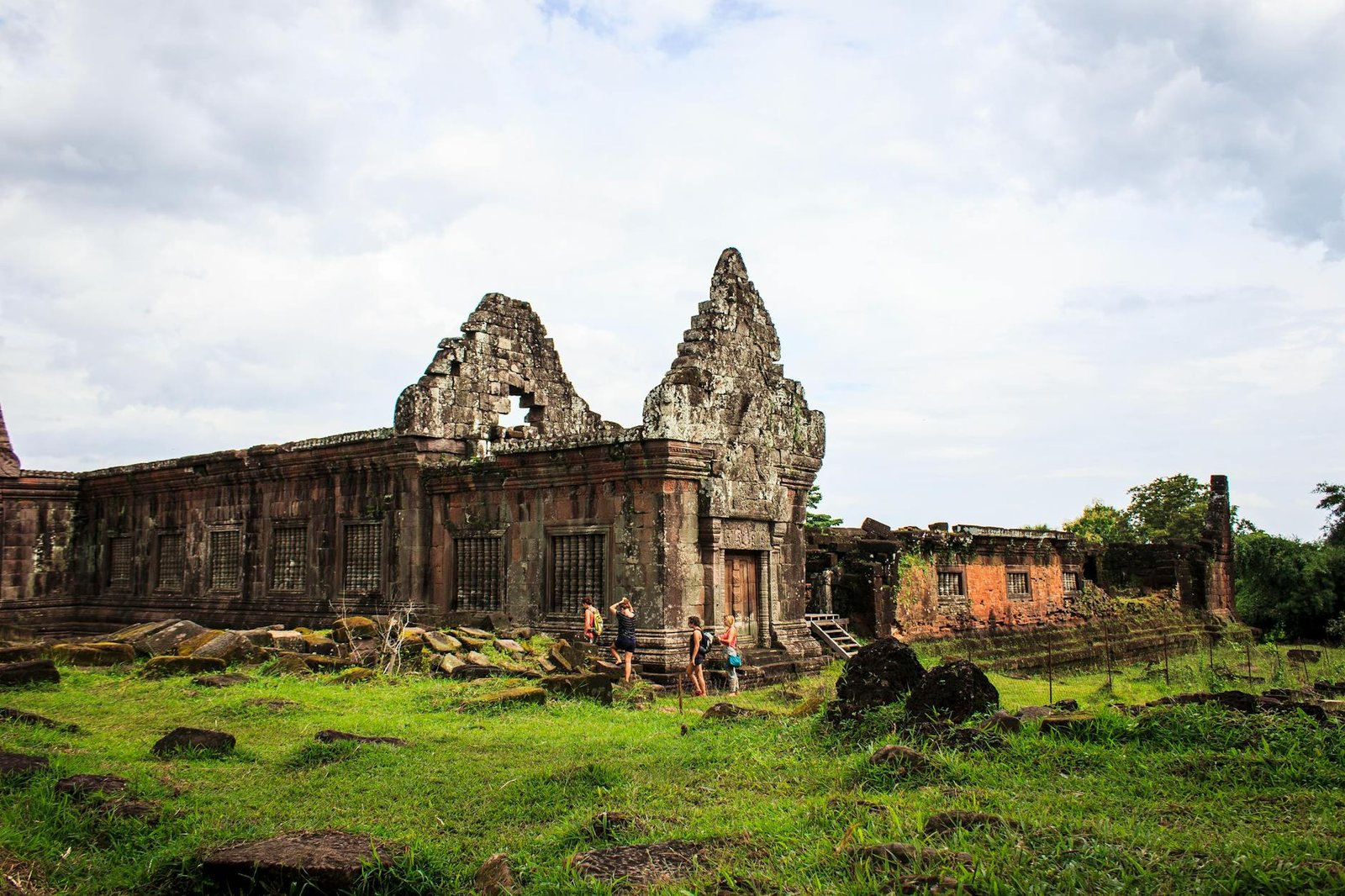
Few cruise stops in Southeast Asia hit you this hard. Champasak is where the Mekong slows down, the jungle closes in, and one of the oldest Khmer temple complexes on earth rises from the hillside like a fever dream. Come prepared, and this is the port call you’ll talk about for years.
Arriving by Ship
Most river cruise vessels dock directly along the Mekong riverbank at Champasak town, with a simple gangway walk onto the embankment — no tendering required on most itineraries. The town itself is tiny and immediately walkable, though Wat Phou sits about 8 kilometres south and requires a tuk-tuk, bicycle, or organised transfer.
The riverbank area is calm, unhurried, and refreshingly un-touristy. Your ship’s crew will typically arrange transport to Wat Phou, but independent options are easy and cheap to organise right on the dock.
Things to Do

Champasak punches well above its weight for a small provincial town. Between the UNESCO-listed temple complex and the surrounding countryside, a single day here rewards every type of traveller.
History & Temples
- Wat Phou Temple Complex — A pre-Angkor Khmer site dating to the 5th century, spread across two lower palaces and a clifftop sanctuary; entrance costs around 50,000 LAK (roughly USD 2.50) and opens daily from 8am–6pm.
- Lingaparvata Mountain backdrop — The sacred mountain directly behind the temple is considered the spiritual heart of the site; take time to look back from the hilltop sanctuary for the full dramatic perspective.
- Champasak Historical Heritage Museum — A small but well-curated museum in town displaying stone carvings and artefacts excavated from Wat Phou; entry is around 10,000 LAK and it’s worth 45 minutes of your time.
Outdoors & Villages
- Bicycle ride along the Mekong — Rent a bike in town for around USD 2–3 and pedal south through palm-lined lanes and rice paddies to reach Wat Phou at a leisurely pace.
- Don Daeng Island — A short boat ride across from Champasak, this car-free island offers flat cycling, traditional weaving villages, and zero tourist crowds; boats cross for around USD 1–2.
- Pakse temples and mystical waterfalls day tour — If your ship overnights, a guided excursion into the wider Champasak province takes in jungle falls and additional Khmer ruins. 🎟 Book: Pakse Mystic Falls and Timeless Temples of Southern Laos Tour
- Sunrise at Wat Phou — If you can arrange early access before the crowds arrive, the golden light on the sandstone terraces is genuinely extraordinary; check with your cruise director about off-schedule visits.
What to Eat
Champasak sits in southern Laos, where the food is spicier and more herb-forward than the north — a distinct regional cuisine worth leaning into. Small family-run restaurants along the riverfront serve honest, cheap, delicious food.
- Laap (Lao minced meat salad) — The national dish done properly here with fresh herbs and toasted rice powder; try it at any local restaurant on the main riverside strip for around USD 2–3.
- Mok Pa (steamed fish in banana leaf) — Fresh Mekong fish steamed with lemongrass and galangal; widely available at riverside eateries for USD 2–4.
- Khao Niao (sticky rice) — Served in a small woven basket at every meal; it’s your edible utensil, so embrace it — included with most meals for free.
- Tam Mak Houng (Lao green papaya salad) — Fiercer than the Thai version and often loaded with tiny fermented crabs; order “bo phet” if you want it mild, around USD 1–2.
- Lao Beer (Beerlao) — The cold, clean local lager is served everywhere and costs around USD 1 at any riverside café; it pairs perfectly with the heat.
- Fresh coconut water — Sold by vendors near the Wat Phou entrance for about USD 0.50–1; non-negotiable on a hot day.
Shopping

Champasak isn’t a shopping destination, and that’s part of its charm. A few small stalls near Wat Phou sell silk scarves, handwoven textiles from nearby villages, and small carved wooden amulets — all reasonably priced and genuinely locally made.
Don Daeng Island is the best spot for traditional Lao silk weaving; you can watch artisans at work and buy directly from the weavers. Skip the cheap plastic temple souvenirs and focus on textiles — they’re lightweight, beautiful, and actually support local families.
Practical Tips
- Currency — The Lao Kip (LAK) is the local currency; carry small amounts of USD as backup, which is widely accepted at attractions.
- Tipping — Not mandatory but always appreciated; 5,000–10,000 LAK for a tuk-tuk driver or guide is a generous gesture.
- Transport — Agree on the tuk-tuk fare before you get in; the standard return trip to Wat Phou from the dock should be around USD 5–8.
- Dress code — Wat Phou is a religious site; cover your shoulders and knees, or a cheap sarong will be offered at the entrance for a small fee.
- Heat — Go ashore early; midday temperatures regularly exceed 35°C and the temple climb is exposed to full sun.
- Time needed — Allow at least three hours for Wat Phou alone; a full day including Don Daeng or cycling covers everything comfortably.
- Photography — The light at Wat Phou is best before 10am; golden hour shots from the upper sanctuary terrace are exceptional.
Pack your sense of wonder alongside the sunscreen — Champasak is the kind of place that quietly rewires your understanding of how ancient and alive the world can still feel.
🎟️ Things to Book in Advance
These highly-rated experiences fill up fast — book before you arrive to avoid missing out.


This page contains affiliate links. If you book through them, we may earn a small commission at no extra cost to you.
📍 Getting to Champasak, Wat Phou temple, Laos
Use the interactive map below to explore the port area and plan your route from the terminal.
Leave a Reply