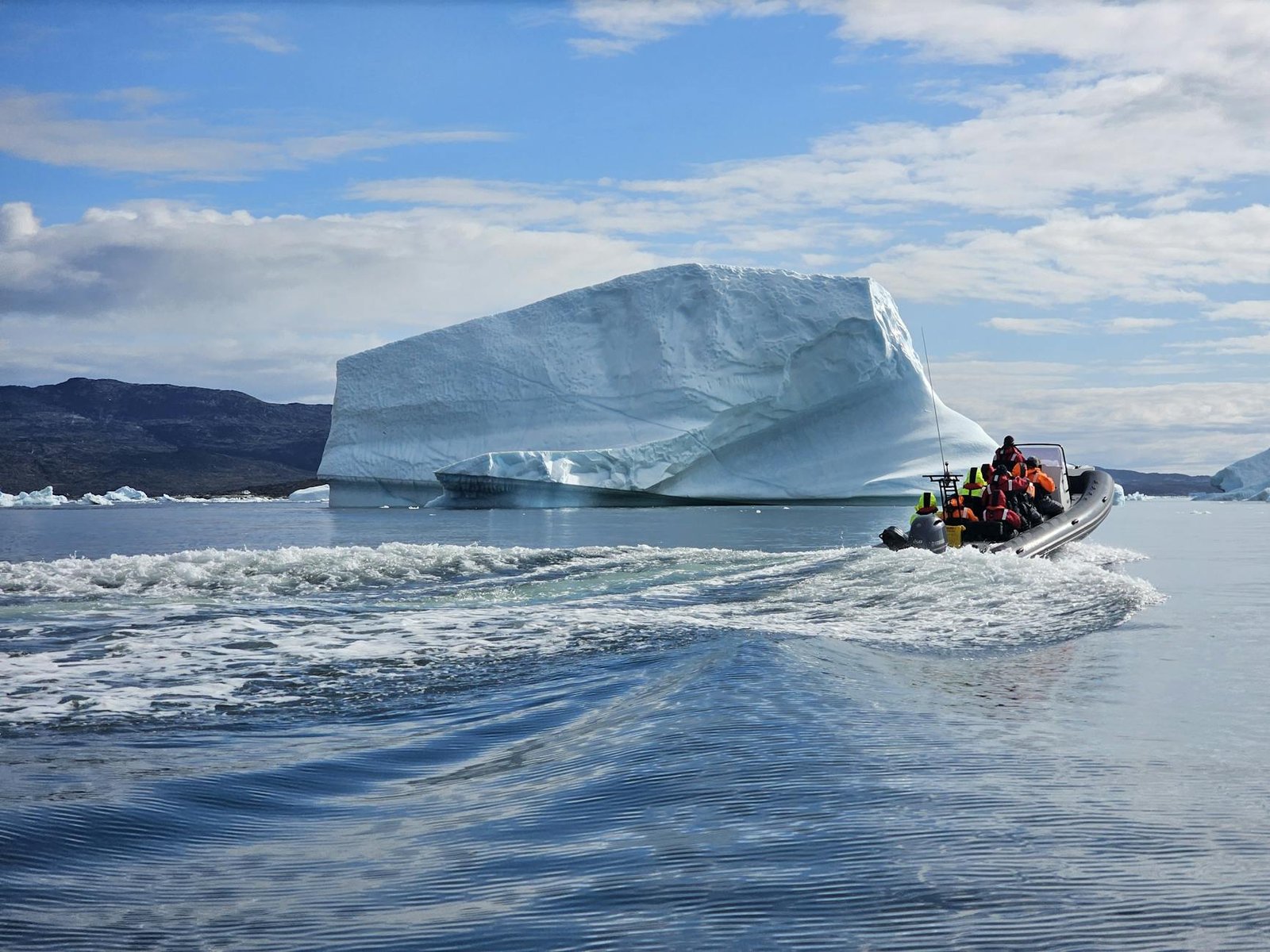
Maniitsoq isn’t on most travellers’ bucket lists — and that’s exactly what makes it extraordinary. This compact Greenlandic town of just 2,500 people sits wedged between dramatic fjords and raw Arctic wilderness, offering something increasingly rare: genuine, unpolished authenticity. Step ashore here and you’re not following a tour group — you’re discovering a place on your own terms.
Arriving by Ship
Maniitsoq has no deep-water cruise dock capable of handling large vessels, so most ships anchor in the harbour and tender passengers ashore. The tender ride itself is a spectacle — icebergs occasionally drift nearby, and the town’s colourful wooden houses cascade down the hillside in a way that makes the approach feel cinematic. Once ashore, the small tender pier deposits you practically in the heart of town, within easy walking distance of everything worth seeing.
The harbour area is compact and manageable, with no shuttle required. You’ll find your bearings within minutes, which is refreshing if you’re used to the sprawling industrial ports of bigger destinations.
Things to Do

Maniitsoq rewards slow, curious exploration over rushed sightseeing. There are no theme park attractions or polished museums with English audio guides — instead, you get fjord hikes, Inuit culture, and the kind of stillness that reminds you the world is still largely wild.
Nature & Adventure
- Hike to the panoramic viewpoint above town for sweeping views over the labyrinthine fjord system — the trail starts near the church and takes roughly 45 minutes return.
- Explore the surrounding fjords by local boat — ask at the harbour about informal guided trips; prices vary but expect to pay around 300–500 DKK per person.
- Spot Arctic wildlife including humpback whales, seals, and arctic foxes in season; summer visits (June–August) offer the best sightings.
- Walk the coastal path that winds south from the harbour along rocky outcrops, giving dramatic views of the open Davis Strait.
History & Culture
- Visit the Maniitsoq Museum (Katuaq Cultural Centre equivalent for the region), a small but genuinely fascinating collection covering the town’s history as a shrimp fishing hub and traditional Inuit life — entry is free or by small donation.
- Photograph the iconic coloured houses climbing the hillside — each colour historically indicated the building’s function (red for commerce, yellow for hospitals), a Danish colonial coding system still visible today.
- Watch local fishermen unload their catch at the working harbour — shrimp processing is a major industry here, and the activity around the dock is completely unscripted and fascinating.
Families
- Let kids scramble over the smooth granite boulders along the shoreline — the rocks are rounded and safe, and the scenery makes for unforgettable family photographs.
- Look for sled dogs tethered on the outskirts of town; they’re working animals, not pets, but seeing them up close is a genuine Arctic experience (keep a respectful distance).
What to Eat
Maniitsoq has limited dining options, but what exists is honest and flavourful — rooted in the sea. Don’t expect glossy restaurants; expect fresh ingredients and local pride.
- Greenlandic shrimp (rejer) — cold-water shrimp are sweeter and denser than anything you’ll find at home; buy them fresh from the harbour or at the local supermarket for around 50–80 DKK for a portion.
- Musk ox stew — if you find a local selling home-cooked food near the dock, this hearty, gamey dish is worth every bite; prices vary, typically 100–150 DKK.
- Mattak (raw whale skin with blubber) — a traditional Inuit delicacy offered occasionally by locals; approach with curiosity and an open mind.
- Dried Arctic char — available at the local store (Pisiffik supermarket) for around 60 DKK; an excellent ship-board snack purchase.
- Coffee and pastries at the local café near the town centre — Greenlandic café culture is strongly Danish-influenced; a coffee and cinnamon roll costs around 40–60 DKK.
Shopping

Shopping in Maniitsoq is minimal but meaningful. You won’t find rows of souvenir shops, but you will occasionally find locals selling handmade goods near the harbour when cruise ships are in.
Look for hand-sewn sealskin items — mittens, pouches, and small decorative pieces — which are genuinely crafted and make far more meaningful souvenirs than mass-produced trinkets. The Pisiffik supermarket stocks local food products worth bringing home, including dried fish and Danish chocolates. Avoid purchasing anything made from endangered species, and be aware that sealskin products cannot be imported into certain countries, so check your customs rules before buying.
Practical Tips
- Currency is the Danish Krone (DKK) — carry cash as card facilities are limited in a town this size.
- Tipping is not a Greenlandic custom — don’t feel obligated, though genuine gratitude is always welcome.
- Dress in warm, windproof layers even in summer — temperatures can drop sharply near the water and wind chill is significant.
- You need only 3–4 hours ashore to see the town thoroughly; use remaining time for a hike or boat trip.
- Go ashore early to catch the fishermen at the harbour and the best light for photography.
- There is no ATM in Maniitsoq — withdraw cash before your ship arrives.
- Mobile data is unreliable — download offline maps before tendering ashore.
Maniitsoq won’t dazzle you with luxury, but it will leave you with something far more valuable — the quiet conviction that you’ve seen somewhere truly, stubbornly real.
📍 Getting to Maniitsoq, Greenland
Use the interactive map below to explore the port area and plan your route from the terminal.
Leave a Reply