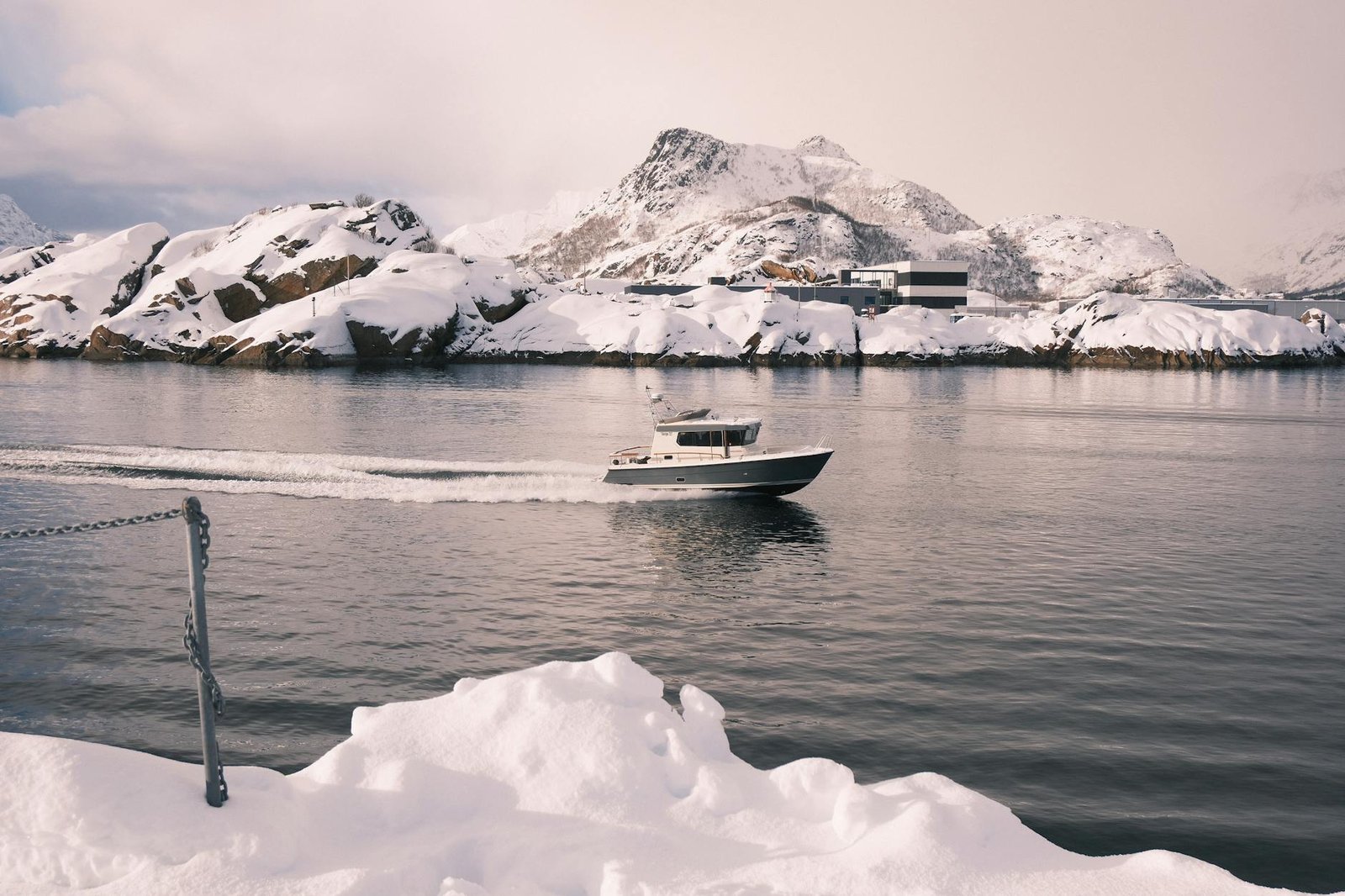
Jutting out into the Vestfjorden against a backdrop of jagged granite peaks, Svolværs is one of Norway’s most photogenic ports — and one that consistently surprises cruise passengers who weren’t expecting much from a small Arctic town. This is the unofficial capital of the Lofoten Islands, a place where fishing heritage, dramatic mountain scenery, and a quietly thriving arts scene collide in the most spectacular way. A few hours here can genuinely feel like a lifetime’s worth of landscape.
Arriving by Ship
Cruise ships dock right in the heart of Svolværs, at the compact Svolværs Cruise Quay, which puts you within easy walking distance of the town centre, harbour cafés, and the main tourist information office. The approach alone is worth setting your alarm for: the ship threads through rocky islands and past the famous twin-peaked Svolværgeita (the Svolværs Goat), a rock formation that looms almost theatrically over the waterfront. There’s no tender process here — you walk straight off the gangway and into the action, which is a genuine relief when time ashore is precious. The port area is flat and easily navigable, making it accessible for passengers of all mobility levels.
Things to Do

The Lofoten Islands were made for adventure, and Svolværs is your launchpad into some of Norway’s most extraordinary scenery. The single most iconic excursion is a cruise into Trollfjord, a narrow, cliff-lined waterway so dramatic it seems almost fictional — sheer rock faces rise hundreds of metres on both sides as you glide through in near silence. A guided silent cruise through this natural wonder takes roughly three hours and is an experience many passengers describe as the highlight of their entire voyage. 🎟 Book: Lofoten Island: Silent Trollfjord Cruise from Svolvær If you prefer a little more adrenaline, a RIB speedboat safari combines Trollfjord with the thrill of spotting white-tailed sea eagles wheeling overhead. 🎟 Book: Lofoten RIB Sea Eagle Safari and Trollfjord Cruise
For something more independent, Svolværs town itself rewards unhurried wandering. The Magic Ice bar on the harbour is a curious tourist attraction built entirely from ice sculptures, but the real draw is simply the harbour area itself — colourful wooden rorbuer (traditional fishermen’s cabins) line the water’s edge, fishing boats bob at their moorings, and the mountains frame everything so perfectly it looks like a screensaver. If you have a full day in port, consider joining a photo-focused road trip out to Reine and Hamnøy, two of the most photographed villages in Norway — the kind of place where every bend in the road produces another frame-worthy image. 🎟 Book: Reine, Hamnøy, Sakrisøy Photo Tour from Svolvær
Local Food
Cod is king in Lofoten, and you’ll encounter it in almost every form imaginable. The region is famous for its stockfish — wind-dried cod hung on wooden racks throughout winter — and while you might not eat the dried version straight, it underpins much of the local cuisine. Look for bacalao on menus, a richly spiced tomato-and-salt-cod stew with Portuguese roots that somehow became a Lofoten staple. Fresh cod served simply pan-fried with butter and boiled potatoes is deeply satisfying and widely available.
Don’t leave without trying tørrfisk snacks at one of the harbour-side shops, or picking up a bowl of fiskesuppe (fish soup) — creamy, warming, and packed with local catch. Several small cafés and restaurants cluster around the main harbour; Børsen Spiseri inside a historic 1828 fisherman’s warehouse is atmospheric and reliably good. Reindeer is also available on some menus if you’re feeling adventurous — served as a burger or in a warming stew, it’s leaner and more complex than beef.
Shopping

Svolværs punches well above its size when it comes to shopping, particularly for crafts and Norwegian design. The town has a surprisingly vibrant gallery scene — the North Norwegian Artist Centre is worth popping into, and several independent galleries sell original paintings and prints inspired by the Lofoten landscape. These make far more meaningful souvenirs than the usual fridge magnets.
For food gifts, stockfish products, dried fish snacks, and locally produced cloudberry jam are all excellent choices that pack easily and travel well. Wool products — chunky sweaters, mittens, and scarves in traditional Nordic patterns — are practical and authentically local. Several boutique shops along the main street stock Norwegian outdoor brands alongside artisan goods, so even if you’re not a dedicated shopper, browsing here is genuinely enjoyable.
Practical Tips
Svolværs sits well inside the Arctic Circle, so weather can be unpredictable regardless of season. Pack layers even in summer — temperatures can drop sharply when the wind picks up off the fjord. Comfortable walking shoes are a must; while the town itself is flat, any excursion into the hills or onto boat trips involves uneven terrain.
Norwegian currency (krone) is technically the local currency, but card payments are accepted virtually everywhere — cash is largely unnecessary. English is spoken widely and enthusiastically. If you’re hoping to see the Northern Lights, you’ll need a late-season sailing (September to March) and a clear night, but when it happens in Svolværs, with the mountains as a backdrop, it’s genuinely breathtaking.
Svolværs rewards passengers who arrive with open eyes and a willingness to move — whether that means stepping onto a RIB boat, following a hiking trail, or simply sitting at a harbour café watching fishing vessels come in with the day’s catch. Few ports deliver this kind of raw, unfiltered natural drama so efficiently.
🎟️ Things to Book in Advance
These highly-rated experiences fill up fast — book before you arrive to avoid missing out.


This page contains affiliate links. If you book through them, we may earn a small commission at no extra cost to you.
📍 Getting to Svolvaer Norway
Use the interactive map below to explore the port area and plan your route from the terminal.
Leave a Reply