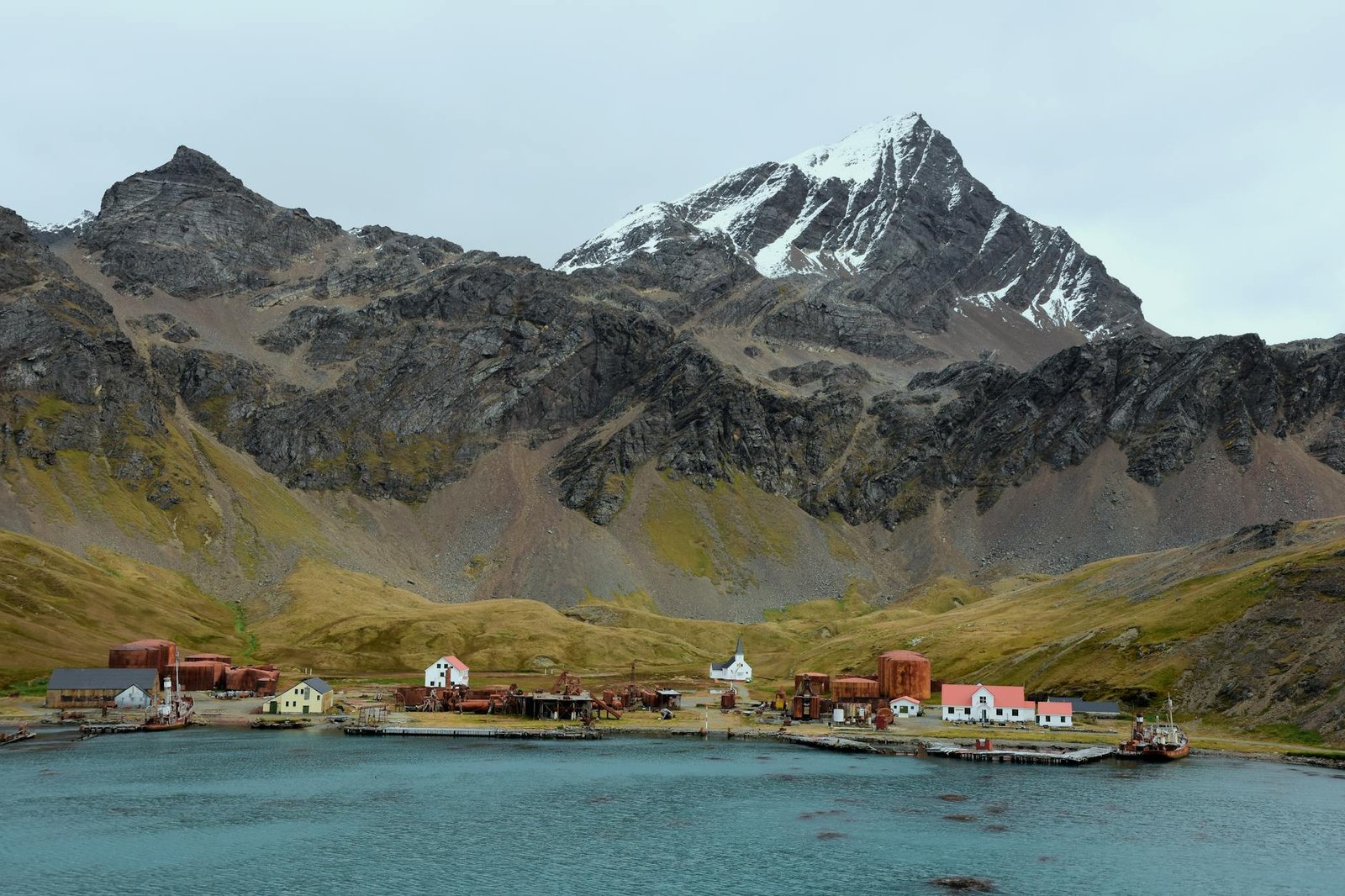
Few places on earth carry the weight of history, wildlife, and raw wilderness that Grytviken does. Tucked into a sheltered bay on the island of South Georgia, this remote sub-Antarctic settlement sits at the edge of the world — and visiting it feels exactly like that. If you’re sailing toward these latitudes and wondering what awaits you ashore, here’s everything that will help you make the most of one of cruising’s most extraordinary landings.
Arriving by Ship
South Georgia is not a port you simply dock at. There are no piers, no terminals, no luggage carousels. Your expedition ship will anchor in Cumberland East Bay, and you’ll be ferried ashore by Zodiac inflatable boats, a wet-footed adventure in itself. Weather and swell conditions dictate everything here, so be mentally prepared for plans to shift at the last minute — that flexibility is part of the experience.
As you approach the shore, the sheer scale of what surrounds you becomes apparent. Jagged peaks dusted with snow rise sharply behind the settlement, glaciers pour down toward the water, and the beach is alive with fur seals and elephant seals that seem entirely unbothered by your arrival. The smell hits you before the scenery does: a rich, organic mix of kelp, sea salt, and wildlife that you won’t find anywhere else. Have your camera ready before you even step out of the Zodiac.
Things to Do

Grytviken rewards curiosity. The old whaling station — a ghostly collection of rusted tanks, blubber cookeries, and corroding hulks of whale-catcher boats — tells the brutal story of the industry that defined this place from 1904 until the 1960s. You can wander through what remains of the station with a sense of awe at how far humans pushed into the world’s most inhospitable corners in pursuit of commerce.
The South Georgia Museum, housed in the former manager’s villa, is genuinely excellent. It covers the island’s natural history, the whaling era, and the remarkable story of Ernest Shackleton, whose legendary trans-Antarctic voyage ended here in 1916. Shackleton’s grave sits in the small whalers’ cemetery nearby, and passengers often bring a tot of whisky to pour in his honour — a tradition as moving as it sounds.
Wildlife encounters are unavoidable and utterly spectacular. King penguins gather in the thousands at nearby Fortuna Bay and Salisbury Plain, but even around Grytviken you’ll be threading your way past lounging elephant seals. For photographers, South Georgia is simply unmatched. If capturing this extraordinary biodiversity in its best seasonal light matters to you, consider a dedicated photography expedition — the South Georgia Spring Photo Tour, which covers all the islands across fifteen days, is designed precisely for that ambition. 🎟 Book: South Georgia Spring Photo Tour: Capture Nature's Wonders Your expedition team will typically organise guided shore walks that put you in close proximity to wildlife safely and responsibly, so listen to their briefings carefully.
Local Food
Don’t come to Grytviken expecting restaurants or cafes in the traditional sense. There is, however, one unexpected gem: the South Georgia Museum operates a small gift shop and tearoom where you can enjoy a hot drink and basic refreshments on shore. Given that you’ve likely been at sea for days crossing the Drake Passage or the Scotia Sea, sitting down with a warm cup of something feels quietly triumphant.
All of your meals will come courtesy of your ship’s galley, and expedition vessels sailing to South Georgia tend to put serious effort into their dining — this is not budget cruising territory. Expect hearty, warming food designed to fuel active days in cold, often wet conditions.
Shopping

The gift shop at the South Georgia Museum is the only retail option ashore, and it’s worth a browse. You’ll find books about the island’s history and wildlife, postcards, and a selection of branded souvenirs. Proceeds support the museum and the South Georgia Heritage Trust, so spending a little here has genuine purpose. Stock is limited and sells out, so don’t delay if you see something you want.
On your ship, the expedition store will likely sell branded clothing, wildlife guides specific to the sub-Antarctic region, and photography accessories. If wildlife photography is a priority during your voyage, investing in the right gear before you leave is smart — and if the idea of combining your passion for photography with a purpose-built expedition appeals, the South Georgia Spring Photo Tour offers expert-led tuition across one of the planet’s most photogenic wildernesses. 🎟 Book: South Georgia Spring Photo Tour: Capture Nature's Wonders
Practical Tips
Layering is non-negotiable. South Georgia weather changes rapidly, and temperatures typically range from just above freezing to about 10°C, with wind chill pushing the felt temperature much lower. Waterproof trousers, sturdy rubber boots (often provided by expedition operators), and a good wind-and-waterproof outer layer are essential. Keep your electronics warm and in waterproof bags.
Biosecurity protocols are strict and absolutely necessary. You will be required to vacuum your clothing and equipment before landing to prevent the introduction of invasive species. This is taken seriously, and rightly so — South Georgia’s extraordinary wildlife recovery has depended on careful conservation management.
Landing time is typically limited to a few hours, so arrive mentally focused and ready to absorb everything quickly. Leave your footprints only in memory; take nothing but photographs and the kind of stories that take years to properly tell.
Grytviken doesn’t just meet expectations — it fundamentally recalibrates what you think a travel experience can be. At the bottom of the world, surrounded by history and wildlife in equal measure, it is genuinely unlike anywhere else your ship will ever take you.
🎟️ Things to Book in Advance
These highly-rated experiences fill up fast — book before you arrive to avoid missing out.

This page contains affiliate links. If you book through them, we may earn a small commission at no extra cost to you.
Leave a Reply