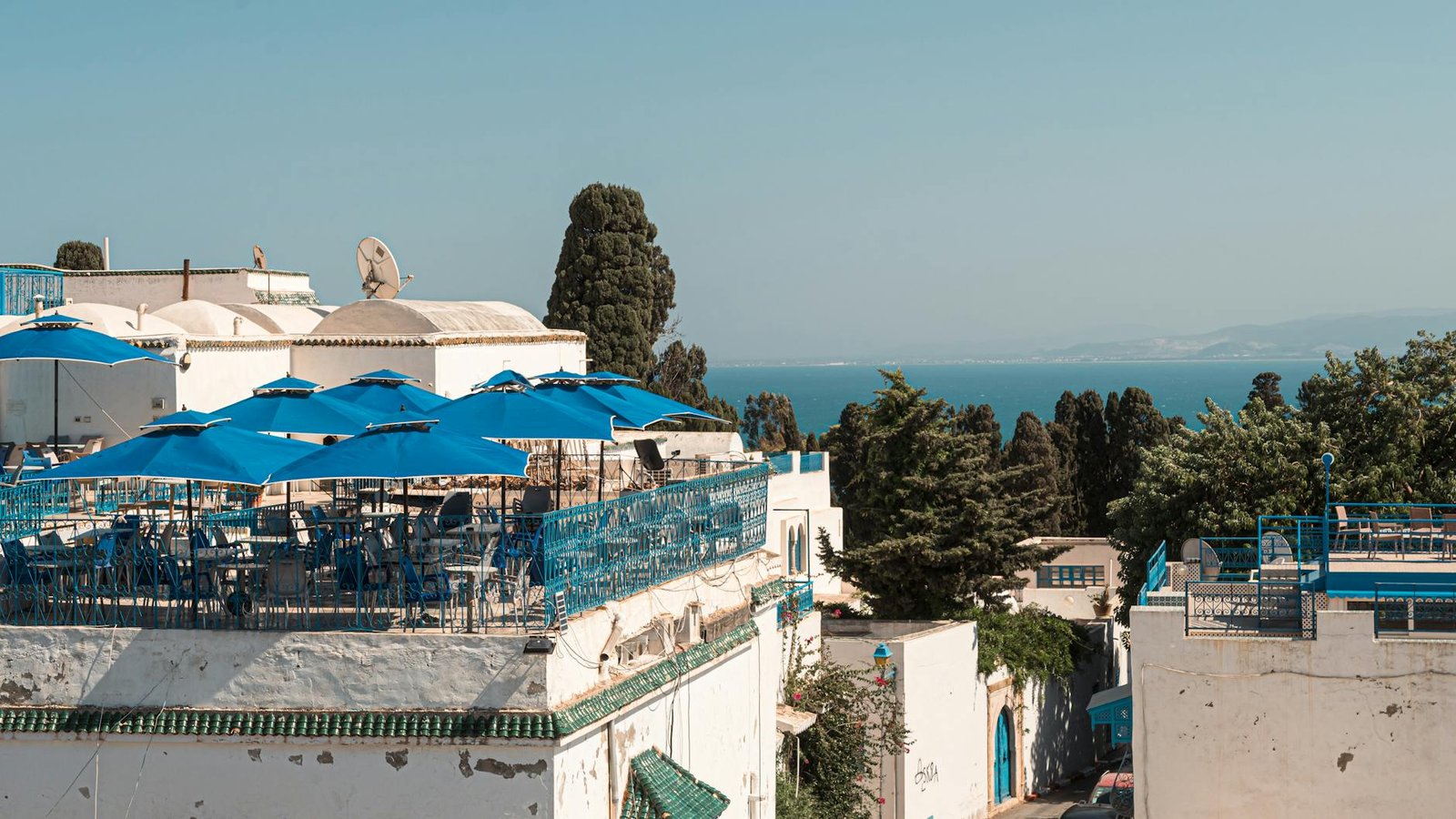
Few port arrivals stir the imagination quite like sailing into Tunis, where the shimmer of the Gulf of Tunis gives way to whitewashed skylines, the distant ruins of Carthage, and the faint scent of jasmine carried on the North African breeze. Tunisia’s capital is a city of extraordinary layers — Roman columns rising from olive groves, medieval medinas humming with life, and a coastal sophistication that surprises almost every visitor. If your cruise brings you here, clear your schedule and prepare for one of the Mediterranean’s most underrated shore days.
Arriving by Ship
Cruise ships dock at the port of La Goulette, a busy commercial and passenger terminal sitting roughly 10 kilometres from the heart of Tunis. The port itself is functional rather than beautiful, but the surroundings are immediately compelling — the causeway stretching across the shallow lagoon, the distant minarets of the medina just visible on the horizon, and the deep blue Gulf glinting behind you as you disembark.
From La Goulette, taxis and organised transfers can whisk you into central Tunis in around 20 to 30 minutes, depending on traffic. The train (TGM line) also runs directly from La Goulette into the city centre and is a wonderfully local way to arrive — cheap, frequent, and surprisingly reliable. Once in Tunis, you’re well-positioned to explore either the capital itself or push further afield to the ruins of Carthage, Sidi Bou Said, or the beaches of Hammamet.
Things to Do

Start in the UNESCO-listed Medina of Tunis, one of the Arab world’s oldest and best-preserved medieval city centres. Lose yourself in the labyrinthine souks that radiate from the Great Mosque of Zitouna, where craftsmen still work gold, leather, and ceramics in workshops that have barely changed in centuries. The Bardo National Museum is an absolute must — it houses one of the world’s finest collections of Roman mosaics, including staggering pieces salvaged from Carthage and other ancient Tunisian sites.
Speaking of Carthage, the ruins lie just a short ride north of the port and reward curious visitors enormously. The Punic ports, the Antonine Baths, and the hilltop views across the gulf are extraordinary even in their fragmented state. Nearby Sidi Bou Said, with its blue-and-white clifftop architecture tumbling down to the sea, is one of those places that genuinely looks as good in real life as it does in photographs. For a structured and deeply knowledgeable experience of the city, consider booking a private walking tour through the medina’s hidden corners and historic districts. 🎟 Book: Tunis Private Walking Tour with a Local A longer, immersive day covering multiple highlights is also worth considering if you want to make the most of your time ashore. 🎟 Book: Discover the wonders of Tunis
Local Food
Tunisian cuisine is bold, fragrant, and built on centuries of cultural exchange between Berber, Arab, Ottoman, and Mediterranean influences. Brik is your essential first taste — a thin, crispy pastry envelope typically filled with egg, tuna, and harissa, fried until golden and best eaten standing at a market stall with juice running down your wrists. Couscous here is nothing like the bland supermarket variety back home; slow-cooked with lamb, vegetables, and chickpeas, it arrives fragrant with spice and topped with a pool of rich broth.
Harissa, Tunisia’s fire-red chilli paste, appears on almost every table and is stirred into soups, spread on bread, and folded into everything from eggs to fish dishes. Seek out lablabi, a cumin-heavy chickpea soup served over torn bread with a raw egg stirred in — deeply warming and wonderfully cheap. For seafood, the restaurants along La Goulette’s seafront serve grilled fish and calamari that taste exactly as good as you’d hope just metres from the water.
Shopping

The medina’s souks are divided by trade — one lane for perfume merchants, another for silversmiths, another piled high with colourful ceramics and hand-woven textiles. Chèche scarves, hand-stamped pottery, and olive wood carvings make excellent, genuinely local souvenirs. Haggling is expected and half the fun; start around 40% of the opening price and enjoy the theatre of it.
The Souk des Chèches and Souk El Berka are highlights for textiles and jewellery respectively, while the Avenue Habib Bourguiba — Tunis’s grand, tree-lined boulevard — offers more modern shopping alongside excellent pastry shops where almond-stuffed makroudh cakes and sticky baklava line the counters.
Practical Tips
The local currency is the Tunisian dinar (TND), and while some vendors accept euros, you’ll get better value exchanging cash at banks or official bureaux. ATMs are widely available in the city centre. Dress modestly when visiting mosques or the medina — covering shoulders and knees shows respect and is generally expected. Most sites are accessible and easily walkable, but the medina’s uneven cobblestones can be challenging, so wear sensible shoes. If you need transport sorted ahead of time, private airport and port transfers are available and take the stress out of navigating an unfamiliar city. 🎟 Book: Private Arrival Transfer: Tunis Airport to Tunis Hotel
Tunis rewards the curious and punishes the hurried. Give this city half a day of genuine attention — wander without a rigid plan, accept tea from a carpet seller, follow the call to prayer down an unmarked alley — and it will give you back far more than you expected from a single shore excursion.
🎟️ Things to Book in Advance
These highly-rated experiences fill up fast — book before you arrive to avoid missing out.


This page contains affiliate links. If you book through them, we may earn a small commission at no extra cost to you.
📍 Getting to Tunis Tunisia
Use the interactive map below to explore the port area and plan your route from the terminal.
Leave a Reply