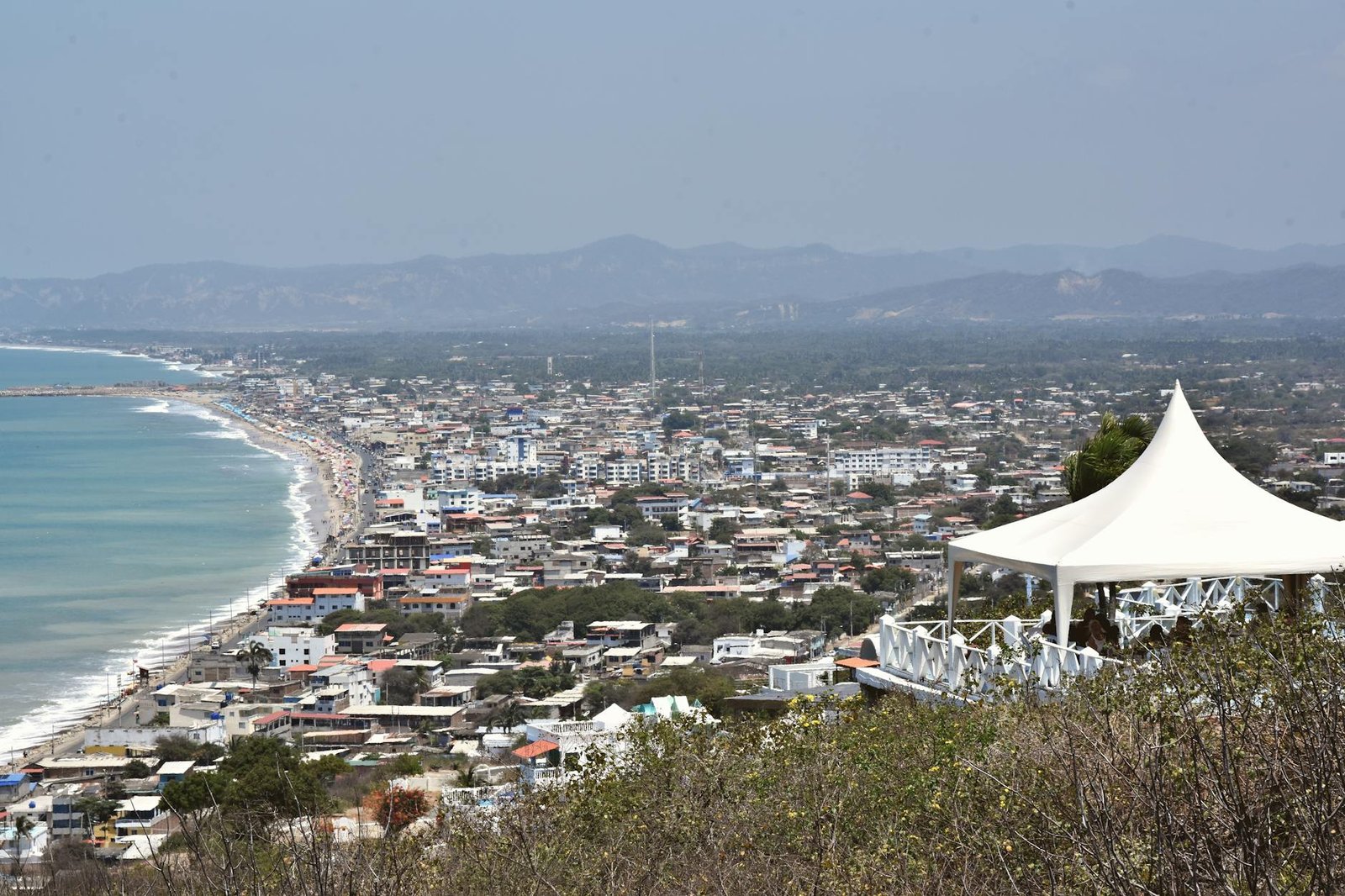
Manta is one of South America’s most underrated cruise ports — a bustling Pacific fishing city where the air smells of salt and tuna, colonial craftsmanship still thrives in nearby hillside villages, and the sunsets over Bahía de Manta are genuinely jaw-dropping. Most visitors don’t realise that the hat they’ve always called a “Panama” was never Panamanian at all — it was born right here, in the small town of Montecristi, just 20 minutes from the dock. Come ready to eat, explore, and wear something woven.
Arriving by Ship
Cruise ships dock at the Puerto de Manta, a working commercial port that’s well-equipped for passenger arrivals. The terminal is clean and organised, with local tour operators, taxi drivers, and information booths waiting just outside the gate. You won’t need a tender here — the pier accommodates large vessels directly, so disembarkation is smooth and straightforward. Taxis are metered and affordable, making it easy to head into the city centre independently. Spanish is the dominant language, and while some vendors near the port speak basic English, having a few phrases ready goes a long way.
Things to Do

The headline excursion from Manta is the trip to Montecristi, a quiet colonial town perched in the hills where master weavers still craft genuine Panama hats — properly called sombreros de paja toquilla — by hand using fine straw fibre. Watching an artisan work is genuinely mesmerising; the finest hats can take months to complete and sell for hundreds of dollars. A dedicated tour that takes you through Manta’s landmarks before heading up to Montecristi is a great way to pack both destinations into a single shore day. 🎟 Book: Half Day City Tour in Manta and Montecristi Landmarks For a more comprehensive version that includes a rainforest detour, you can combine hat workshops with wildlife spotting in the humid forests just inland. 🎟 Book: Rainforest Wildlife, Panama Hat makers, Traditional Cuisine. SHORE TOUR
Back in Manta itself, the Malecón (seafront promenade) is perfect for a morning stroll. You’ll pass fishing boats unloading their catch, local families out for walks, and street vendors selling ceviche from styrofoam cups. The Museo del Banco Central offers a surprisingly rich look at pre-Columbian Manteño culture, including ceramics, gold pieces, and artefacts from the ancient Manteño-Huancavilca people who once dominated this coastline. If the beach calls, Playa Murciélago is the most accessible stretch of Pacific sand near the port.
Local Food
Manta calls itself the Capital del Atún — the tuna capital of the world — and it earns that title with pride. Ceviche de pescado here is extraordinary: ultra-fresh fish cured in citrus juice, loaded with red onion, tomato, and cilantro, then served with popcorn and chifles (thin plantain chips) on the side. Don’t leave without trying viche, a hearty, peanut-based fish soup that’s deeply regional and utterly comforting. You’ll find both dishes at simple cevicharías along the waterfront, where plastic chairs and paper napkins are part of the charm.
For something more immersive, a chocolate and coffee farm tour lets you follow both crops from tree to table, tasting fresh cacao pulp, watching fermentation in action, and finishing with a proper cupping session. 🎟 Book: Chocolate & Coffee farm Cruiseship Tour in Manta Ecuador produces some of the world’s finest Arriba Nacional cacao, and the region around Manta is a fantastic place to experience that story firsthand. If time allows, combining the farm experience with a rainforest walk and a traditional lunch makes for a deeply satisfying full-day adventure. 🎟 Book: The rain forest, surroundings & lunch.
Shopping

Montecristi is the obvious shopping destination, and rightly so. Authentic toquilla straw hats range from everyday quality (USD 20–50) to extraordinarily fine superfino weaves that you’d expect to find in a luxury boutique. Quality is assessed by the tightness of the weave — hold it up to the light and look for uniformity. Buying directly from artisans or reputable co-operatives ensures your money goes to the right hands.
In Manta’s Mercado Artesanal, you’ll find tagua nut carvings (sometimes called vegetable ivory), handwoven textiles, leather goods, and locally produced coffee. The market near the Malecón is also worth a browse for fresh spices, dried seafood, and the kind of colourful chaos that makes for excellent people-watching. Bargaining is accepted but do so respectfully — prices are already reasonable by international standards.
Practical Tips
- Currency: Ecuador uses the US dollar, so there’s no currency exchange headache.
- Weather: Manta sits on the equatorial Pacific and is generally warm and sunny, particularly between June and November when the cool Humboldt Current keeps temperatures pleasant. December to May can bring rain.
- Safety: Stick to tourist areas and use taxis recommended by your ship or port officials. Manta is relatively safe for visitors who exercise standard urban awareness.
- Time: Most shore excursions run 4–6 hours, which is very manageable within a typical port day. If you’re going independently, agree on a return time with your taxi driver.
- Connectivity: SIM cards with data are available cheaply in the city, and most cafés offer Wi-Fi.
Manta rewards curious travellers who push past the port gates and into its living culture. Whether you’re watching a master craftsman weave a hat that will outlast a generation, slurping fresh ceviche by the Pacific, or wandering through a cacao grove with dirt on your shoes, this Ecuadorian port delivers experiences that stay with you long after you sail away.
🎟️ Things to Book in Advance
These highly-rated experiences fill up fast — book before you arrive to avoid missing out.


This page contains affiliate links. If you book through them, we may earn a small commission at no extra cost to you.
📍 Getting to Manta Ecuador
Use the interactive map below to explore the port area and plan your route from the terminal.
Leave a Reply