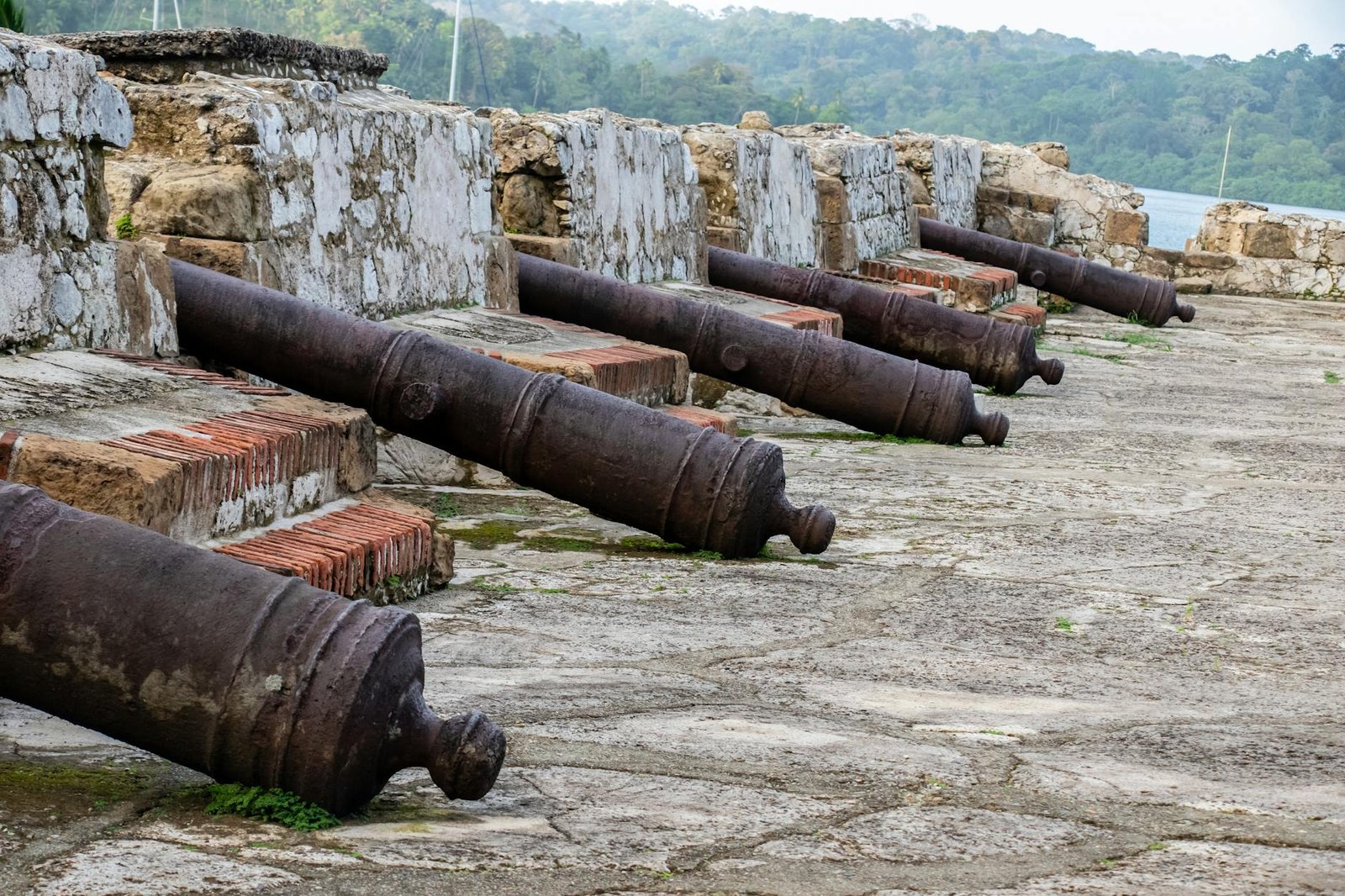
Portobelo, Panama, is one of the most historically charged cruise stops in the entire Caribbean — a crumbling Spanish colonial fortress town that once held more gold than almost anywhere on earth. Tucked into a protected bay on Panama’s Caribbean coast, it’s raw, real, and utterly unlike the polished port towns you’ve likely visited before. If you’re craving depth over duty-free shopping, this is your stop.
Arriving by Ship
Portobelo doesn’t have a purpose-built cruise terminal in the way larger Caribbean ports do. Most ships tender passengers ashore or dock at the nearby port of Colón, from which Portobelo is roughly an hour’s drive east along the Caribbean coast. The approach by water is genuinely stunning — dense jungle tumbles down to the shoreline, and the ruins of 17th-century stone forts emerge from the green like something out of a Gabriel García Márquez novel.
If your ship docks in Colón, you’ll need to arrange transport or book a tour to reach Portobelo itself. This is well worth doing — Colón itself has little to offer day visitors, and the real magic is further along the coast. A private driver or organised excursion is the safest and most convenient option, and there are some excellent guided tours that cover the full story of the region.
Things to Do

History is the main event in Portobelo. The town was declared a UNESCO World Heritage Site alongside Panama City’s Casco Viejo, and for good reason. The fortifications — Castillo San Lorenzo and the various battery walls scattered around the bay — once defended Spain’s most valuable treasure route. Walk along the cannon-lined ramparts and you’ll understand immediately why Francis Drake and Henry Morgan both obsessively targeted this place.
The Church of San Felipe is another unmissable stop, home to the famous Black Christ of Portobelo — a life-sized statue of a dark-skinned Jesus that draws hundreds of thousands of pilgrims every October 21st. Even outside festival season, the church carries an electric reverence that’s hard to explain until you’re standing inside it.
For something more active, the surrounding Caribbean waters are spectacular. Snorkelling among coral reefs, sailing between deserted beaches, and island-hopping are all within easy reach. A full-day catamaran trip that combines sailing, snorkelling, and lunch is a brilliant way to spend the day if history isn’t your primary interest. 🎟 Book: Full-Day Catamaran Sailing Caribbean Beaches with Snorkelling and Lunch Alternatively, a private tour that bundles the ruins, the Black Christ, and Caribbean beach time into one coherent experience covers everything in satisfying depth. 🎟 Book: 4 in 1 Caribbean Portobelo Blue Veins Christ Black and Ruins k
If you want to explore beyond Portobelo itself, consider a longer day out that includes nearby Isla Grande and Mamey Island — a beautiful, unhurried stretch of Caribbean that feels completely removed from the modern world. 🎟 Book: Caribbean Day Tour: Isla Grande, Mamey, Monkey Island & Portobelo
Local Food
Portobelo’s food scene is small but genuinely satisfying. Look for family-run spots around the waterfront serving ceviche made with the morning’s catch — it’s tangy, fresh, and far better than anything you’ll find at the ship’s buffet. Patacones (twice-fried green plantains) served with fresh fish or chicken are a staple, and the arroz con pollo here has a depth that comes from decades of the same recipe being passed down through the same families.
Fresh coconut water, sold from roadside vendors, is both the cheapest and most refreshing drink on a hot Caribbean morning. Don’t skip it. Seafood soups, particularly sancocho de pescado, are hearty and full of flavour — perfect fuel before an afternoon of ruin-exploring.
Shopping

Portobelo has a small but worthwhile artisan market near the main square and along the waterfront path. The craft scene is genuinely local rather than mass-produced: hand-painted ceramic tiles, intricate mola textiles (a tradition inherited from the Guna people), hammered silver jewellery, and carved wooden figures are all commonly found. Prices are fair and the quality is often exceptional — this is a good place to buy something that will actually mean something when you get home, rather than a refrigerator magnet.
Bargaining is accepted but do it respectfully. These are small producers selling their own work, not multinational tourist shops. A reasonable counter-offer is fine; lowballing is not.
Practical Tips
- Currency: The Panamanian balboa is pegged 1:1 to the US dollar, and USD is accepted everywhere.
- Safety: Stay within the tourist areas around the ruins and waterfront. Colón itself has a complicated safety reputation — if transiting through, move directly to your tour transport and don’t linger.
- Weather: The Caribbean coast of Panama is humid and can be rainy year-round. A light rain jacket and insect repellent are non-negotiable packing decisions.
- Time: Portobelo moves slowly. This is a feature, not a bug — build in breathing room rather than rushing between sights.
- Connectivity: Mobile signal is inconsistent outside the main town. Download offline maps before you arrive.
Portobelo rewards curious travellers who show up without a checklist mentality. It’s scruffy around the edges, historically devastating in the best possible way, and surrounded by some of the most beautiful Caribbean water you’ll find anywhere on a cruise itinerary. Give it a full day if you possibly can — it earns every hour.
🎟️ Things to Book in Advance
These highly-rated experiences fill up fast — book before you arrive to avoid missing out.


This page contains affiliate links. If you book through them, we may earn a small commission at no extra cost to you.
Leave a Reply