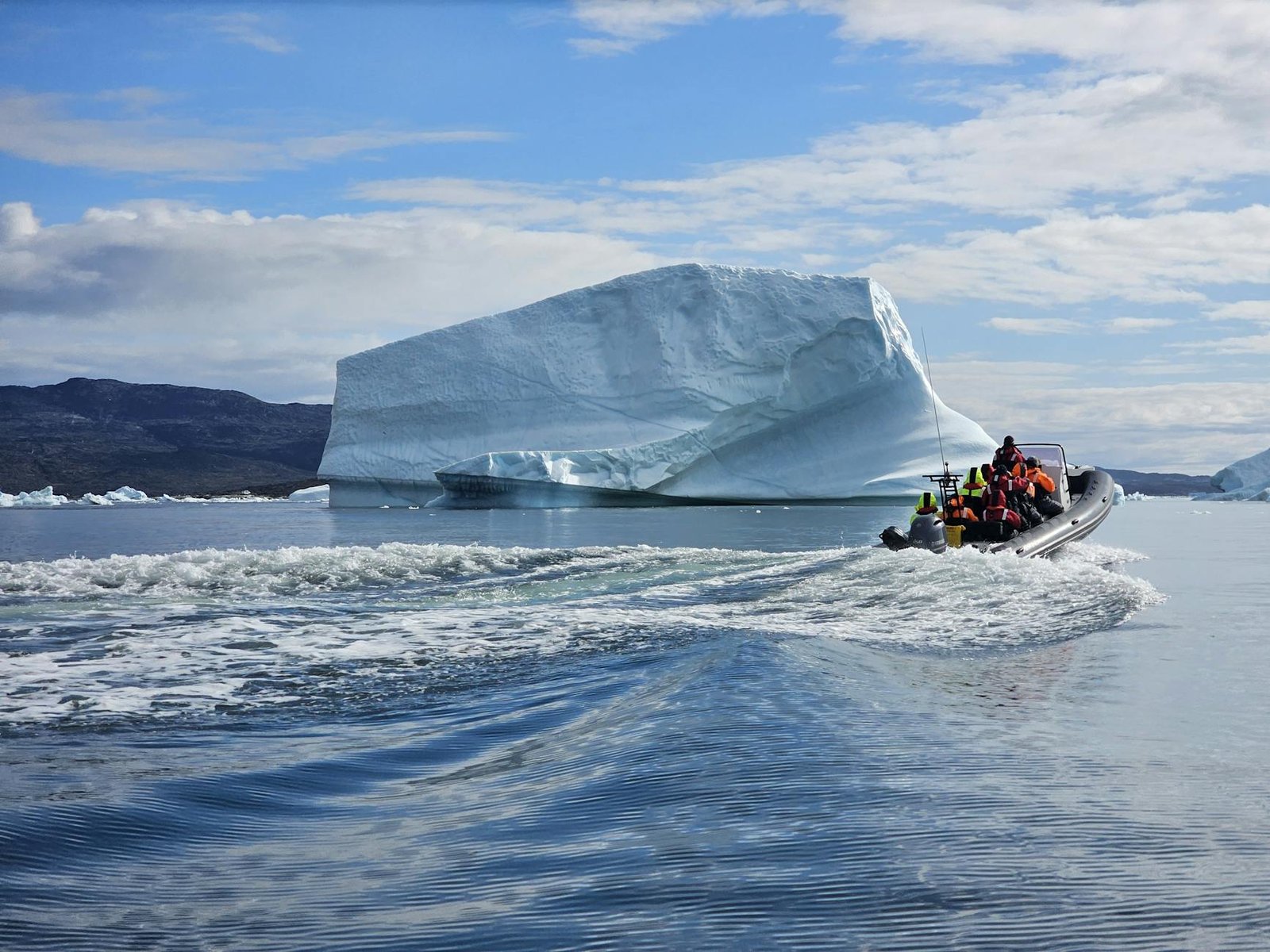
At the southern tip of Greenland, where jagged black peaks plunge dramatically into ink-dark fjords, Nanortalik waits like a secret the Arctic keeps to itself. This tiny settlement of fewer than 1,500 people carries a name that translates from Greenlandic as “place of polar bears,” and everything about it — the raw wilderness, the colourful wooden houses, the silence broken only by wind and guillemots — lives up to that wild promise.
Arriving by Ship
Sailing into Nanortalik is one of those arrival moments you’ll photograph frantically and still never quite capture. The approach through the Prince Christian Sound is extraordinary — a narrow passage flanked by mountains rising over 1,800 metres, streaked with glaciers and waterfall ribbons that catch the Arctic light. Ships typically anchor offshore and tender passengers in, so expect a short but scenic zodiac or tender ride to the small harbour. The dock sits right at the edge of town, meaning you step ashore directly into Nanortalik’s compact centre without any shuttle fuss. Arriving in summer, you’ll have the advantage of long, golden hours of daylight; in late season, the possibility of northern lights dancing over those cathedral peaks is genuinely real.
Things to Do

Nanortalik’s greatest asset is the landscape surrounding it, and even a few hours ashore opens up remarkable experiences. Head straight to the Nanortalik Museum, housed in a cluster of beautifully preserved 18th and 19th-century colonial buildings near the harbour. The open-air site includes a trading post, a blacksmith’s forge, and a church, giving you a tangible sense of what Danish colonial and Inuit life looked like side by side. It’s compact but surprisingly affecting.
For those with an adventurous streak, rock climbing is something of a cult obsession here — the granite towers of the nearby Ulamertorsuaq and Ketil mountains draw serious climbers from across the globe. You won’t summit anything in a half-day port stop, but local guides occasionally offer short trekking excursions into the surrounding terrain. Even a gentle walk uphill above town rewards you with sweeping fjord views that feel almost absurdly cinematic.
Kayaking through the protected waters around the settlement is another option worth pursuing if your ship offers it as an excursion. The combination of glassy water, berg fragments, and mountainous horizons makes it genuinely unforgettable. If you’re lucky, a humpback or minke whale may surface nearby.
Local Food
Greenlandic cuisine is honest, elemental food — built around what the land and sea provide — and Nanortalik is no exception. Suaasat, a traditional Greenlandic soup made from seal, reindeer, or whale meat with rice, onion, and bay leaves, is the dish to seek out. It’s warming, deeply savoury, and entirely unlike anything you’ll eat anywhere else on your cruise itinerary. The small café near the museum sometimes serves it, and asking locals where to find it that day is half the cultural experience.
Fresh Greenlandic prawns, caught in the icy waters of the surrounding fjords, are sweet and clean-tasting in a way that spoils you for prawns anywhere else. If you see them sold locally — sometimes simply boiled in a bag — buy them immediately. Dried fish and reindeer meat are also available and make for fascinating, protein-rich snacks while you explore.
Shopping

Don’t expect luxury boutiques or souvenir chains. Nanortalik’s shopping is refreshingly authentic and small-scale. The museum gift shop is your best starting point, stocking local handicrafts, Greenlandic prints, and books on the region’s history and wildlife. Look for tupilak carvings — small figures rooted in Greenlandic mythology, traditionally carved from bone, antler, or wood. Each one is handmade and genuinely unique, making them among the most meaningful souvenirs you can bring home from the Arctic.
The local supermarket, run by the Pilersuisoq chain (Greenland’s main retail network), stocks everyday goods alongside local produce. It’s worth a browse simply to understand the texture of daily life in one of the world’s most remote communities.
Practical Tips
Nanortalik’s weather is famously changeable, so layer up even in summer and keep a waterproof jacket accessible at all times. The town is entirely walkable — you won’t need transport to see everything. Most residents speak Greenlandic and Danish, with English understood by younger locals and museum staff. The currency is the Danish krone, though card payments are accepted in most places. Tipping isn’t a strong cultural expectation here. Tender operations can be cancelled in rough weather, so build no rigid expectations around your visit — flexibility and gratitude for whatever the Arctic decides to offer is genuinely the right mindset.
Nanortalik doesn’t perform for tourists. It simply exists — ancient, elemental, and breathtakingly beautiful — and that, more than any planned attraction, is exactly why it stays with you long after your ship has sailed south.
📍 Getting to Nanortalik Greenland
Use the interactive map below to explore the port area and plan your route from the terminal.
Leave a Reply