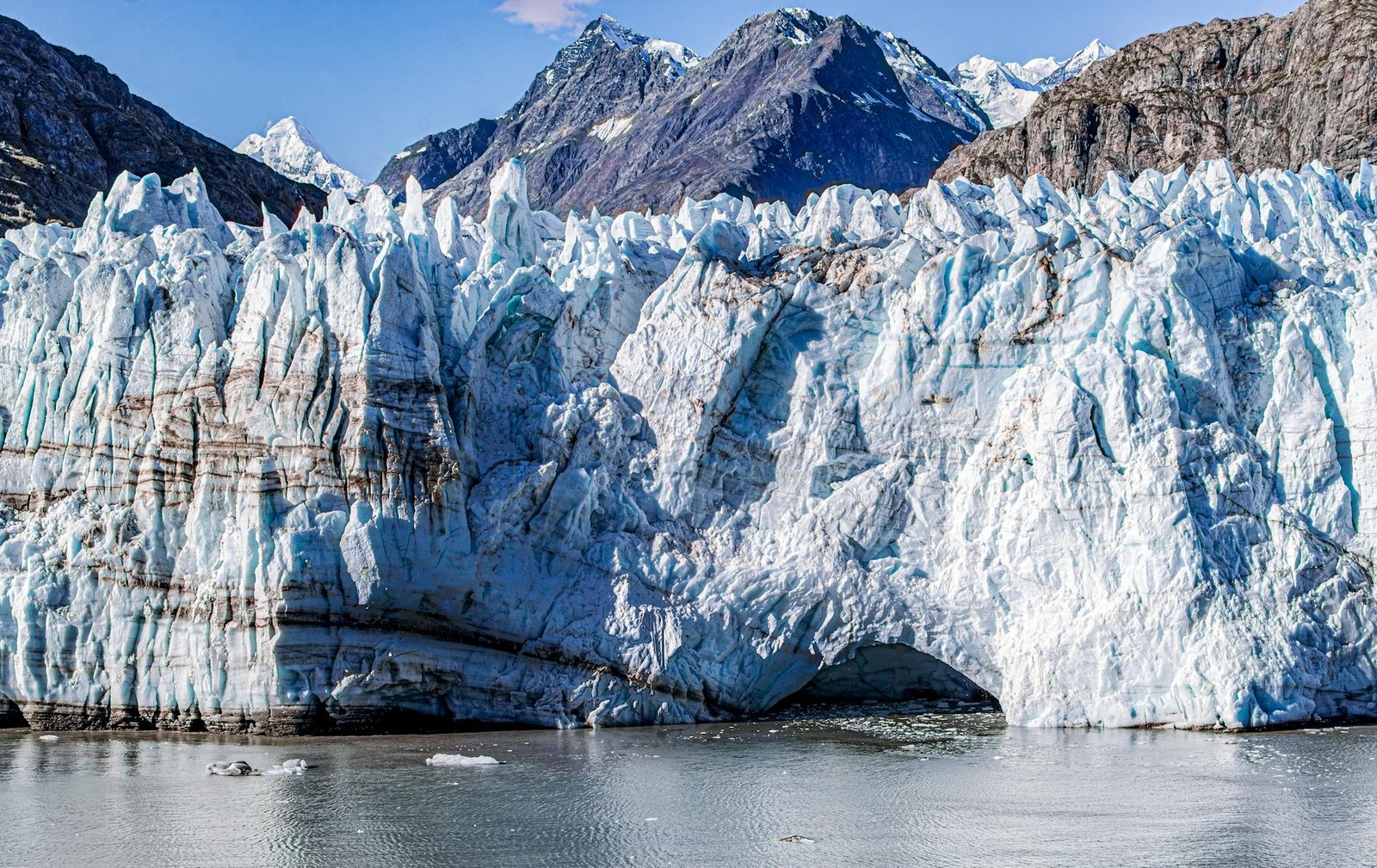
Hubbard Glacier is one of nature’s most theatrical performances — a nine-mile-wide wall of ancient ice that thunders into Disenchantment Bay in a spectacle unlike anything else on earth. Cruise ships don’t dock here; they simply stop, engines idling, while passengers press against railings in stunned silence. This is Alaska at its most raw and its most humbling.
Arriving by Ship
Your ship will approach Hubbard Glacier slowly, navigating through increasingly icy waters as the temperature noticeably drops and the air takes on a crisp, electric quality. Most itineraries position the vessel as close as safety allows — sometimes within half a mile of the glacier’s face — and you may remain anchored for an hour or two. Because there’s no port infrastructure here, there’s no tendering, no excursion buses, and no tourist infrastructure to speak of. Everything you experience happens from the deck or from the shore excursions offered through your cruise line. Binoculars are essential, and layering your clothing is non-negotiable. The glacier stretches roughly 76 miles back into the St. Elias Mountains, making it the largest tidewater glacier in North America that’s still actively advancing — a genuinely rare fact worth savouring.
Things to Do

Watching the glacier calve — massive blocks of ice cracking and crashing into the sea — is the headline event, and it can happen at any moment. Keep your camera ready and your patience intact, because the wait is always worth it. The sound arrives a few seconds after the visual, a deep cannon-crack that rolls across the water. Beyond the calving itself, look for harbour seals lounging on ice floes, bald eagles circling overhead, and the occasional black bear visible on the distant shoreline.
For a deeper Alaskan wilderness experience before or after your cruise, consider a dedicated land adventure. The Wilderness, Wildlife, Glacier Experience from Anchorage offers an excellent six-hour immersion into the surrounding landscape. 🎟 Book: Wilderness, Wildlife, Glacier Experience from Anchorage If you’re sailing through Juneau before or after visiting Hubbard, a wildlife-focused whale watching tour is an ideal complement to your glacier encounter. 🎟 Book: Juneau Wildlife Whale Watching Humpbacks, orcas, and Steller sea lions are regularly spotted in these waters, turning a single trip to Alaska into a genuine wildlife safari.
Local Food
There’s no café at the glacier’s edge, obviously, but the culinary story of this region is told in the ports that bookend your visit. Juneau and Seward are your best opportunities to eat like a genuine Alaskan. Look for wild-caught Copper River salmon, either grilled simply or smoked and served on sourdough. King crab legs, available in most waterfront restaurants, are the indulgent treat this region is famous for — they’re sweet, buttery, and almost absurdly large. Reindeer sausage is another local staple worth trying, often sold from street carts or featured in hearty breakfast dishes. If you find yourself in a small diner rather than a tourist-facing restaurant, order whatever the daily chowder is. It will be excellent.
Shopping

Again, shopping happens in the ports surrounding the glacier rather than at the face of the ice itself. Juneau offers the widest selection, with dozens of shops selling everything from genuine Alaska Native art to mass-produced keychains. Focus your spending on the former — carved soapstone, hand-stitched beadwork, and totem pole miniatures crafted by local Indigenous artists carry real cultural weight and make meaningful souvenirs. Look for shops displaying the Silver Hand logo, a certification that guarantees the work was made by an Alaska Native artist. Wild-caught smoked salmon packaged for travel is also a brilliant gift to bring home, and most shops will vacuum-seal it for your suitcase.
Practical Tips
Dress in warm, windproof layers even in summer — standing on an open deck near a glacier creates a wind-chill effect that surprises even seasoned travellers. Gloves and a hat are not overkill in July. Bring a dry bag or waterproof case for your phone and camera, as the damp, misty air can wreak havoc on electronics. If you’re prone to seasickness, take your medication before the ship enters the choppier waters near the glacier. Timing matters too: morning light tends to illuminate the glacier’s blue hues most dramatically, so set an early alarm. Most importantly, resist the urge to stay below deck for “just another hour” — calving events are unpredictable, and the passengers who miss them never quite get over it.
Hubbard Glacier isn’t a destination you explore so much as one you simply witness. Standing before a wall of ice older than human civilisation, listening to the deep groan and crack of a living glacier, you realise that some places on earth don’t need enhancement or explanation — they just need your full, undivided attention.
🎟️ Things to Book in Advance
These highly-rated experiences fill up fast — book before you arrive to avoid missing out.


This page contains affiliate links. If you book through them, we may earn a small commission at no extra cost to you.
📍 Getting to Hubbard Glacier United States
Use the interactive map below to explore the port area and plan your route from the terminal.
Leave a Reply