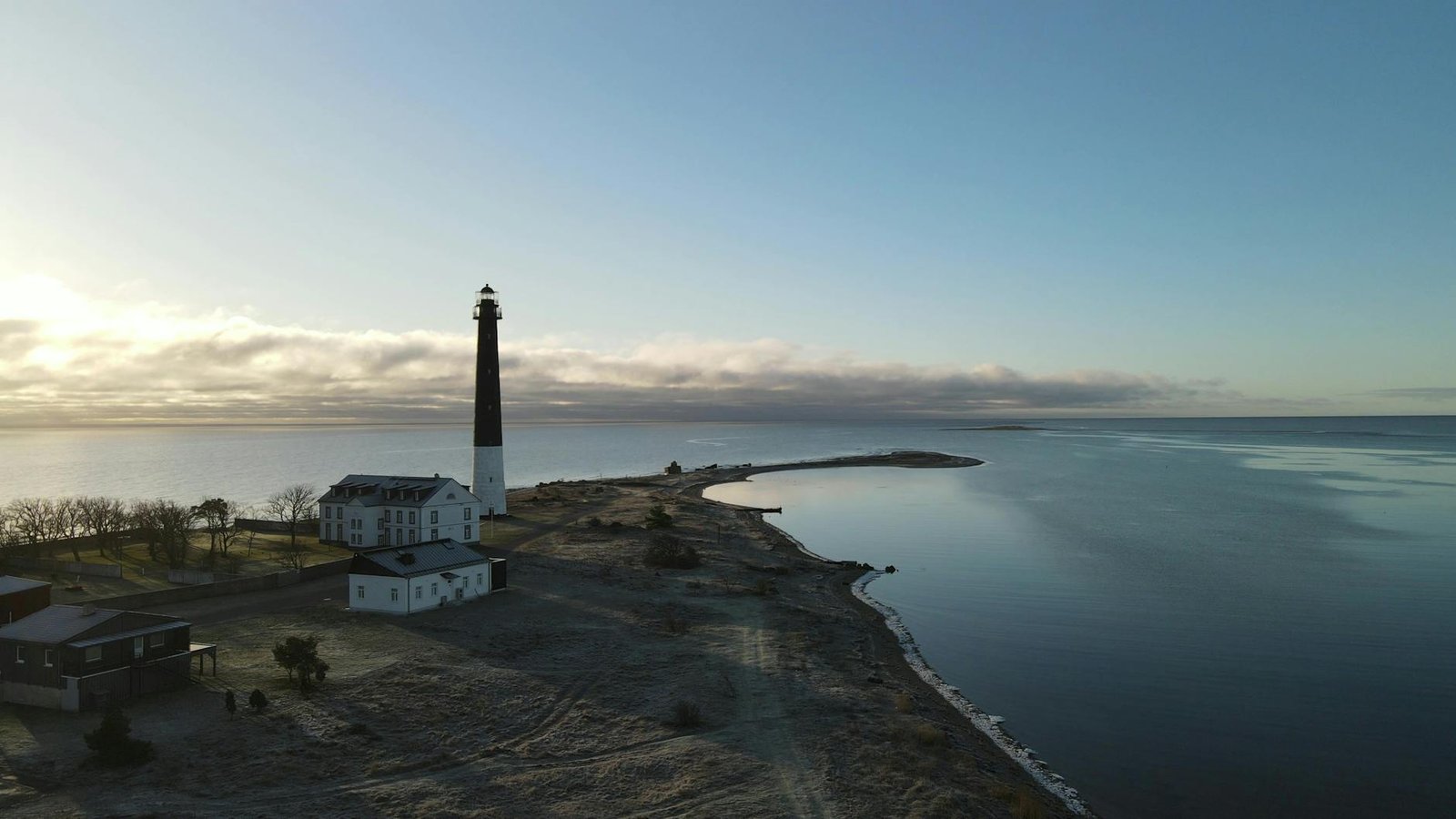
Estonia’s largest island greets you with something rare in modern Europe — genuine quietness. Saaremaa rises slowly from the Baltic Sea, a place of windswept meadows, medieval stone towers, and a pace of life that feels deliberately unhurried.
Arriving by Ship
Ships arriving at Saaremaa typically dock or tender at the port of Kuressaare, the island’s charming capital on the southern coast. The approach itself is memorable — low, forested shorelines edging into view, the water shifting from deep Baltic grey to a calmer green as you enter the bay. There’s no dramatic skyline to announce your arrival, just the pointed spire of St. Nicholas’ Church and the square silhouette of Kuressaare Castle emerging through the trees.
Because Saaremaa is a relatively intimate port, the atmosphere dockside is refreshingly relaxed. You won’t find yourself jostling through crowds or navigating enormous terminal buildings. The town centre is within easy walking distance of the harbour, which immediately sets a wonderfully unhurried tone for your day ashore.
Things to Do

Kuressaare Castle is your first and most essential stop. One of the best-preserved medieval castles in the Baltic States, this 14th-century fortress sits on the waterfront surrounded by a moat and parkland. Inside, the Saaremaa Museum traces the island’s history from prehistoric times through Soviet occupation — give yourself at least two hours here.
Beyond the castle, the island rewards those who venture further. Kaali Meteor Crater, formed roughly 4,000 years ago, is one of the most accessible meteor impact sites in the world and sits just 18 kilometres from Kuressaare. The circular lake at its centre has an almost eerie stillness about it. The island is also famous for its windmills — the open-air museum at Angla displays five traditional wooden windmills against a typically dramatic Baltic sky.
For natural beauty, the Vilsandi National Park on the island’s western tip protects fragile coastal habitats and offers birdwatching that rivals anywhere in northern Europe. If your schedule is tight, even a short walk along the limestone shoreline near Kuressaare gives you a sense of how ancient and elemental this landscape feels.
Local Food
Saaremaa has a food culture built around simple, honest ingredients, and eating here is one of the genuine pleasures of the visit. The island is famous throughout Estonia for its lamb — sheep graze freely on the coastal meadows, and the meat has a distinct, slightly wild flavour. Look for lamb dishes at almost any local restaurant.
Saaremaa bread is another island institution: dense, dark, and made from local rye. Pair it with local cheese or smoked fish and you have a lunch that tastes entirely of the place. The island also produces its own beer — Saaremaa Õlu — which has been brewed here for decades and is proudly found on every menu. If you spot any locally made juniper products, from beer to seasoning, try them; juniper grows across the island and flavours the food in subtle, distinctive ways.
Shopping

Saaremaa’s shopping scene is modest but genuinely local, which is exactly what makes it worth exploring. The town centre around Kuressaare’s main square hosts small boutiques and craft shops selling handmade linen, woollen goods, and ceramics inspired by traditional Estonian patterns. You’ll also find shops dedicated to locally produced foods — jars of wild berry preserves, honey from island apiaries, and packaged rye bread make ideal edible souvenirs.
The Saturday market in Kuressaare is worth timing your visit around if possible, bringing together local producers and artisans selling everything from fresh vegetables to handwoven textiles. It’s the most authentic shopping experience on the island and a wonderful window into everyday Estonian life.
Practical Tips
Saaremaa is a small island, and while Kuressaare is walkable, you’ll want transport to reach the crater, windmills, or national park. Pre-booking a guided tour or rental car for the day is strongly recommended. If you’re planning to stay connected throughout your explorations, having a local data eSIM sorted in advance is a smart move. 🎟 Book: Saaremaa Data eSIM 0.5GB daily to 50GB 30 Days
The island uses the euro, and card payments are widely accepted, though carrying a small amount of cash is useful at markets and smaller cafés. English is spoken in most tourist-facing businesses, but a few words of Estonian will earn you a warm welcome. The roads are quiet and well-maintained, making cycling a genuinely enjoyable way to explore the countryside if your ship allows enough time ashore.
Cruises That Visit Saaremaa, Estonia
Saaremaa sits on Baltic Sea itineraries that have grown steadily in popularity as travellers seek out less-visited alternatives to Tallinn and Helsinki. Windstar Cruises has been among the most consistent operators including Kuressaare in their Baltic programmes, with their smaller ships particularly suited to the port’s intimate scale. Ponant and Hurtigruten Expeditions also include Saaremaa on select Baltic voyages, appealing to travellers who prefer deeper cultural immersion over large-ship ports of call.
These sailings typically depart from Stockholm, Copenhagen, or Hamburg, with some itineraries originating from Amsterdam or Kiel. Voyage lengths generally run between 10 and 14 days, combining Saaremaa with other Baltic highlights such as Visby, Riga, and St. Petersburg (where itineraries permit).
The best time to visit Saaremaa by sea is between late May and early September, when the days are long, the wildflowers are in bloom, and temperatures are genuinely pleasant. July and August see the most favourable weather, though June offers a magical quality of light during the near-endless northern evenings.
🚢 Cruises That Stop at Saaremaa Estonia
Ready to book a cruise to Saaremaa Estonia?
Compare itineraries, prices, and cabin types from all the major cruise lines — with a best price guarantee and no booking fees.
🔍 Search Cruises to Saaremaa Estonia →
Affiliate link — we may earn a commission if you book, at no extra cost to you.
Saaremaa doesn’t announce itself loudly, and that’s precisely its appeal. If you’re fortunate enough to find this island on your cruise itinerary, step ashore and let it unfold slowly — the juniper-scented air, the ancient stone, and the unhurried Baltic light will stay with you long after your ship has sailed.
🎟️ Things to Book in Advance
These highly-rated experiences fill up fast — book before you arrive to avoid missing out.

This page contains affiliate links. If you book through them, we may earn a small commission at no extra cost to you.
📍 Getting to Saaremaa Estonia
Use the interactive map below to explore the port area and plan your route from the terminal.
Leave a Reply