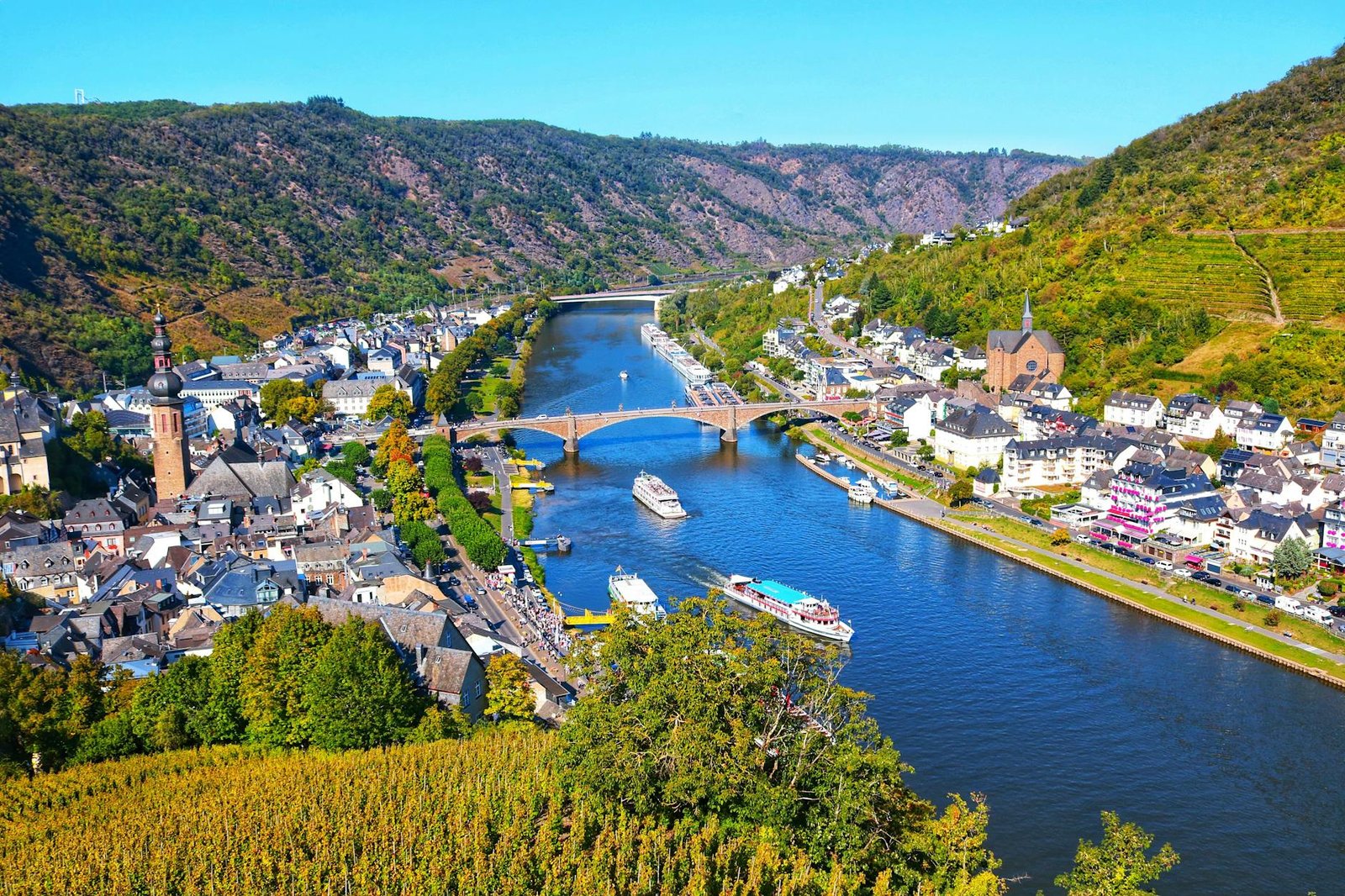
Few river ports in Germany stop you mid-breath quite like Treis-Karden. Twin medieval villages face each other across the Moselle’s green curve, framed by vine-terraced slopes and the ruins of a hilltop castle. This is the Rhineland at its most cinematic, and you’re sailing straight into it.
—
Arriving by Ship
River cruise ships dock directly along the Moselle’s bank at Treis-Karden, so there’s no tender process — you simply step ashore onto a quiet riverside path. The combined settlement is actually two historic villages, Treis on the south bank and Karden on the north, connected by a road bridge a short walk from the moorings.
Karden is the more compelling side to explore first, home to the magnificent collegiate church of St. Castor. The town centre is compact enough to reach on foot within minutes, making this one of the most effortlessly walkable stops on the Moselle.
—
Things to Do

Treis-Karden punches well above its size. Between Romanesque architecture, Moselle wine culture, riverside cycling, and a looming castle ruin overhead, a single shore day here moves fast.
History & Architecture
- St. Castor Collegiate Church, Karden — One of the finest Romanesque churches on the Moselle, dating to the 12th century; free entry, open daily, and the carved choir stalls alone are worth the visit.
- Winneburg Castle Ruins — A steep but rewarding 30-minute hike above Treis rewards you with panoramic views of the Moselle valley and a dramatically crumbling medieval fortress; free access year-round.
- Old Karden Village Lanes — Wander the half-timbered streetscape around the church, where medieval canons’ houses still stand largely intact; grab a free walking-map from the tourist office near the church.
Wine & Outdoors
- Moselle Riverside Cycling Path — The well-signed Moselradweg runs directly through the village; hire a bike locally for around €15–20 per day and pedal through neighbouring vineyards toward Cochem, just 12 km upriver.
- Local Winery Tastings — Several small Weingüter (wine estates) in the surrounding hills offer informal tastings of Riesling and Elbling; look for handwritten signs along the Karden lanes or ask at your ship’s excursion desk.
- Moselle Valley River Cruise from Frankfurt — If you’re pre- or post-cruise and want a broader regional context, a guided Rhine and Moselle valley experience can be booked through Viator. 🎟 Book: Rhine Valley Trip from Frankfurt including Rhine River Cruise
Nearby Day Trips
- Cochem — Just 12 km away, this postcard-famous town centres on the spectacular Reichsburg castle (€7 adults); easily reached by bike, taxi, or local bus.
- Koblenz Scavenger Hunt — About 35 km downriver, Koblenz offers a self-guided digital scavenger hunt that’s great fun for curious travellers exploring at their own pace. 🎟 Book: e-Scavenger hunt Koblenz: Explore the city at your own pace
- Private Romantic Rhine Day Trip — For a fully guided, immersive valley experience with wine tasting included, a private tour covers both the Rhine and Moselle landscapes in depth. 🎟 Book: Private day trip to the Romantic Rhine Valley with river cruise and wine tasting
—
What to Eat
Rhineland-Palatinate cooking is hearty, seasonal, and deeply tied to the river and vine. In Treis-Karden, you’ll find small gasthouses (Gaststätten) serving traditional Moselle cuisine — portions are generous and prices remain refreshingly honest compared to larger tourist towns.
- Sauerbraten with Klöße — Slow-braised pickled beef with potato dumplings; a regional staple found at most local Gaststätten for around €14–18.
- Moselle Riesling by the glass — Crisp, mineral, and bone dry; expect to pay €4–6 per glass at riverside wine taverns — always choose local estate-bottled wine over the house carafe.
- Flammkuchen — Thin-crust Alsatian-style flatbread with crème fraîche, onion, and speck; a popular lighter lunch option for around €9–12.
- Forelle Müllerin (Pan-fried Trout) — Fresh Moselle trout cooked in butter; look for it as a daily special at waterfront restaurants, typically €15–20.
- Käsekuchen — German cheesecake, denser and less sweet than American versions; grab a slice at any bakery for €3–4 as an afternoon treat.
—
Shopping

Treis-Karden is a village, not a shopping destination — and that’s precisely its charm. You won’t find souvenir chains here, but you will find genuine local wine estates selling bottles directly, which makes for the best possible take-home gift. Look for Moselle Riesling Spätlese and Auslese in the €8–15 range, and buy direct from the producer for the best price and story.
Avoid impulse-buying generic “Rhine region” gift items, which are often produced far away. Instead, check whether any local artisan markets are running near the church square — small weekend markets occasionally feature handmade ceramics and regional food products worth seeking out.
—
Practical Tips
- Currency — Germany uses the euro (€); carry some cash as small village establishments may not accept cards.
- Tipping — Round up the bill or add 5–10%; leaving coins on the table is perfectly acceptable.
- Best time ashore — Go early; the village is tiny and you’ll want full daylight for the castle hike.
- How long you need — Three to four hours covers the church, the castle ruins, and a wine tasting comfortably.
- Transport — The village is walkable, but taxis can be arranged at the dock for trips to Cochem or Koblenz.
- Dress code — Wear sturdy shoes; the path to Winneburg Castle is uneven and sometimes muddy.
- Weather — The Moselle valley runs warm and sheltered; summer days can be surprisingly hot between the vine-covered hillsides.
—
Step off the gangway, let the scent of riverbank willows and Riesling vines hit you, and know that Treis-Karden is about to quietly become one of the most memorable stops of your entire cruise.
🎟️ Things to Book in Advance
These highly-rated experiences fill up fast — book before you arrive to avoid missing out.


This page contains affiliate links. If you book through them, we may earn a small commission at no extra cost to you.
📍 Getting to Treis-Karden, Germany Rhineland-Palatinate
Use the interactive map below to explore the port area and plan your route from the terminal.
Leave a Reply