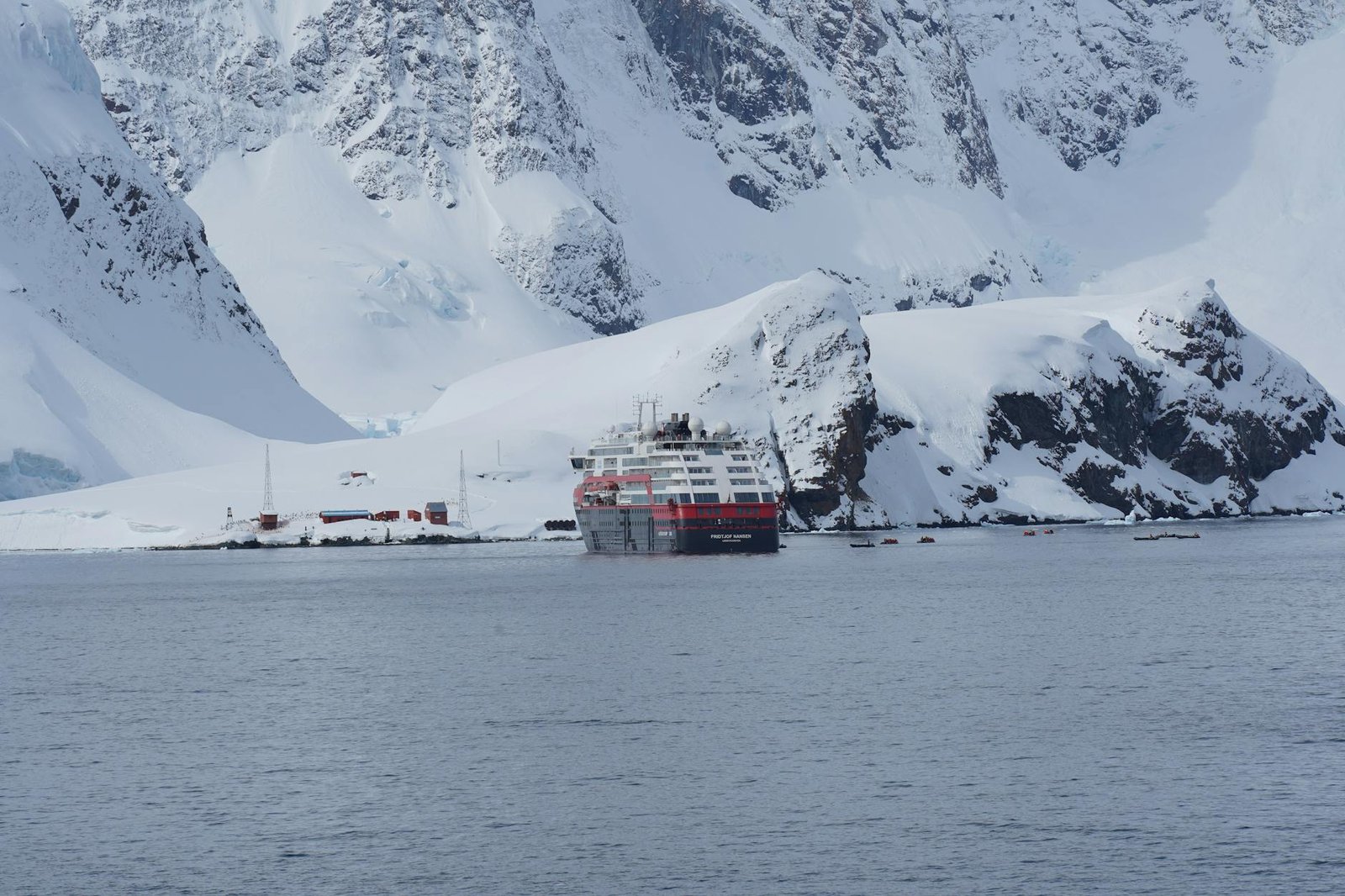
The Antarctic Peninsula is the most remote, raw, and genuinely humbling cruise destination on Earth. No ports, no towns, no tourist traps — just continent-scale ice, sky-darkening seabird colonies, and a silence that physically stops you. If you’ve ever wanted to feel truly small, this is the place.
Arriving by Ship
There are no docks here. Every landing on the Antarctic Peninsula happens by Zodiac inflatable boat, ferrying passengers from ship to shore in small groups across glassy bays or between bobbing ice chunks. Your expedition team controls the schedule — landings depend entirely on weather, wildlife, and ice conditions, which can change within the hour.
Most ships position themselves off sites like Paradise Harbour, Neko Harbour, Cuverville Island, or the famous Lemaire Channel. Expect multiple landings per day during good weather, each one a carefully managed wilderness experience rather than a conventional port stop.
Things to Do

Forget sightseeing in the traditional sense — here, the experience is the landscape. Every Zodiac ride, every crunchy step on snow, every penguin encounter counts as the main event.
- Walk among penguin colonies at Cuverville Island, home to one of the peninsula’s largest Gentoo penguin rookeries — arrive in November to see chicks hatching.
- Kayak through iceberg channels offered by many expedition ships as an optional add-on, typically USD 150–200 for the voyage; the silence between paddle strokes is surreal.
- Camping on the ice is offered by select operators — sleep in a bivouac bag on the snowfield for a night you’ll never forget, usually around USD 200–300 extra.
- Zodiac cruising among icebergs lets you drift past cathedral-sized blue ice formations; your expedition team will position the boat for jaw-dropping photo opportunities.
- Visit Port Lockroy (British Antarctic Heritage Trust), a restored WWII-era British base on Goudier Island that now functions as a museum and the world’s most southerly post office — yes, you can mail a postcard.
- Spot humpback and minke whales from the ship’s bow as you transit the Gerlache Strait — morning crossings in January tend to offer the most sightings.
- Climb a snowfield at Neko Harbour with crampons for a panoramic view over the bay — guides lead groups up for 45 minutes to a ridgeline that’ll knock the breath from your lungs.
- Watch leopard seals hauled out on ice floes from your Zodiac — your guide will keep a respectful distance, but these animals often approach out of curiosity.
- Photograph the Lemaire Channel — nicknamed “Kodak Gap” by early expeditioners — a narrow, mountain-flanked waterway that appears on virtually every Antarctica postcard ever printed.
- Attend onboard lectures from glaciologists, ornithologists, and marine biologists who brief you nightly on what you’ll see the next day; these talks genuinely transform what you observe ashore.
If you’re visiting Ushuaia as your departure point, the [fusion_builder_container hundred_percent=”yes” overflow=”visible”][fusion_builder_row][fusion_builder_column type=”1_1″ background_position=”left top” background_color=”” border_size=”” border_color=”” border_style=”solid” spacing=”yes” background_image=”” background_repeat=”no-repeat” padding=”” margin_top=”0px” margin_bottom=”0px” class=”” id=”” animation_type=”” animation_speed=”0.3″ animation_direction=”left” hide_on_mobile=”no” center_content=”no” min_height=”none”][Tierra del Fuego National Park with optional End of the World Train](VIATOR:2) from USD 80 makes a perfect pre-cruise warm-up to the wilderness mindset. If you’re routing through Christchurch or New Zealand, consider the [Akaroa Shore Excursion including the International Antarctic Centre](VIATOR:4) from USD 120.66 — excellent for context before you head south.
What to Eat
There are no restaurants in Antarctica — your ship is your kitchen, your dining room, and your bar. Expedition vessels range from comfortable to seriously luxurious in the galley department, but a few food moments define the experience.
- Ship-prepared Antarctic dinners — most expedition ships serve restaurant-quality meals; expect hearty proteins like lamb, beef, or fresh fish after cold, active days on the ice.
- Hot soup on deck — many ships bring thermoses of soup to Zodiac loading points for returning passengers; after two hours in sub-zero wind, this is the greatest food experience of your life.
- Whisky on the rocks — literally, served with a chip of 10,000-year-old glacial ice chipped from a berg by the ship’s crew; typically included or around USD 10–15 per drink at the bar.
- Expedition birthday cake — ships monitor passenger birthdays and celebrate them during voyages; peculiarly common and strangely emotional.
- Pre-voyage dinner in Ushuaia — the embarkation city has excellent Patagonian lamb restaurants; try Chez Manu or La Cantina del Sur for USD 20–35 per person.
Shopping

Port Lockroy is the only place in Antarctica where you can actually buy something. The small gift shop stocks official British Antarctic Survey merchandise — patches, mugs, books, and branded clothing — and every purchase supports heritage conservation work on the peninsula.
Resist buying cheap “Antarctic souvenirs” from street markets in Ushuaia; most are mass-produced and have nothing to do with the continent. The postcard you mail from Port Lockroy, stamped with the world’s most remote postmark, is the only souvenir that actually matters.
Practical Tips
- Currency: No transactions happen in Antarctica itself; bring USD or Argentine pesos for Ushuaia spending pre- or post-voyage.
- Tipping: Budget USD 15–20 per day for the ship’s expedition team; it’s standard practice and genuinely appreciated.
- Timing: The season runs November to March — December and January offer 20+ hours of daylight and peak wildlife activity.
- Layering is everything: Bring thermal base layers, a mid-layer fleece, and a waterproof outer shell; gloves in multiple weights are non-negotiable.
- Biosecurity rules: Brush every item of clothing and footwear before each landing to prevent introducing invasive species — this is mandatory, not optional.
- Sea sickness: The Drake Passage crossing (2 days each way) can be severe; bring prescription scopolamine patches, not just over-the-counter tablets.
- Photography: Bring twice the memory cards and batteries you think you need — cold drains batteries fast and you will take thousands of photos.
Antarctica doesn’t just change your perspective on travel — it permanently rewires how you see the entire planet, and you’ll spend the rest of your life trying to explain it to people who haven’t been.
🎟️ Things to Book in Advance
These highly-rated experiences fill up fast — book before you arrive to avoid missing out.


This page contains affiliate links. If you book through them, we may earn a small commission at no extra cost to you.
[/fusion_builder_column][/fusion_builder_row][/fusion_builder_container]
📍 Getting to Antarctic Peninsula
Use the interactive map below to explore the port area and plan your route from the terminal.
Leave a Reply