Step ashore at Kiriwina Island and you’ll feel it immediately — the particular silence of a place that has never been in a hurry. The largest of the Trobriand Islands in Papua New Guinea’s Milne Bay Province, Kiriwina is a world of coral-fringed beaches, ancient traditions, and a culture so intact it feels almost dreamlike. For cruise passengers lucky enough to anchor here, it’s one of the Pacific’s most genuinely off-the-beaten-path experiences.
Arriving by Ship
Your ship will tender you ashore near Losuia, the island’s modest administrative centre. The approach alone is worth savouring — brilliant turquoise water, palm-lined shores, and dugout canoes paddled by locals who’ve been navigating these waters for centuries. There’s no slick cruise terminal waiting for you, just a simple jetty and the warm, curious greetings of Trobriand islanders. That rawness is precisely the point. Tenders run throughout your time in port, so you have flexibility, but keep an eye on departure times — Kiriwina runs on its own clock, not yours.
Things to Do

Kiriwina rewards slow exploration. The island is flat and walkable, and wandering through villages is genuinely welcomed here, provided you’re respectful. The Trobriand Islands are world-famous among anthropologists as the society studied by Bronisław Malinowski, and the matrilineal social structure, elaborate yam cult, and famous Kula Ring exchange system are still very much alive. Ask locals about the Kula — the ceremonial trading of shell ornaments that travels in a great circle across island groups — and you’ll open a fascinating conversation.
Visit a traditional chief’s compound to see beautifully carved yam houses, where surplus yams are stored as a display of wealth and status. The carvings on these structures are extraordinary, geometric and symbolic, unlike anything you’ll find elsewhere. If you’re visiting during yam harvest season (roughly May to July), you may catch public celebrations with dancing and ceremony.
The beaches here are spectacular and uncrowded. Bring snorkelling gear — the reef systems off Kiriwina are rich with colour and marine life. The island also sits close to some of the Second World War’s most significant Pacific battlegrounds, and a few rusting relics remain for history-minded visitors.
If you’re using your PNG cruise stopover to bookend time in Port Moresby, a private city tour there is well worth arranging. 🎟 Book: Private Port Moresby City Tour For something closer to the eastern end of the main island, the Eastcape Drive Tour offers a brilliant road-level perspective on the landscape and local life. 🎟 Book: Eastcape Drive Tour
Local Food
Don’t expect restaurants or menus. Food on Kiriwina is simple, communal, and deeply tied to the land. Yams are the cultural cornerstone — they’re not just food but status symbols — and you may be offered boiled or roasted yam if you spend time with a local family. Coconut features in almost everything, from drinking coconuts cracked open on the spot to coconut cream used in cooking. Tropical fruit is abundant: pawpaw, banana, and breadfruit are commonly available. If villagers offer you food, accepting graciously is a meaningful gesture of respect. There’s no street food scene to speak of, so eat a good meal on board before you tender ashore.
Shopping

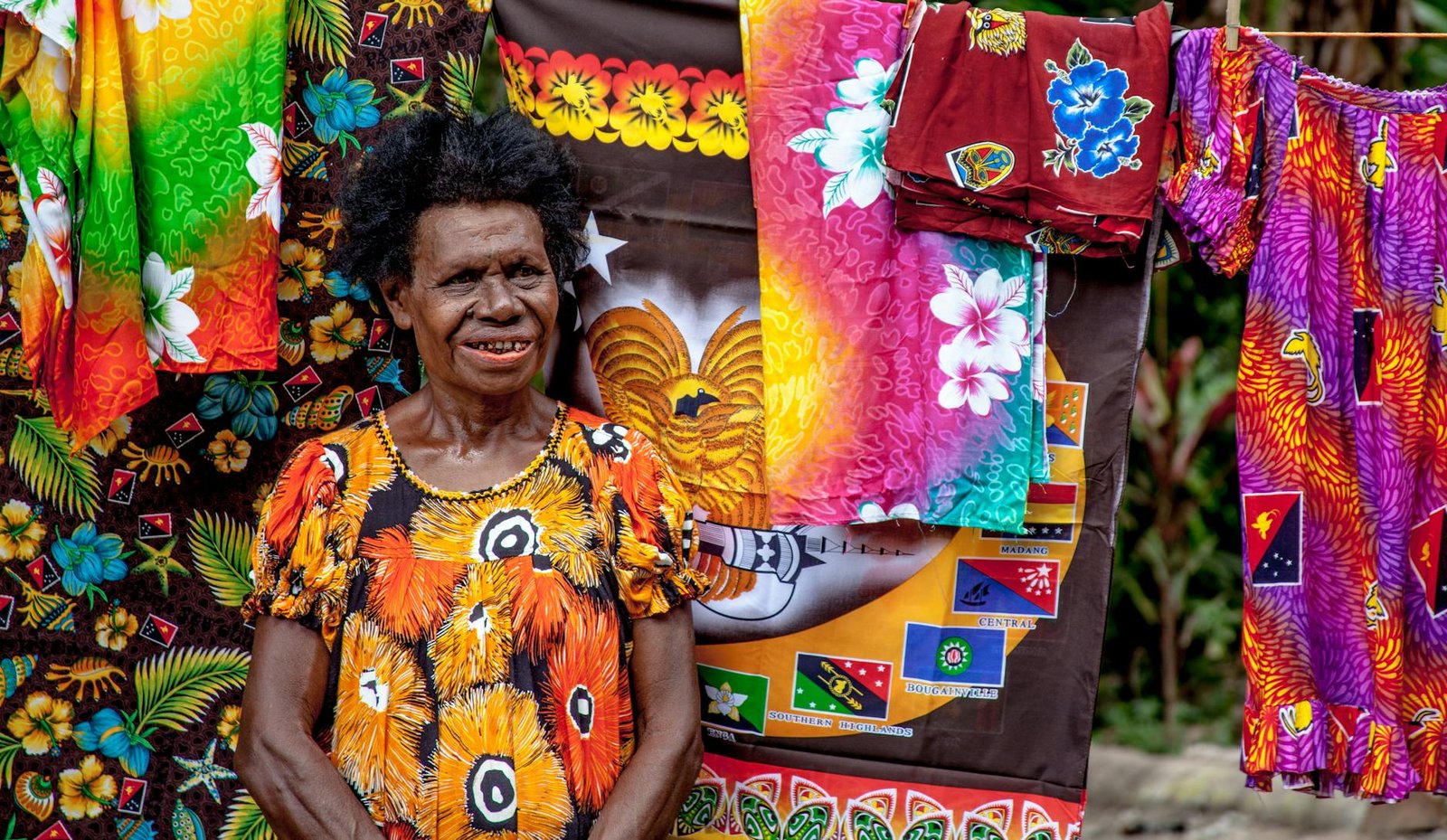
Kiriwina is one of the finest places in the Pacific to buy traditional crafts, and the quality here is genuinely exceptional. Ebony woodcarving is the island’s most celebrated art form — intricate, polished figures, bowls, and walking sticks crafted with extraordinary skill. You’ll also find woven baskets, shell jewellery, and traditional doba (banana leaf skirts) that form part of women’s ceremonial wealth. Prices are reasonable and negotiation is normal, though always approach it warmly rather than aggressively. Buying directly from the artisan — which you almost certainly will be doing — means your money goes straight to the maker. Carry small denomination Papua New Guinean kina in cash; there are no card facilities here.
Practical Tips
- Cash only. There are no ATMs or card readers on the island. Sort your kina before arriving — ideally in Port Moresby or another major port.
- Dress modestly. Shoulders and knees covered is appreciated, especially in villages.
- Ask before photographing. Many Trobriand islanders are happy to be photographed but some are not, and the custom is to ask first, always.
- No alcohol. Kiriwina is a dry island. Leave your duty-free purchases on the ship.
- Bring reef shoes. The coral can be sharp in shallow water.
- Sun protection is essential. There’s little shade outside the villages and the equatorial sun is fierce.
Kiriwina Island doesn’t offer curated experiences or packaged adventure — it offers something rarer. It offers contact with a living culture that has chosen its own pace, its own values, and its own relationship with the world. For a cruise passenger willing to simply show up, listen, and look, it’s unforgettable.
🎟️ Things to Book in Advance
These highly-rated experiences fill up fast — book before you arrive to avoid missing out.


This page contains affiliate links. If you book through them, we may earn a small commission at no extra cost to you.
📍 Getting to Kiriwina Island Papua New Guinea
Use the interactive map below to explore the port area and plan your route from the terminal.
Leave a Reply