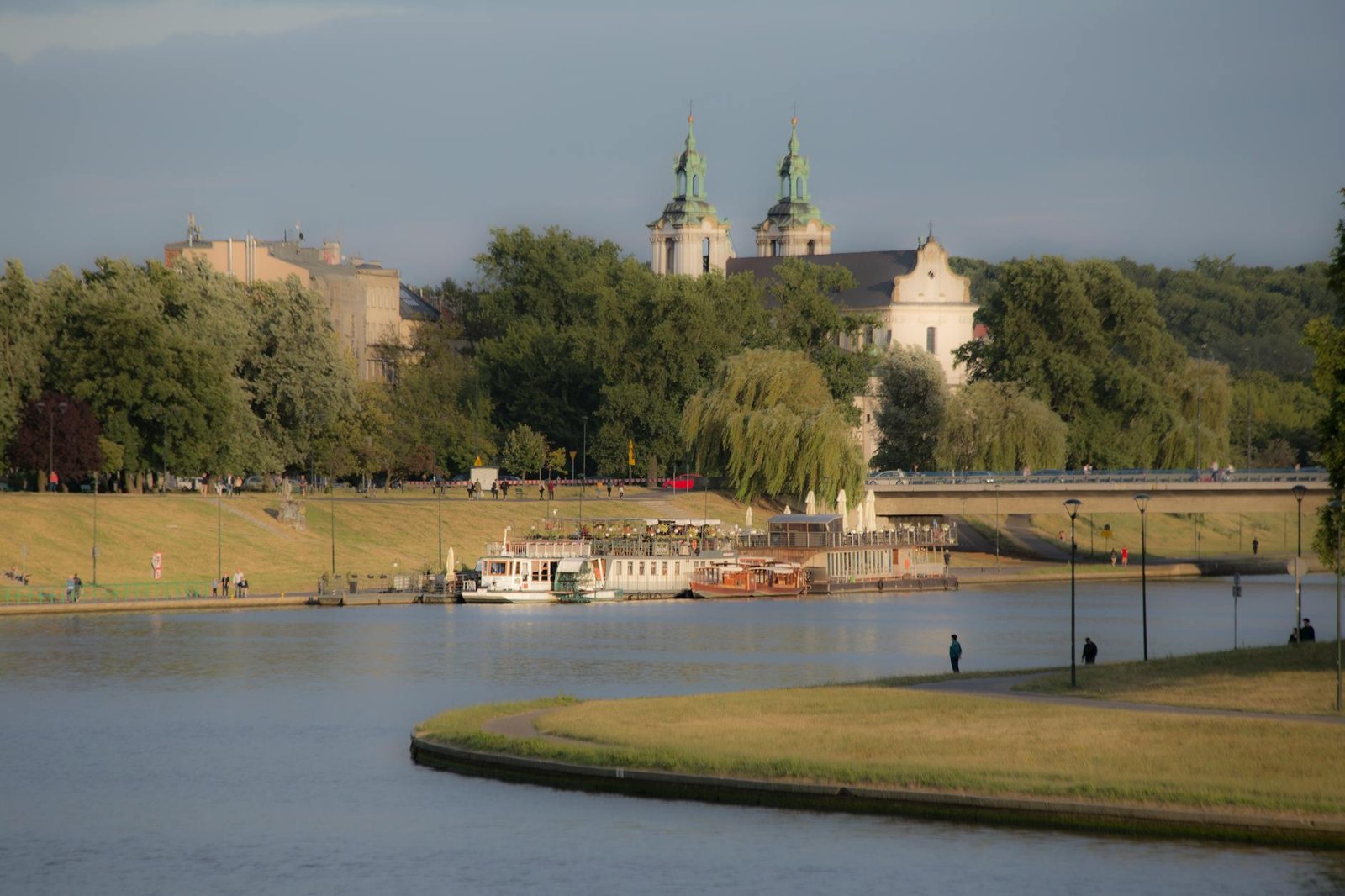
Few cruise passengers have even heard of Wolin — and that’s exactly why you should go. This small Polish island on the Baltic coast packs Viking heritage, primeval forest, and unspoiled beaches into a single shore day. Skip the crowds of bigger ports and discover somewhere genuinely extraordinary.
Arriving by Ship
Wolin sits on the island of the same name, connected to the mainland near Świnoujście, a larger port city where most cruise ships actually dock. From Świnoujście’s well-equipped terminal, Wolin town is roughly 25 kilometres east — reachable by taxi, local bus, or an organised shore excursion in around 30–40 minutes.
Once you arrive on the island, everything in Wolin town itself is compact and walkable. The town sits along the Dziwna Strait, and the waterfront has a relaxed, unhurried feel that larger Baltic stops simply can’t offer.
Things to Do

Wolin punches well above its weight for a town of under 5,000 people. History, wilderness, and folklore compete for your attention at every turn.
History & Heritage
- Jomsborg Viking Festival — held each August, this internationally famous re-enactment draws thousands of visitors for combat demonstrations, Viking markets, and longship ceremonies. Check the exact dates before you sail.
- Wolin Island Museum (Muzeum Regionalne) — explore genuine Viking-era artefacts excavated locally, including jewellery, weapons, and tools. Entry costs around 10–15 PLN (approximately £2–3).
- Wolin Settlement Archaeological Site — walk the reconstructed early medieval settlement on the banks of the Dziwna, where costumed guides bring 10th-century life vividly to the surface.
- St. Nicholas Church — a quietly striking Gothic church in the town centre dating to the 14th century; entry is free and the interior stonework rewards a closer look.
Nature & Wildlife
- Wolin National Park — one of Poland’s smallest yet most biodiverse national parks, home to bison, white-tailed eagles, and ancient beech forest. A day pass costs around 6 PLN (roughly £1.20).
- Bison Reserve (Zagroda Pokazowa Żubrów) — walk a marked trail through forested enclosures to see European bison up close; budget about 1–2 hours and 15 PLN entry.
- Zalesie Cliffs — dramatic chalk and clay cliffs along the park’s northern Baltic coastline, best reached by a scenic 3–4 km forest trail from Wisełka village.
Beaches
- Wisełka Beach — a clean, crowd-free Baltic beach inside the national park with soft sand and a backdrop of pine forest. It’s free to access and genuinely beautiful even on grey days.
- Kołczewo Beach — a calmer, sheltered option on the Szczecin Lagoon side, ideal if you’re visiting with children or want gentler water.
What to Eat
Polish coastal cuisine leans on freshwater and Baltic fish, hearty soups, and honest home cooking — and Wolin delivers all three. Prices are low by Western European standards, so eat well without guilt.
- Żurek — a sour rye soup served with hard-boiled egg and sausage, found in virtually every local restaurant for around 15–20 PLN (£3–4). Warming and deeply savoury.
- Smoked eel (węgorz wędzony) — the Szczecin Lagoon is famous for its eel; try it at any fish stall near the waterfront, typically 20–30 PLN for a generous portion.
- Pierogi z rybą — fish-filled dumplings, a regional coastal variation on the classic; look for them on lunch menus at Restauracja Grodzka in Wolin town.
- Bigos — a slow-cooked hunter’s stew of sauerkraut, meat, and mushrooms, best ordered at a traditional milk bar (bar mleczny) where a full bowl rarely tops 15 PLN.
- Baltic herring (śledź) — marinated in cream, mustard, or vinegar, served as a starter nearly everywhere; order a mixed plate for around 18–22 PLN.
- Local craft beer — microbreweries across the Pomerania region produce excellent Baltic-style ales; ask your restaurant what’s on tap rather than defaulting to the big brands.
Shopping

Wolin’s modest town centre has a handful of craft shops and market stalls selling amber jewellery — this stretch of the Baltic coast is one of Europe’s richest sources of the fossilised resin. Look for pieces sold by certified local jewellers rather than tourist kiosks; a genuine amber pendant starts around 40–80 PLN.
Viking-themed wooden carvings, hand-forged ironwork, and linen goods made by local artisans also make memorable, lightweight souvenirs. Avoid mass-produced plastic Viking helmets and generic Polish pottery — you’ll find far better quality if you browse the stalls near the archaeological site or inside the national park visitor centre shop.
Practical Tips
- Currency — Poland uses the Polish Złoty (PLN); euros are rarely accepted, so withdraw cash at ATMs in Świnoujście before heading to Wolin.
- Tipping — rounding up or leaving 10% is appreciated but not obligatory in local restaurants.
- Transport — taxis and rideshares from Świnoujście to Wolin town cost around 80–120 PLN each way; agree the price before you get in.
- Timing ashore — head out early to reach the national park before afternoon tour groups arrive.
- Time needed — allow at least 5–6 hours to do both the town and a slice of the national park justice.
- Language — English is spoken in tourist spots but less so in rural areas; a few Polish words go a long way.
- Safety — Wolin is extremely safe; petty crime is rare and locals are notably welcoming to visitors.
Wolin rewards the curious traveller who dares to step off the beaten Baltic trail — and once you’ve stood in a Viking settlement surrounded by ancient forest, you’ll wonder why you ever went anywhere else.
📍 Getting to Wolin, Poland
Use the interactive map below to explore the port area and plan your route from the terminal.
Leave a Reply