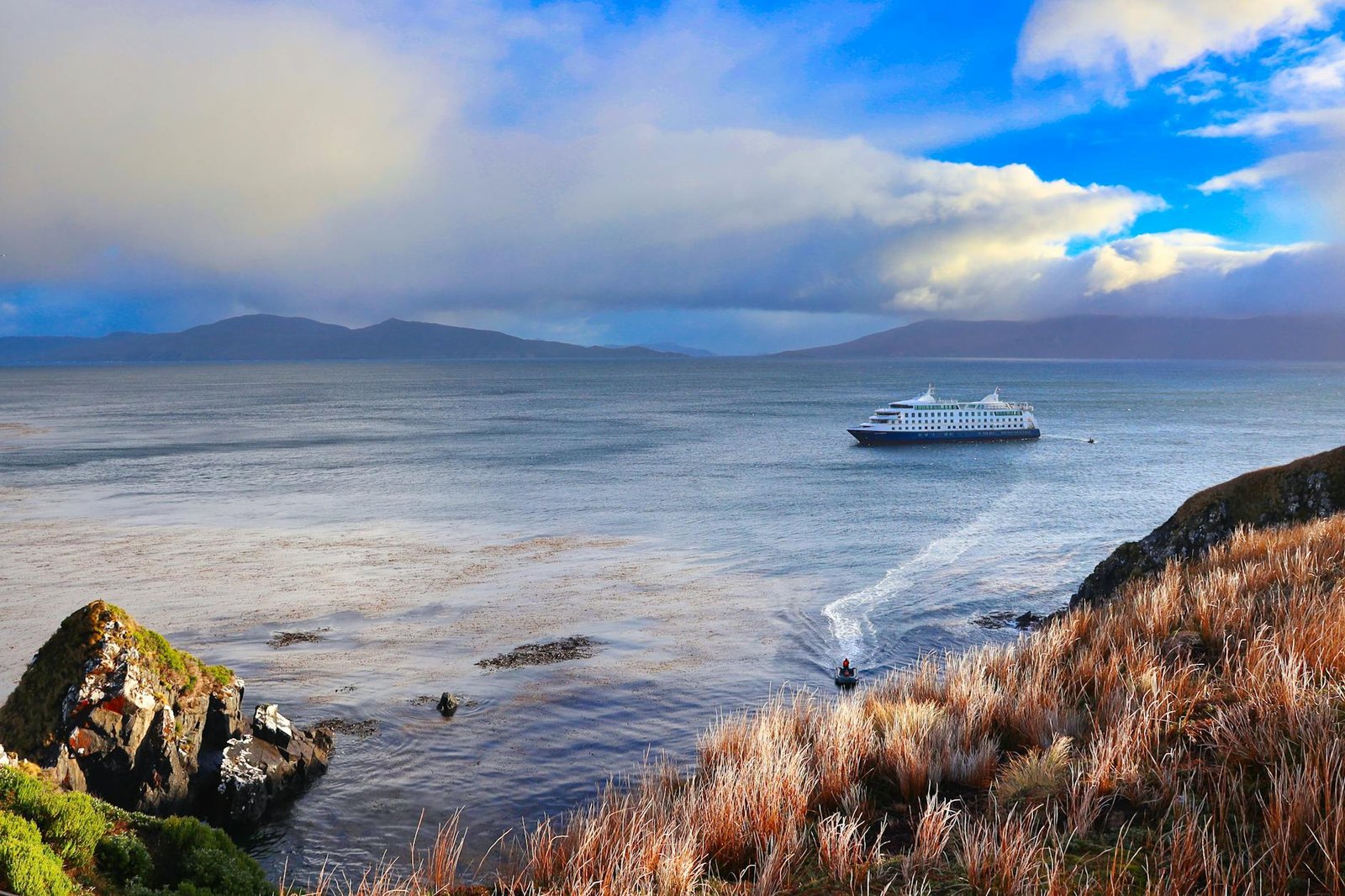
Cape Horn sits at the absolute southern tip of South America, where the Atlantic and Pacific Oceans collide in one of the most ferocious stretches of water on earth. For centuries, sailors feared and revered this jagged Chilean headland as the graveyard of ships and the ultimate test of seamanship. Today, arriving here by cruise ship is one of the rarest and most electrifying experiences available to any traveller.
Arriving by Ship
Cape Horn — or Cabo de Hornos — belongs to Chile’s Magallanes Region, perched on a small island called Isla Hornos at roughly 55° 59′ South latitude. Most cruise passengers encounter it as a sailing point rather than a docking destination. Ships typically approach in the Drake Passage corridor, and the experience of simply seeing the Horn from the deck is considered a milestone in itself.
On days when weather cooperates — which is not often — Zodiacs or small tenders may ferry a limited number of passengers ashore to the tiny Chilean Navy lighthouse and the legendary albatross monument, a striking bronze sculpture honouring the sailors lost to these waters. Do not expect this excursion on every voyage. The Southern Ocean here generates swells that can exceed 15 metres, and captains make landing decisions only hours in advance. If you do set foot on the island, you will join a surprisingly exclusive club — fewer people have landed at Cape Horn than have summited Everest.
Cruises that include Cape Horn typically depart from Ushuaia in Argentina or Punta Arenas in Chile, sailing through the Beagle Channel and past the spectacular Tierra del Fuego archipelago before rounding the Horn.
Things to Do

The bragging rights of simply sailing past Cape Horn are considerable, but if you make it ashore, the experience becomes genuinely unforgettable. The island’s Chilean Navy family — usually just one posting officer and their relatives — manage the lighthouse and occasionally greet visitors. The albatross monument, designed by Chilean sculptor José Balcells, stands as a hauntingly beautiful tribute to the estimated 10,000 sailors who died in these waters between the 16th and 20th centuries.
Birdwatching around the Horn is extraordinary. Black-browed albatrosses, wandering albatrosses, and southern giant petrels wheel above the ship constantly, and from the deck you can spot rockhopper penguins and southern right whales if you time your visit between November and February.
For travellers who want to extend their Chile adventure inland, the country offers remarkable contrast to its wild southern tip. Kayaking through the channels of Chiloé Island — a UNESCO-listed archipelago further north — offers another perspective on Chile’s rugged Pacific coast. 🎟 Book: Kayaking in Chiloé Island Those seeking high-altitude thrills can also explore the Andes on horseback from Santiago, connecting the country’s dramatic geography in a completely different way. 🎟 Book: Horse Riding Tour in the Andes Santiago Chile
Local Food
Landing opportunities at Cape Horn itself are too brief and remote for any dining experience, but the spirit of the region is best tasted in Punta Arenas or Ushuaia before or after your cruise. In Punta Arenas, look for centolla — the Magellanic king crab — served simply boiled with butter or cold in a chupe (a creamy gratinéed casserole). It is richly flavoured and absurdly fresh, caught from the same cold Strait of Magellan waters your ship will sail through.
Lamb is the other defining ingredient of Patagonia. Whole spit-roasted lamb (cordero al palo) is slow-cooked over an open wood fire for several hours, producing meat of extraordinary tenderness. Chilean mariscos — mixed seafood platters featuring sea urchin, razor clams, and mussels — are worth seeking out in any port town along this stretch of coast.
Pisco sour, Chile’s national cocktail made from grape brandy, egg white, lime, and sugar, warms you up admirably when the Patagonian wind cuts through your jacket.
Shopping

Shopping at Cape Horn itself is essentially non-existent, though the lighthouse keeper occasionally sells handmade crafts or stamped certificates confirming your rounding of the Horn — an item sailors have treasured for generations. If you receive one, it is worth far more than its modest price.
In Punta Arenas, the duty-free zone (Zona Franca) offers electronics and imported goods at reduced prices. More meaningful souvenirs include Mapuche-inspired silver jewellery, hand-spun wool items crafted by local artisans, and artisan liquors infused with native Patagonian botanicals like calafate berry, a deep-purple fruit said to ensure you will return to Patagonia.
Practical Tips
Pack layers you are genuinely prepared to lose to the wind — the Horn’s gusts can strip a hat from your head faster than you can blink. Waterproof outer layers are non-negotiable. Bring seasickness medication regardless of your usual tolerance, as the Drake Passage earns its reputation.
Keep your schedule flexible and your expectations fluid. Cape Horn landings are at the captain’s discretion only, and many voyages simply sail past without stopping. Treat the passage itself as the destination and any shore time as an extraordinary bonus. Binoculars are your single most important piece of luggage here. If your cruise departs from Santiago and you have time before or after, a full Chilean BBQ experience paired with Andean horse riding offers a vivid counterpoint to the south’s wild isolation. 🎟 Book: Santiago: Horse riding experience with Chilean BBQ all-included
Cape Horn does not welcome visitors — it merely tolerates them briefly. That defiant, storm-battered indifference is precisely what makes standing at the end of the world feel so profoundly worth the journey.
🎟️ Things to Book in Advance
These highly-rated experiences fill up fast — book before you arrive to avoid missing out.


This page contains affiliate links. If you book through them, we may earn a small commission at no extra cost to you.
📍 Getting to Cape Horn Chile
Use the interactive map below to explore the port area and plan your route from the terminal.
Leave a Reply