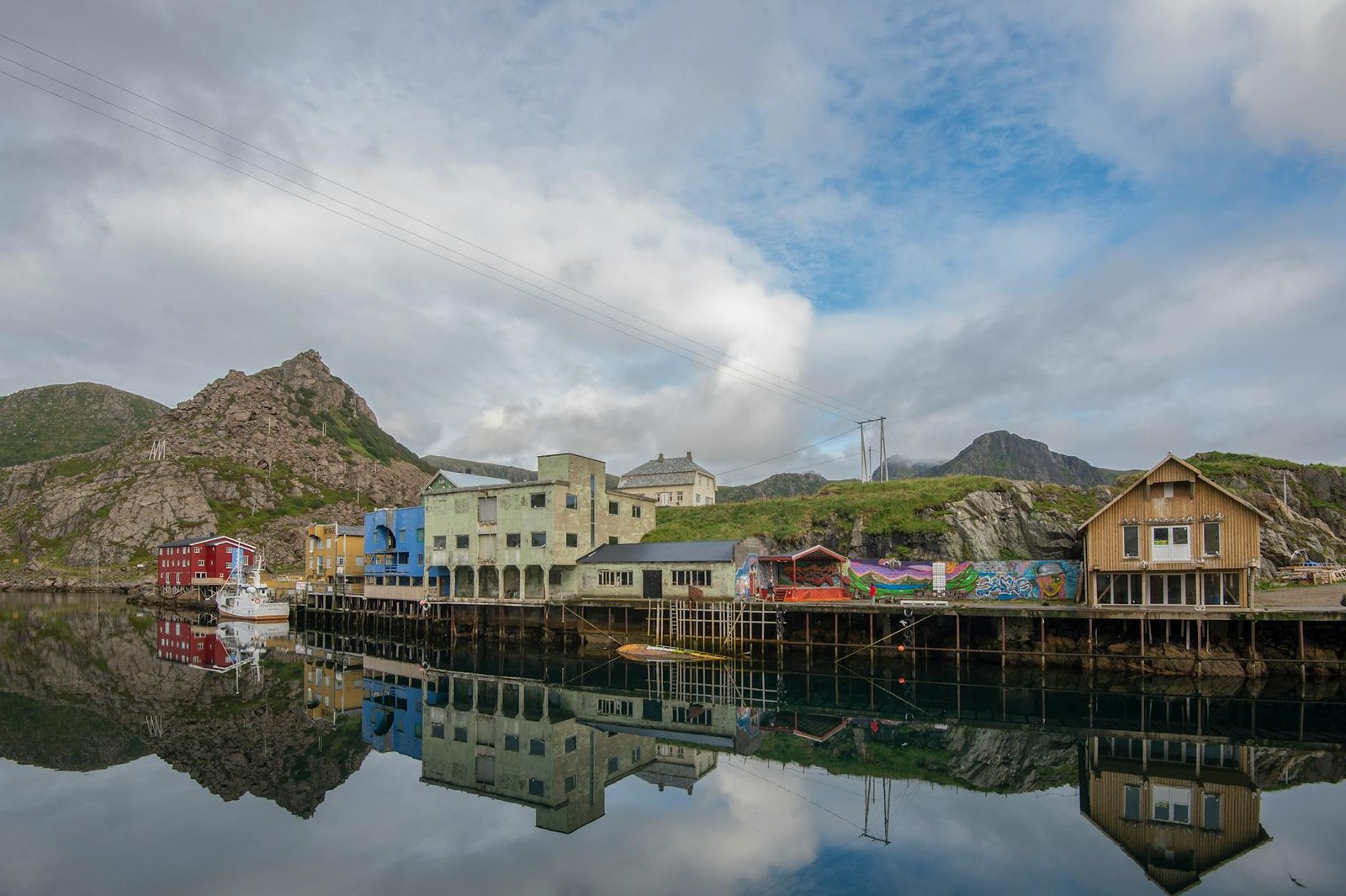
Norway’s Vesterålen archipelago sits just north of the Lofoten Islands, yet it draws a fraction of the crowds — making it one of the most rewarding stops on any Norwegian coastal cruise. These islands deal in raw, unhurried wilderness: whale-feeding grounds, storm-sculpted peaks, and fishing villages that still smell of salt and industry. Come prepared to be genuinely surprised.
Arriving by Ship
Most cruise ships calling at Vesterålen dock at Sortland or Stokmarknes, both of which offer straightforward quayside berthing — no tendering required. Sortland, known as the “Blue City” for its boldly painted buildings, sits right alongside the dock, so you can step off and start exploring immediately.
Stokmarknes is the spiritual home of the legendary Hurtigruten coastal express, and the famous old MS Finnmarken ship is permanently moored here as a museum. Neither port requires a shuttle bus, which means more time ashore and less time waiting.
Things to Do

Vesterålen rewards those who lean into its wildness — whale watching, bird cliffs, and open-ocean drives are the headline acts here, but the quieter cultural moments are just as memorable.
Wildlife & Nature
- Whale watching from Andenes is world-class: sperm whales are spotted year-round in the deep Bleik Canyon, and tours from Hvalsafari depart daily (from approx. NOK 1,095/adult; check hvalsafari.no for schedules).
- Bleik Bird Rock (Bleiksøya) hosts one of Norway’s largest Atlantic puffin colonies — boat tours leave from the small fishing village of Bleik between May and August.
- Andøya Space Center offers guided tours of Norway’s rocket-launch facility, a genuinely unique experience that doubles as a window into Arctic research (tours from NOK 250).
- Reine to Bleik coastal drive — if you rent a car, the road along Andøya’s western coast passes white sand beaches and dramatic sea stacks that rival anything in Lofoten.
History & Culture
- Hurtigruten Museum in Stokmarknes tells the full story of the legendary coastal route through original ships and artefacts; entry is around NOK 150 and it’s a short walk from the dock.
- Nyksund ghost village is a once-abandoned fishing settlement now slowly returning to life — wander its wooden docks and peer into restored boathouses for a hauntingly atmospheric hour.
- Melbu open-air museum (Vesterålen Museum) covers traditional fishing and farming life; open in summer from roughly 10am–4pm, entry NOK 100.
Outdoor Adventures
- Hiking Møysalen National Park offers rewarding trails through Norway’s smallest national park, with guided day hikes available from local operators based in Sortland.
- Sea kayaking around Langøya can be arranged through local outfitters in Sortland for half-day paddles between NOK 600–800 per person.
What to Eat
Vesterålen’s food culture is rooted in the sea — this is proper working fishing country, and the produce reflects it. You’ll eat better here than in many port towns twice its size.
- Stockfish (tørrfisk) — air-dried cod that’s been a regional staple for centuries; try it at local restaurants in Sortland or buy a small pack from a fishmonger for around NOK 80–120.
- Freshly caught king crab — often served simply with butter and lemon; look for it on the menu at Restaurant Arctandria in Sortland, mains around NOK 295–400.
- Fiskesuppe (Norwegian fish soup) — a creamy, dill-laced broth packed with local white fish; widely available at cafés and harbour-side spots for around NOK 120–160.
- Røkt laks (smoked salmon) — locally sourced and incomparably fresh; pick up a vacuum-packed portion at Sortland’s supermarkets (REMA 1000 or Coop) for around NOK 90.
- Skillingsboller — a Norwegian cinnamon bun, slightly different from Swedish kanelbullar, found at any local bakery for about NOK 30–40 and essential with a strong coffee.
Shopping

Vesterålen isn’t a shopping destination in the conventional sense, which is honestly part of its charm. You won’t find tourist-tat shops on every corner — instead, look for small design studios and artisan outlets selling hand-knitted wool goods, local ceramics, and dried seafood products.
In Sortland, check out the small independent shops along the main street for Scandinavian knitwear and locally made jewellery. Skip the generic Viking souvenirs (available everywhere in Norway) and focus on edible gifts like tørrfisk, cloudberry jam (multekonfitur), or a bottle of Norwegian aquavit.
Practical Tips
- Currency is Norwegian Krone (NOK) — card payments are accepted almost universally, but carry some cash for small harbour-side stalls.
- Tipping is not expected but rounding up the bill by 10% in restaurants is appreciated.
- Dress in warm layers regardless of the season — even a July day can turn cold and blustery with little warning.
- Rent a car if you can: the distances between Andenes, Nyksund, and Stokmarknes make self-driving far more rewarding than relying on infrequent local buses.
- Go ashore early: whale-watching tours book up fast, so secure your spot online before the ship arrives.
- You need at least 6–8 hours to do Vesterålen justice — a half-day barely scratches the surface.
- Mobile coverage is surprisingly good in most towns but can drop in remote coastal areas.
Pack your binoculars, embrace the unpredictable weather, and let Vesterålen show you exactly what Norway looks like when nobody’s performing for the cameras.
Leave a Reply