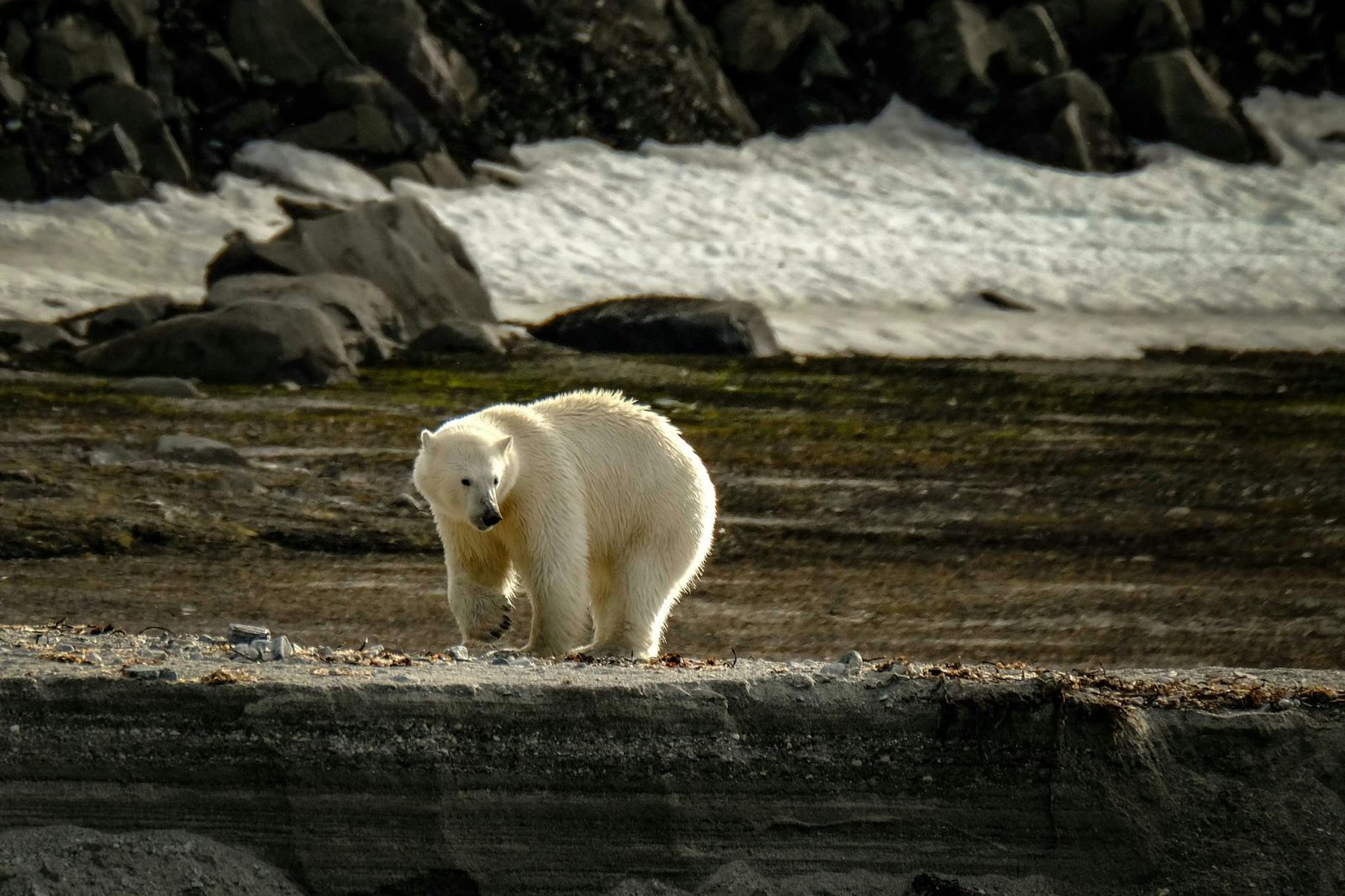
Quick Facts: Port: Bjørnøya (Bear Island) | Country: Norway (Svalbard Archipelago) | Terminal: No formal cruise terminal — open anchorage/zodiac landing | Dock or tender: Tender/Zodiac only | Distance to “center”: No town center exists; the Norwegian Meteorological Institute station is approximately 1–2 km from typical landing zones | Time zone: UTC+1 (CET) / UTC+2 in summer (CEST)
Bear Island sits roughly halfway between mainland Norway and Svalbard, and almost nobody visits it — which is precisely the point. This is one of the most remote, genuinely wild landings in the entire Norwegian Arctic, and the single most important planning tip is this: your ship may not be able to land at all. Sea conditions, fog, and wind dictate everything here. Treat any confirmed landing on Bjørnøya as a genuine privilege.
—
Port & Terminal Information
There is no cruise terminal on Bear Island. Full stop. There are no docks, no piers, no port infrastructure of any kind built to receive cruise passengers. What exists is a rugged, largely inaccessible coastline of sheer basalt cliffs, gravel beaches, and perpetually churning Arctic water.
How you get ashore: Expedition cruise ships — the only vessels that call here — use Zodiac inflatable craft to ferry passengers from the ship’s anchorage to a suitable gravel or rock landing beach. The ship’s expedition team scouts conditions and selects the landing site on the day. This process takes time, typically 30–45 minutes from anchor drop to first passengers stepping ashore, so factor this into your usable time on the island. [Check the general area on Google Maps](https://www.google.com/maps/search/Bjornoya-Bear+Island+cruise+terminal) to orient yourself to the island’s geography before departure.
Terminal facilities: There are none. No ATMs, no Wi-Fi, no tourist information booth, no luggage storage, no restrooms (aside from a possible courtesy access to the meteorological station by arrangement). No shops. No cafés. Nothing.
What this means for you: Everything you need for your time ashore — warm layers, waterproof boots, snacks, water, camera, binoculars, a fully charged phone — must come off the ship on your back. Your expedition team will brief you thoroughly the evening before and morning of the landing. Listen carefully.
The meteorological station: The only permanent human presence on Bear Island is the Norwegian Meteorological Institute station (Bjørnøya Meteorologiske Stasjon), staffed year-round by a small rotating team of typically 4–6 people. On some landings, expedition leaders coordinate a visit to the station. This is not guaranteed and is entirely at the discretion of the station staff. If it happens, it is one of the most unusual human encounters you will have in your entire cruising life.
—
Getting to the Island

This section works very differently from any other port guide you’ll read. Bear Island is exclusively accessible by sea, and only expedition cruise ships operating in the Svalbard archipelago include it as a potential call. There are no ferries, no charter flights, no water taxis, and no scheduled transport of any kind.
- On Foot — Once ashore via Zodiac, all movement is on foot across untamed terrain. Distances are manageable — 1 to 5 km depending on your landing zone and chosen route — but the ground is rough, wet, often boggy, and occasionally steep. Sturdy waterproof hiking boots are non-negotiable.
- Bus/Metro — Does not exist on Bear Island.
- Taxi — Does not exist on Bear Island.
- Hop-On Hop-Off — Does not exist on Bear Island.
- Rental Car/Scooter — Does not exist on Bear Island. There are no roads.
- Ship Shore Excursion — This IS the shore excursion. The entire landing is organized and led by your ship’s expedition team. They divide passengers into Zodiac groups, assign naturalist guides, designate walking routes, and establish safety perimeters (particularly important given polar bear presence). You do not plan this independently — you participate in what your ship has organized, and you should be grateful for every single minute of it. If you’re considering an expedition-style Arctic cruise that includes Bear Island, [check current Svalbard expedition tours on Viator](https://www.viator.com/search/Bjornoya-Bear+Island) and [on GetYourGuide](https://www.getyourguide.com/s/?q=Bjornoya-Bear+Island¤cy=USD&partner_id=MHU0UHU) for context on what Arctic expedition experiences look like across the archipelago.
—
Top Things to Do on Bjørnøya (Bear Island)
Bear Island doesn’t offer “attractions” in any conventional tourism sense. What it offers is something rarer: encounters with a landscape and wildlife so untouched, so indifferent to human presence, that it recalibrates your sense of what the world actually is. Here are the specific experiences that make a Bear Island landing extraordinary.
Must-See
1. The Seabird Cliffs of Stappen (free) — The southwest cape of Bear Island hosts one of the most spectacular seabird colonies in the entire North Atlantic. Towering basalt sea stacks rise 400+ meters from the ocean, and the sound — a wall of calls from hundreds of thousands of little auks, Brünnich’s guillemots, razorbills, kittiwakes, and fulmars — is something that stays with you for years. Stand at the cliff edge and look down: the water below is black with birds. This is not hyperbole. Allow 1–2 hours to simply stand and absorb it.
2. Mørkfjorden & the Southern Tundra (free) — The island’s southern interior is a vast, windswept plateau of Arctic tundra, frost-shattered rock, and shallow lakes. Walking here feels like being on another planet. The ground is patterned with frost polygons — geometric shapes created by repeated freezing and thawing of the soil — and in summer, patches of Arctic wildflowers push through the gravel. Allow 1–2 hours for a tundra walk.
3. The Meteorological Station Visit (free, when arranged) — Meeting the 4–6 people who actually live and work on Bear Island year-round — through polar night, storms, and total isolation — is a quietly staggering human experience. They are scientists, technicians, and cooks who have chosen to be here. If your expedition team arranges access, ask them questions. Their perspective on the Arctic is unlike anything you’ll find in a museum. Allow 30–45 minutes.
Beaches & Nature
4. Arctic Wildflower Meadows (free) — In July and early August, Bear Island’s sheltered valleys produce unexpected bursts of color: purple saxifrage, Arctic poppy, mountain avens, and chickweed bloom in the tundra gravel. These are not meadows in any lush sense — they’re scattered, fragile, and precious. Your naturalist guide will point them out. Stay on established walking routes; the vegetation here takes decades to recover from a single footstep off-path. Allow 30 minutes of specific attention.
5. Fossil Beach Formations (free) — Bear Island’s geology is a record of ancient Carboniferous seas, and certain beach sections expose fossils of tropical corals, crinoids, and brachiopods — organisms that lived here 300 million years ago when this land sat near the equator. Your expedition naturalist will identify the best sites. Do not remove fossils; Norwegian law prohibits removal of natural materials from Svalbard. Allow 30–45 minutes.
6. Sea Ice Observation (seasonal) (free) — In late spring and early summer calls (May–June), Bear Island is often still surrounded by or adjacent to sea ice. Observing sea ice from a Zodiac — its texture, color, the way it groans and moves — is a profound experience that most people have never had. Your Zodiac driver may take you along the ice edge. Allow as long as they’ll give you.
7. Arctic Fox and Reindeer Sightings (free) — The Svalbard reindeer (a distinct subspecies, stockier and shorter-legged than mainland reindeer) roams Bear Island freely, and Arctic foxes in summer brown-gray coats patrol the cliffs for dropped seabird eggs. Both species have almost no fear of humans, having evolved with no land predators until the arrival of people. You may find yourself within 5 meters of a reindeer that simply does not care you exist. Allow unpredictable time — this is wildlife, not a zoo.
Day Trips
8. Zodiac Cruise Along the Basalt Cliffs (included with ship) — Rather than landing, some conditions allow for extended Zodiac cruises along the cliffs — getting underneath the seabird colonies, threading between sea stacks, and watching polar bears (if present) on cliff ledges above. This is an alternative landing or a supplement to it, and it is genuinely one of the most dramatic small-boat experiences available anywhere in the Arctic. Allow 1–2 hours.
9. Circumnavigation by Sea (ship) — If your expedition ship’s captain decides a landing is impossible, they will often instead circumnavigate the island by sea — a slower, closer circuit of the coastline that gives you the cliff views, the birdlife, and possibly polar bear sightings from the ship’s deck. This is the consolation prize that still feels like winning. Allow 3–4 hours of deck time.
Family Picks
10. Seabird Identification with the Naturalist (free) — Your ship’s expedition naturalists turn the seabird cliffs into a real-time ornithology lesson. For children especially, learning to distinguish a guillemot from a razorbill from a puffin — by beak shape, wing beat, and call — while standing 20 meters from actual nesting colonies is a natural history experience that no classroom can replicate. Allow 45–60 minutes of guided focus.
11. Zodiac Boarding Drills and Wildlife Spotting (free) — Younger cruisers who are first-time expedition passengers often find the Zodiac experience itself thrilling — the cold spray, the engine noise, the sense of being genuinely small in a large ocean. Most expedition ships welcome children (age restrictions vary by line) and naturalist guides are experienced at engaging young passengers. Allow 30 minutes transit each way, plus landing time.
Off the Beaten Track
12. Bjørnøya Weather Station Interior (rare access) (free) — On very rare occasions, the station staff invite small groups inside to see the equipment, the living quarters, and the monitoring systems that feed data into European weather models. If your expedition leader announces this possibility, volunteer immediately. Almost nobody who has cruised the Arctic has seen this. Allow 30–45 minutes.
13. The Old Trapper Hut Remains (free) — Scattered around Bear Island are the ruins and a few remaining structures of Norwegian trappers who wintered here for Arctic fox pelts in the early 20th century. These weathered, silent huts — some partially collapsed, some still standing — tell a story of extraordinary human endurance and hardship. Your naturalist guide will know where to find them. Allow 20–30 minutes at each site.
14. Photography at the Magic Hour Light (free) — Arctic summer light on Bear Island is extraordinary. Because the sun barely sets (or doesn’t set at all, depending on the date), the low-angle golden light that elsewhere would last 30 minutes can persist for hours. If your ship is at anchor in the evening, ask whether a late Zodiac run is possible. The cliffs and tundra in that golden Arctic light produce photographs that look entirely unreal. Allow as long as possible.
If you’re looking to extend the Arctic expedition experience beyond Bear Island and deeper into the Svalbard archipelago, the [Svalbard Discover the Mining Settlement of Pyramiden tour on Viator](https://www.viator.com/search/Bjornoya-Bear+Island) (from USD 1,124.05, 8 hours) offers a remarkable contrast — the ghost town of a Soviet-era mining settlement frozen in time. 🎟 Book: Svalbard Discover the Mining Settlement of Pyramiden For those wanting a more active adventure on Svalbard, the [Svalbard Snowmobile Adventure and Ice Cave Exploration on Viator](https://www.viator.com/search/Bjornoya-Bear+Island) (from USD 605.77, 7 hours) is worth adding to your itinerary around Bear Island. 🎟 Book: Svalbard Snowmobile Adventure and Ice Cave Exploration
—
What to Eat & Drink

This is one of the very few ports in any cruise guide where the honest answer to “what should I eat ashore?” is: nothing, because there is nowhere to eat. Bear Island has zero food or drink facilities for visitors — no café, no kiosk, no vending machine, no anything.
All food and drink for your time ashore comes from your ship. Your expedition team will typically provide a thermos of hot coffee or soup on longer landings, and some ships organize a “beach BBQ” on suitable landings — grilling reindeer sausages or fresh bread on the tundra with a view of a million seabirds. These are among the most memorable meals of any Arctic cruise.
- Pack your own snacks — Energy bars, chocolate, nuts, and dried fruit are ideal. Your pack should carry enough calories for 3–4 hours of walking in cold air.
- Hot drinks from the ship — Your expedition team will often bring vacuum flasks of hot coffee, tea, or cocoa to the landing site. Accept this offering with both hands.
- Ship’s dining room — pre-landing breakfast — Eat a full, hot breakfast before going ashore. Cold air and physical activity burn calories fast in the Arctic. Don’t skip it.
- Ship’s dining room — post-landing lunch — After returning from a Bear Island landing, your ship will serve a full lunch. The contrast between the stark, wild island and a warm dining room with hot food is one of the quietly emotional rhythms of expedition cruising.
- Beach BBQ (if offered) — Some expedition ships organize a tundra BBQ on Bear Island landings when conditions allow. This typically means hot dogs, reindeer sausages, or similar grilled items cooked over a portable stove, eaten standing in full Arctic gear, wind in your face, seabirds wheeling overhead. It is, inexplicably, one of the best meals you will ever eat. Price: included with your cruise.
- Norwegian Arctic cuisine — save for Longyearbyen — Reindeer stew, Arctic char, king crab, and whale carpaccio (controversial but traditional) are all available in Longyearbyen restaurants before or after your Bear Island call. Prices range from NOK 180–450 (approximately USD 17–42) for mains.
—
Shopping
There is no shopping on Bear Island. There are no shops, markets, street vendors, or kiosks of any kind. Nothing is sold here. This is not a place that has gift shops; it is a place that has glacially polished pebbles and the sound of 500,000 birds.
If you want souvenirs representing Bear Island and Svalbard, Longyearbyen is your destination — either before or after your expedition. The town’s main pedestrian street has several good shops selling locally produced items: hand-knitted wool goods, Arctic fox fur items (check customs regulations for your home country), Svalbard-branded outdoor wear, traditional Norwegian knitwear, local jam made from cloudberries and crowberries, and high-quality photography books about the archipelago. Avoid the mass-produced polar bear keychains and generic “Norway” merchandise, which could come from anywhere. Look instead for products from Svalbardbutikken and local artisan makers, where prices are higher (expect NOK 200–800 for quality items) but authenticity is genuine.
—
How to Plan Your Day
Planning a “day” on Bear Island is fundamentally different from planning a day in, say, Dubrovnik or Nassau. You are planning a landing on an uninhabited Arctic island in potentially hostile weather, and flexibility is the only fixed strategy.
- 4 hours ashore: Zodiac transit to landing beach (30–45 min round trip). Guided walk to nearest seabird cliff viewpoint with naturalist (45–60 min). Free time for photography, fossil hunting, and tundra walking (60–90 min). Zodiac return. This is a complete and deeply satisfying Bear Island experience — don’t feel that a 4-hour window is inadequate. It isn’t.
- 6–7 hours ashore: As above, plus an extended walk toward the meteorological station or trapper hut ruins (additional 60–90 min). A possible Zodiac cruise along the cliff base (45–60 min). Extended free time for solo tundra exploration within the safety perimeter designated by your expedition team. Hot drinks stop organized by the expedition team mid-landing.
- Full day (8+ hours): On the rare occasions when an 8+ hour Bear Island landing is possible and conditions hold, you have the opportunity for a genuine crossing of part of the island — walking from one coastal area to another, spending time at multiple seabird colony viewpoints, exploring the tundra
🎟️ Things to Book in Advance
These highly-rated experiences fill up fast — book before you arrive to avoid missing out.


This page contains affiliate links. If you book through them, we may earn a small commission at no extra cost to you.
📍 Getting to Bjornoya-Bear Island, Svalbard Norway
Use the interactive map below to explore the port area and plan your route from the terminal.
Leave a Reply