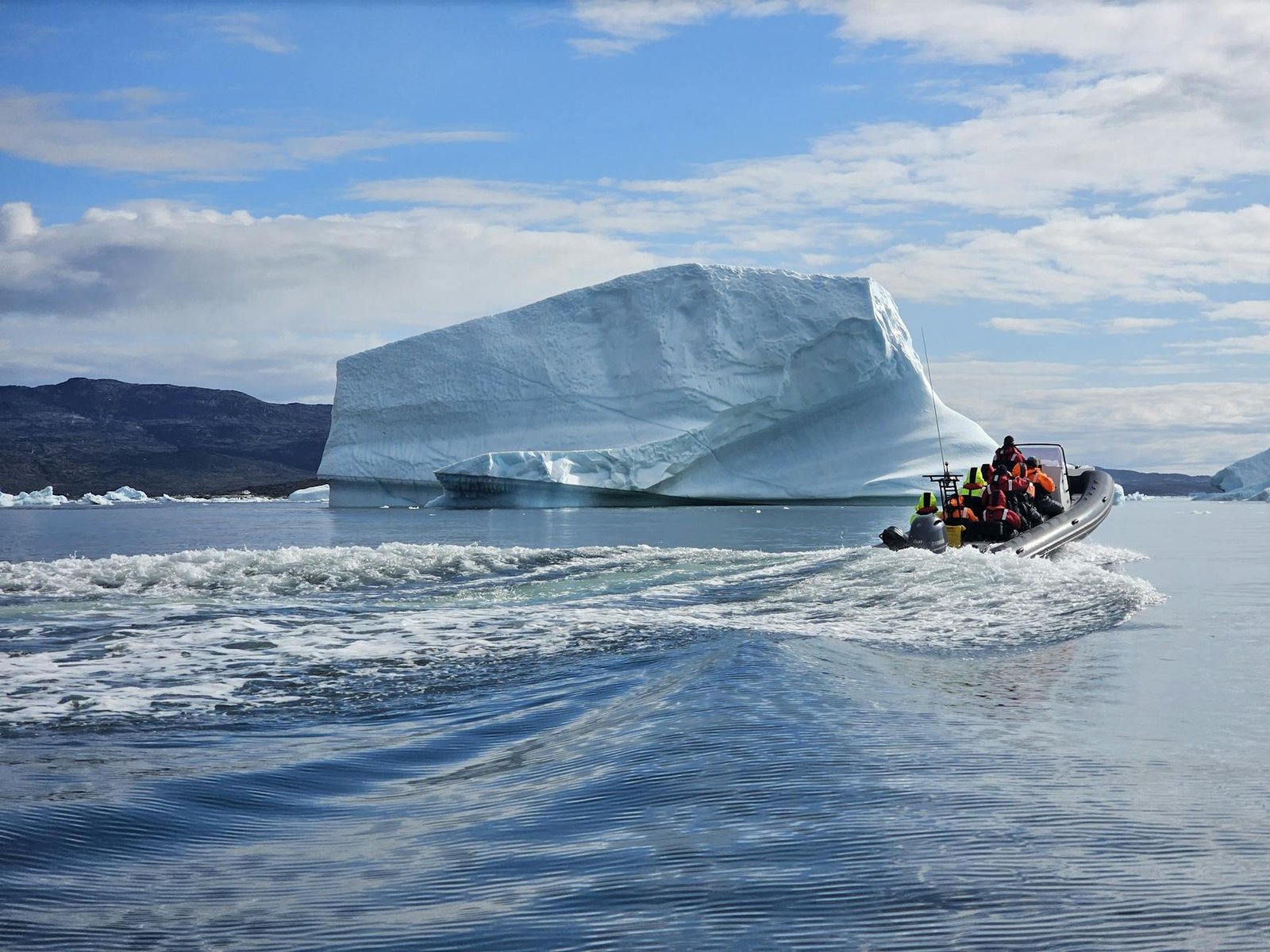
Qaanaaq sits at 77°N, one of the most remote inhabited places on Earth, and most visitors arrive expecting a frozen wasteland. What they find instead is a vibrant Inuit community where traditional hunting culture pulses with genuine, unbroken life. This is not a recreation of the Arctic — it is the Arctic, raw and completely real.
Arriving by Ship
Qaanaaq has no dedicated cruise terminal, so all ships anchor offshore and tender passengers into the small settlement. The process is unhurried — you’re in the High Arctic, and patience is part of the experience. From the tender landing point, the colourful wooden houses of the town are a five-minute walk uphill along a gravel track.
The harbour area is compact and intimate, often shared with local hunters launching their traditional kayaks or dog sledges parked at the water’s edge. Expect to step ashore onto a rough stone quay, and wear footwear with grip — the terrain is uneven and can be damp.
Things to Do

Qaanaaq offers something genuinely rare: authentic access to one of the world’s last traditional subsistence hunting cultures. The activities here aren’t staged for tourists — they’re glimpses into real daily life, and that makes them extraordinary.
Culture & History
- Visit the Qaanaaq Museum to see harpoons, kayak frames, and clothing worn by real Polar Inuit hunters; admission is roughly 50 DKK and staff often speak basic English.
- Watch a dog sledge demonstration near the edge of town, where local mushers sometimes invite visitors to photograph their teams of powerful Greenlandic sled dogs — always ask permission before approaching the animals.
- Speak with a local hunter at the small harbour; many are happy to explain the walrus or narwhal hunt, and your expedition guide can interpret if needed.
Landscapes & Wildlife
- Walk to the viewpoint above town for a panorama of Inglefield Fjord, where icebergs the size of apartment blocks drift silently — the walk takes about 20 minutes each way on a clear path.
- Scan the fjord for narwhal from the shoreline; late summer visits (July–August) offer the best chance of spotting their distinctive spiral tusks breaking the surface.
- Photograph the midnight sun if you’re visiting between May and August — at this latitude, the sun simply never sets, and the light turns the icebergs gold.
- Hike toward the Greenland ice sheet edge, visible from town on clear days; guided hikes can be arranged through your ship’s expedition team and take around three to four hours return.
Community
- Attend a drum dance performance, occasionally organised for cruise visitors by local cultural groups — check with your expedition staff onboard to confirm availability before arrival.
What to Eat
Dining options in Qaanaaq are extremely limited — this is not a culinary destination, but the traditional foods you can try are unlike anything you’ll encounter anywhere else. Go in curious and open-minded, and you’ll leave with stories.
- Mattak (raw narwhal skin and blubber) — the defining Inuit delicacy, chewy and rich in omega-3; occasionally offered as a sample during cultural demonstrations, free or included in tour costs.
- Dried caribou meat — intensely flavoured and eaten like jerky; sometimes available directly from hunters or community members as a small gift or trade, not commercially sold.
- Seal stew — slow-cooked and warming, this is genuine subsistence food; your expedition ship’s chef may prepare a version using local ingredients obtained in port.
- Arctic char — a wild-caught freshwater fish, clean and delicious; the ship’s kitchen often sources fresh char locally, so check the dinner menu on port days.
- Ship dining remains your main option — Qaanaaq has no restaurants open to passing visitors, so budget dining ashore is essentially nonexistent; eat well onboard before tendering in.
Shopping

Shopping in Qaanaaq is modest and deeply personal. There is no tourist market as such, but a small community shop — the Pilersuisoq store — sells everyday supplies, local jams, and the odd souvenir item, and browsing it is an experience in itself.
The best souvenirs are handcrafted items sold directly by community members: hand-sewn sealskin mittens, carved soapstone figures, and small bone or ivory pieces where legally permitted under local regulations. Always confirm that any animal-product crafts comply with your home country’s import rules before purchasing — customs restrictions vary significantly, particularly for ivory and marine mammal products.
Practical Tips
- Currency is the Danish Krone (DKK) — carry cash, as card readers are unreliable or nonexistent in most situations ashore.
- Tipping is not part of Greenlandic culture — a genuine thank-you and respectful interaction means far more.
- Dress in serious layers — even in summer, temperatures can hover around 0–5°C with biting wind off the fjord.
- Go ashore early — tender queues can build mid-morning, and the best light for photography is in the early hours.
- Two to three hours ashore is sufficient — the town is small, and the experience is about depth of connection, not distance covered.
- Photography is welcome but always ask first — Inuit communities deserve the same dignity and privacy as anyone else.
- Respect the sled dogs — they are working animals, not pets, and approaching them without permission can be dangerous.
Qaanaaq will quietly dismantle every assumption you brought with you and replace it with something far more precious — the memory of a real, resilient human culture thriving at the edge of the world.
📍 Getting to Qaanaaq, Thule, Greenland
Use the interactive map below to explore the port area and plan your route from the terminal.
Leave a Reply