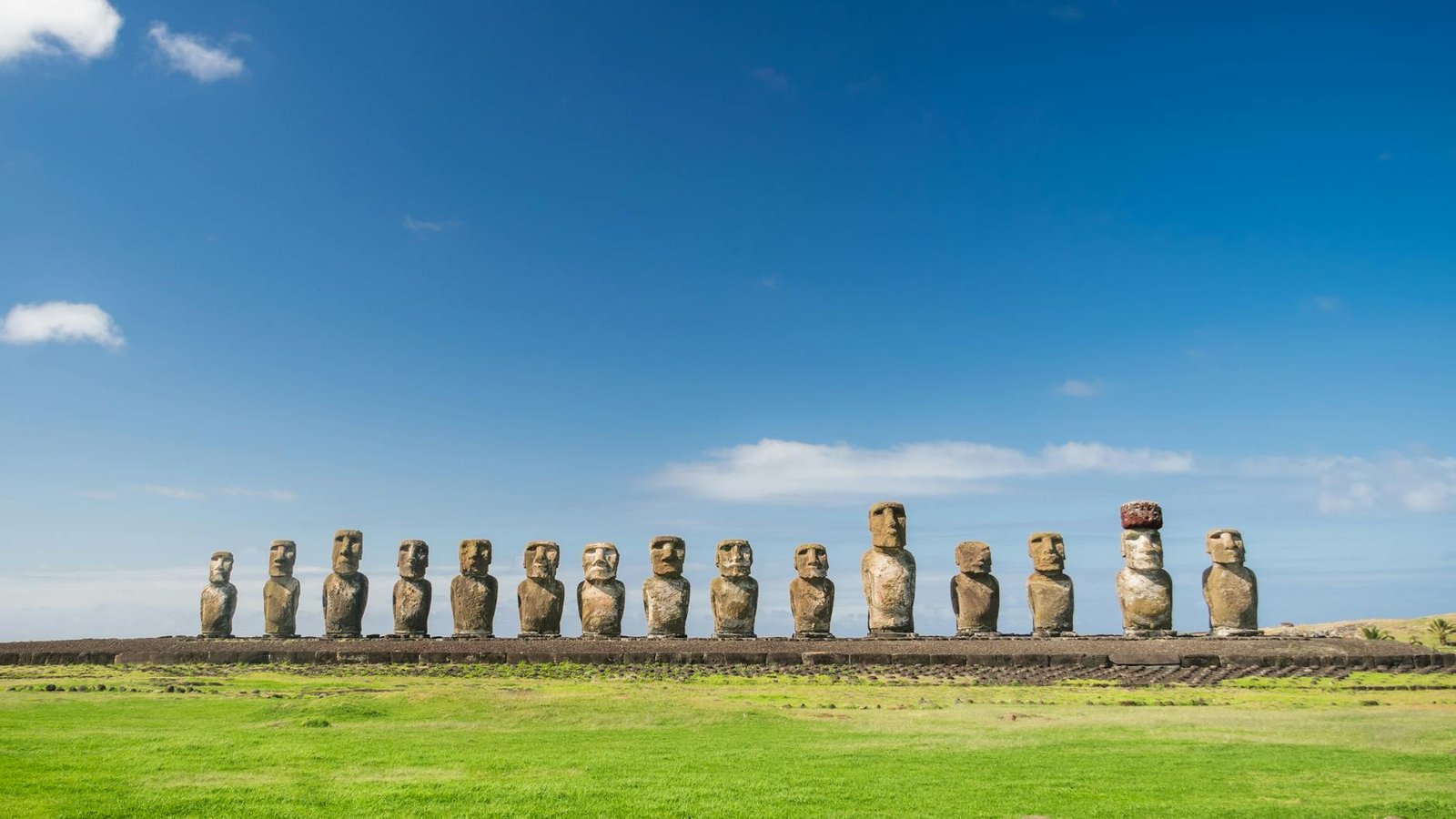
Easter Island sits so far out in the Pacific Ocean that it barely seems real before you arrive — and somehow feels even more surreal once you do. Most visitors board their ship imagining a dry, windswept field dotted with famous stone faces, but what they find is an island of layered mystery, wild coastlines, and a living Polynesian culture that refuses to be reduced to a postcard. This is one of the most remote cruise destinations on earth, and it earns every mile of that journey.
Arriving by Ship
Easter Island — known locally as Rapa Nui — has no deep-water port capable of docking large cruise ships, so you’ll tender ashore into Hanga Roa, the island’s only town. The tender ride itself is memorable, with the volcanic cliffs rising dramatically above the Pacific swell. Once ashore, you’ll find a surprisingly welcoming small town of around 7,000 people, with painted murals, friendly locals, and the immediate smell of salt air and grilling meat drifting from the harbour.
Because most cruise visits last only one day, time is genuinely precious here. The island covers about 63 square miles, but the density of archaeological sites means that even a single well-planned day can leave you genuinely changed by what you’ve seen. Taxis, rental bikes, ATVs, and guided minibuses are all available just steps from the tender dock.
Things to Do

The moai are the obvious draw, but how you experience them matters enormously. Ahu Tongariki — a restored platform bearing 15 standing moai facing away from the sea — is the island’s most iconic sight, and nothing quite prepares you for how commanding they are in person. Arrive at sunrise if you can arrange it, and you’ll understand why photographers make the pilgrimage specifically for this moment.
Don’t miss Rano Raraku, the volcanic quarry where the moai were carved. Here, hundreds of unfinished and half-buried statues emerge from the hillside grass like ancient sentinels — it’s eerie, beautiful, and genuinely humbling. For a completely different perspective on the island’s history, the ceremonial village of Orongo perches on the crater rim of Rano Kau, overlooking a turquoise lagoon and tiny offshore islets. This is the place to understand the Birdman cult that replaced the moai era — a fascinating chapter that most visitors never know existed. 🎟 Book: The birdman journey in Easter Island
If you want to cover the major highlights efficiently, a private or small-group tour makes a real difference given the limited time. 🎟 Book: Private Tour: The Highlights of Easter Island And if you’d prefer something completely off-script, the island’s coral reefs hold surprisingly vibrant marine life — snorkelling here means swimming alongside colourful fish in crystal-clear Pacific water with volcanic rock formations below you. 🎟 Book: Easter Island Snorkeling on Coral Reefs
Local Food
Rapa Nui cuisine is a beautiful collision of Polynesian tradition and Chilean influence. Tuna — caught fresh in local waters — is the island’s signature ingredient and appears in everything from ceviche to empanadas. Look for local restaurants along Atamu Tekena street serving po’e, a sweet banana and cassava pudding, alongside grilled fish with chimichurri that leans definitively South American.
The island also grows its own sweet potatoes, which have been cultivated here for centuries and appear as a side dish in nearly every traditional meal. For an evening experience that combines performance and food, the dinner show at a local restaurant delivers live traditional Rapa Nui dance alongside a multi-course meal — a genuinely festive way to close out the day. 🎟 Book: Easter Island Dinner Show with Transport
Shopping

Hanga Roa’s craft market near the harbour is compact but carefully curated. Local artisans carve miniature moai from volcanic stone and dark wood — these make among the most meaningful souvenirs you’ll take home from any cruise port, precisely because they’re made here by people with a direct connection to what they represent. You’ll also find hand-painted textiles, jewellery made from local shells and obsidian, and woven items reflecting the island’s Polynesian heritage.
Prices are higher than mainland Chile, which reflects both the island’s remoteness and the value of genuinely handcrafted goods. Bargaining lightly is acceptable, but these are skilled artisans, not market stalls.
Practical Tips
Bring cash — ATMs exist but run out frequently when cruise ships are in port. Sun protection is non-negotiable: the UV index here is punishing even on overcast days. Most sites charge a single combined entry fee (around USD 80) that covers Rano Raraku, Ahu Tongariki, and Orongo — buy it early. Spanish is spoken, but many locals involved in tourism also speak English. And carry water; shade is scarce at the major archaeological sites.
Easter Island doesn’t just meet expectations — it quietly dismantles them and builds something larger in their place. One day here is never quite enough, but even one day leaves a mark as lasting as the stones themselves.
🚢 Cruises That Stop at Easter Island Chile
Ready to experience Easter Island Chile for yourself? Search live sailings below — filter by departure port, cruise line, and travel dates to find the itinerary that works for you.
Widget not showing? Search all cruises to Easter Island Chile on CruiseDirect ↗
Affiliate link — we may earn a commission if you book through it.
🎟️ Things to Book in Advance
These highly-rated experiences fill up fast — book before you arrive to avoid missing out.


This page contains affiliate links. If you book through them, we may earn a small commission at no extra cost to you.
📍 Getting to Easter Island Chile
Use the interactive map below to explore the port area and plan your route from the terminal.
Leave a Reply