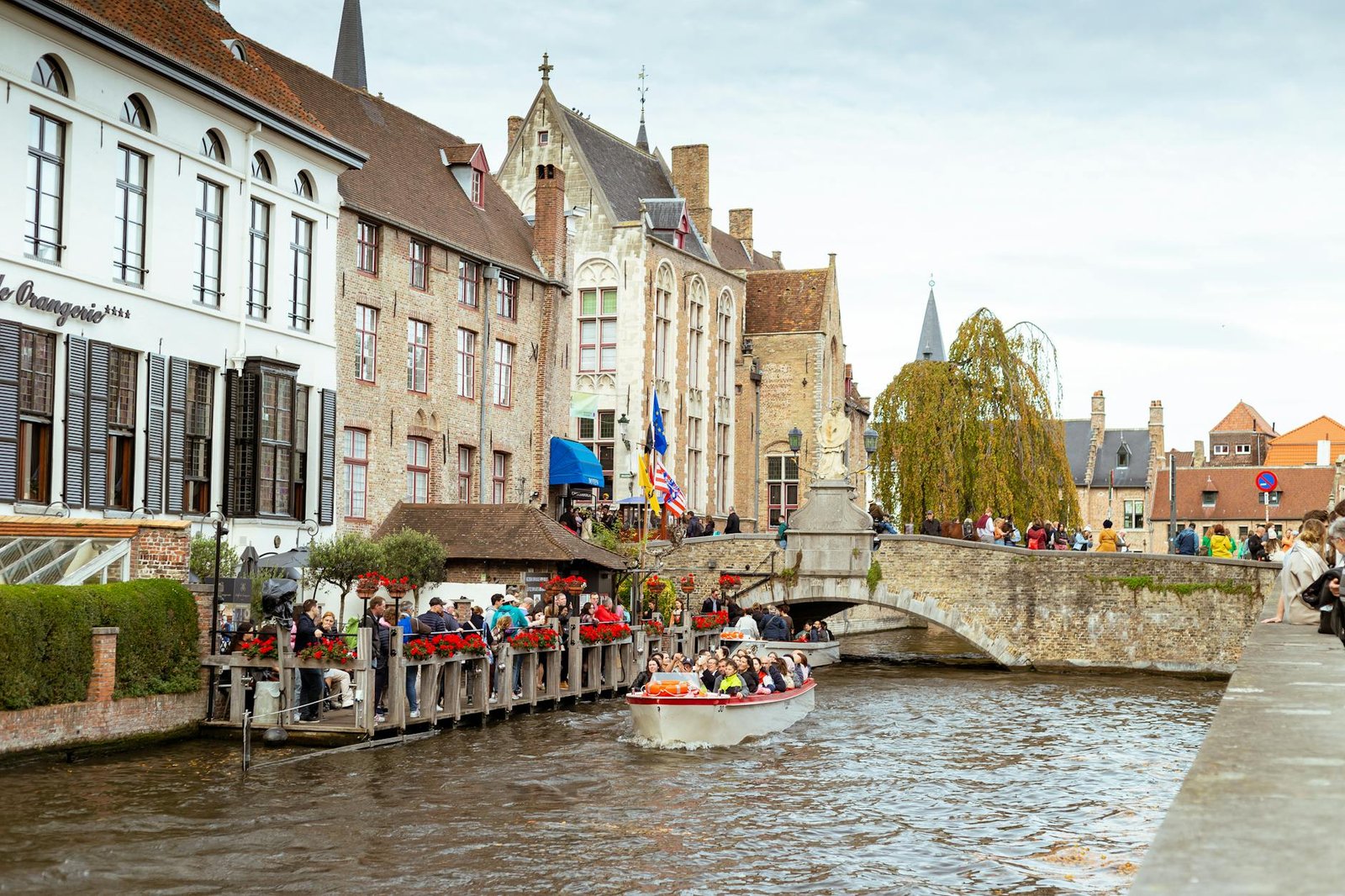
Zeebrugge sits on Belgium’s North Sea coast as one of Europe’s busiest cargo and cruise terminals, and first impressions can underwhelm. But step beyond the industrial docklands and you’re just 15 kilometres from one of the most perfectly preserved medieval cities on the continent — a place so beautiful it almost feels fabricated.
Arriving by Ship
Your vessel docks at the Port of Zeebrugge, a sprawling working port that handles everything from container ships to liquefied natural gas tankers. Don’t let the industrial surroundings fool you into staying onboard. The cruise terminal itself is functional and well-organised, with a welcome centre, currency exchange, and a line of taxis and tour buses ready to whisk you into the Belgian countryside.
The town of Zeebrugge itself is small and frankly not the draw here. The real destination is Bruges, a UNESCO World Heritage city of winding canals, Gothic spires, cobblestone squares, and chocolate shops around every corner. The easiest way to get there is a dedicated shuttle service that takes around 20 minutes each way — efficient, affordable, and stress-free. 🎟 Book: Round-Trip Shuttle Service from Zeebrugge to Bruges From the Bruges city centre, everything is walkable.
If you prefer a more structured introduction, a guided shore excursion handles all the logistics while giving you context and history that would take days to research on your own. 🎟 Book: Deluxe Bruges Shore Excursion from Zeebrugge Cruise Port
Things to Do

Bruges rewards slow exploration. Start at the Markt, the grand central square flanked by the medieval Cloth Hall and the iconic Belfort (Belfry). If your legs are willing, climb the 366 steps to the top for a panoramic view across the terracotta rooftops — genuinely one of the most memorable vistas in Northern Europe.
From there, wander towards the Burg square to admire the Gothic Town Hall, one of the oldest in the Low Countries, and the ornate Basilica of the Holy Blood, which claims to house a relic of Christ’s blood. Whether or not you’re religious, the architecture alone is worth the visit.
The canal network is what truly sets Bruges apart. A boat ride along the waterways gives you a completely different perspective on the city — low bridges, weeping willows trailing into the water, and the backs of medieval merchant houses reflected in the canal’s surface. It’s the kind of scene that makes you reach for your camera every 30 seconds. Combining a guided city tour with a canal cruise is the smartest use of a single port day. 🎟 Book: Best Bruges Cruise-Friendly Tour including Canal Boat Ride
Don’t miss the Begijnhof, a tranquil walled community founded in the 13th century and now home to Benedictine nuns. Even on busy tourist days, this courtyard filled with white-washed houses and daffodils in spring feels like a secret the city is reluctant to share.
Local Food
Belgian food culture is serious business, and Bruges is an excellent place to discover why. Mussels steamed in white wine and cream (moules marinières) are a staple, especially satisfying on a cool North Sea day. Belgian fries — thick-cut, double-fried, and served in a paper cone with a dollop of mayonnaise — are nothing like what you’ve had elsewhere, and the frituur (chip shops) near the Markt are the places to try them.
Beer is practically a religion in Belgium. Bruges has its own local brewery, De Halve Maan (The Half Moon), which has been producing beer on the same site since 1564. Their Brugse Zot and Straffe Hendrik ales are outstanding, and the brewery tour is a fun detour if time allows. For something sweet, Belgian waffles and hand-made praline chocolates are everywhere — the quality varies, so look for shops where chocolatiers are actually working behind the counter rather than selling mass-produced imports.
Shopping

Bruges is a genuinely excellent shopping destination, particularly for handmade lace, which has been produced in the city for centuries. You’ll find dedicated lace shops around the Begijnhof and throughout the old town — look for pieces actually made in Belgium rather than imported imitations. Ask the shopkeeper directly if you’re unsure.
Chocolate shops line the main pedestrian streets, and the Belgian praline tradition runs deep. Beyond chocolate and lace, Bruges also offers independent boutiques selling ceramics, art prints, and local gin. Belgian jenever (grain spirit) makes a compact and unusual souvenir — several dedicated spirits shops near the Burg stock excellent selections.
Practical Tips
- Bruges is entirely walkable once you arrive; the historic centre is compact and flat.
- Euros are the currency; most shops and restaurants accept cards, but small frituur stalls may be cash only.
- Port days in Bruges can be long enough — ships typically dock early and depart early evening, giving you a comfortable six hours in the city.
- Bruges gets crowded on summer weekends with day-trippers from Brussels and beyond; mornings are calmer and more atmospheric.
- The weather on the Belgian coast can be unpredictable — bring a light waterproof layer regardless of the forecast.
- Belgian lace is a UNESCO-recognised craft, but much of what’s sold is mass-produced abroad. Genuine handmade pieces will have a certificate of origin.
Zeebrugge may arrive in your itinerary looking like an afterthought, but Bruges is the kind of city that lingers in your memory long after the ship has sailed. Give it a full day, walk slowly, eat well, and let one of Europe’s most quietly extraordinary medieval cities do exactly what it does best — surprise you completely.
🎟️ Things to Book in Advance
These highly-rated experiences fill up fast — book before you arrive to avoid missing out.


This page contains affiliate links. If you book through them, we may earn a small commission at no extra cost to you.
📍 Getting to Zeebrugge (Bruges) Belgium
Use the interactive map below to explore the port area and plan your route from the terminal.
Leave a Reply