Quick Facts: Port: Qena | Country: Egypt | Terminal: Qena Nile Cruise Dock | Docked (river berth) | Distance to Dendera Temple: ~7 km; city center Qena: ~3 km | Time zone: UTC+2 (Egypt Standard Time, no DST)
Dendera-Qena sits on the west bank of the Nile in Upper Egypt, about 60 km north of Luxor, and serves as the gateway to the Dendera Temple Complex — one of the best-preserved ancient Egyptian temple sites on earth. The single most important planning tip: this port is not Luxor, and the crowds here are a fraction of what you’ll face at Karnak — arrive by 8:00 AM and you may have the Great Hypostyle Hall of Hathor almost entirely to yourself.
—
Port & Terminal Information
- Terminal name: Qena Nile Cruise Dock (also called Qena River Quay) — a dedicated Nile cruise berth on the east bank, used by river cruise vessels rather than ocean liners; most guests arrive as part of a Nile cruise itinerary
- Docking: All vessels dock directly at the quay — no tender required, so you step ashore immediately
- Facilities: Basic pier with tour buses staged immediately outside; no ATMs on the dock itself; minimal shelter; no official tourist info desk or luggage storage at the terminal
- Nearest ATM: BanqueMisr and National Bank of Egypt branches inside Qena city center, ~3 km away
- Wi-Fi: Not available at the terminal; available in Qena cafés
- City center distance: ~3 km to central Qena, ~7 km to Dendera Temple Complex
—
Getting to the City

- On Foot — The dock to Qena city center is ~3 km on flat road, walkable in about 35–40 minutes in cooler months; in summer (May–September), heat regularly exceeds 40°C and this is not recommended
- Taxi — The most practical option; expect to pay EGP 50–100 (roughly USD 1.50–3) for the port-to-city run, and EGP 150–250 round-trip with waiting time to Dendera Temple; always negotiate before you get in and agree on a return pickup time
- Tuk-Tuk — Common locally; EGP 20–40 to city center, but not suitable for the temple road; a fun way to explore the Qena souk area
- Minibus/Microbus — Public microbuses run from Qena city to Dendera village for EGP 5–10, but routes change and stops are unmarked — confidence with Arabic helps significantly
- Hop-On Hop-Off — No HOHO service operates in Qena or Dendera
- Rental Car/Scooter — Not practical or readily available; road signage is inconsistent and traffic rules are loosely interpreted
- Ship Shore Excursion — Worth considering specifically for Abydos combination days (a 2-temple day covering Dendera + Abydos is ~2.5 hours of driving total); if your ship offers it, the logistics are handled. For Dendera alone, going independently by taxi is easy and saves significant money
—
Top Things to Do in Dendera-Qena, Egypt
Dendera rewards slow exploration — the temples here are not ruins in the typical sense but intact, roof-accessible, inscription-covered monuments that most visitors wildly underestimate. Budget more time than you think you need.
Must-See
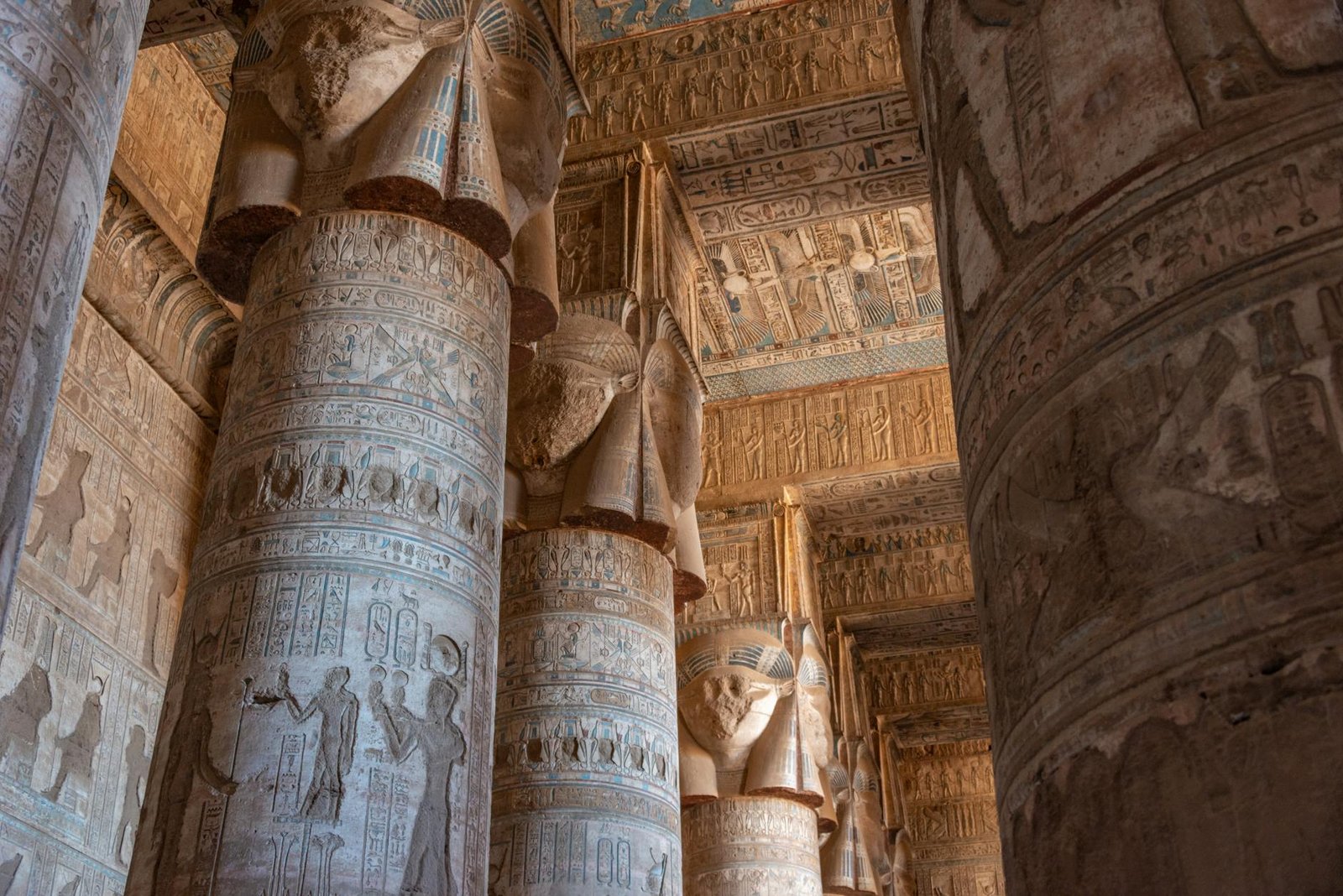
1. Temple of Hathor, Dendera Complex (EGP 100, ~USD 3.25) — The crown jewel: a Ptolemaic-Roman temple so well-preserved you can walk the rooftop. The famous Dendera Zodiac (a copy — the original is in the Louvre) is carved in the roof chapel, and the hypostyle hall’s 18 Hathor-headed columns are genuinely awe-inspiring. [Book a guided half-day private tour on Viator from USD 32] 🎟 Book: Dandara temple. Allow 2–3 hours minimum.
2. The Roof Crypts and Underground Chambers (included in temple admission) — 12 narrow crypts run beneath the temple floor and within the walls; their inscriptions are among the most intact in Egypt. Bring a small flashlight. Allow 30–45 minutes extra.
3. The Dendera Temple Enclosure — Temple of Isis and Birth Houses (included in admission) — Two smaller temples flank Hathor’s main complex, often rushed past. The Mammisi (Birth House) of Augustus contains beautifully colored reliefs that photography reproduces poorly — see them in person. 45 minutes.
4. Coptic Church Ruins Within the Complex (included) — A 5th-century mud-brick basilica sits inside the Dendera enclosure walls, an extraordinary layering of history that most visitors walk past without realizing what it is. 15 minutes.
Beaches & Nature
5. Nile Corniche at Qena (free) — A calm, locals-only riverfront promenade running north of the dock. Watching feluccas at dusk with zero tourist infrastructure around you is genuinely memorable. 30–45 minutes.
6. Agricultural Hinterland Cycling or Walking (free) — The flat farmland between Qena and Dendera is early-morning gold: sugar cane fields, donkey carts, egrets in irrigation channels. Arrange a bicycle through your guesthouse or a local fixer. 1–2 hours.
Day Trips
7. Temple of Seti I, Abydos (EGP 180, ~USD 5.85) — 90 km west of Qena, Abydos contains Seti I’s mortuary temple with the most vivid original pigment of any New Kingdom site in Egypt — blues and ochres that look freshly painted. Combine it with Dendera in a [full-day private tour from Viator from USD 82] 🎟 Book: Private Full Day Tour: Dendera & Abydos Temples from Luxor. Allow 4–5 hours including travel.
8. Luxor Day Trip (variable) — Luxor is 60 km south; a taxi round-trip runs USD 40–60. Karnak Temple alone justifies it. Alternatively, book an organised [full-day Luxor excursion on Viator from USD 60] 🎟 Book: Luxor Full Day Tour Visit Dendara And Abydos Temple that bundles East and West Bank highlights.
Family Picks
9. Qena Souk (Central Market) (free) — A working Egyptian market selling spices, textiles, pottery, and produce. Kids respond to the sensory overload; parents find the lack of tourist pressure refreshing. Mornings are busiest and best. 1 hour.
10. Felucca Ride on the Nile (EGP 80–150 per boat for 1 hour) — Negotiate directly at the Qena corniche. An hour on the water is peaceful, photogenic, and a hit with children. 1 hour.
Off the Beaten Track
11. Dendera Village (free) — The small town adjacent to the temple complex is almost entirely unvisited. A single main street, a tea house, and residents who are genuinely curious about foreign visitors rather than commercially positioned. 30 minutes.
12. Qena Pottery Workshops (free to watch; pieces from EGP 20) — Qena is historically famous for its clay water vessels (qulla), still made by hand. Ask locally for active workshops near the central souk — no formal tour needed. 1 hour.
—
What to Eat & Drink

Upper Egyptian cuisine is simpler and heartier than Cairo’s — grilled meats, bean-based staples, and fresh flatbread dominate, with almost no tourist-menu interpolation this far from the resort coast. Lunch near the temple complex means either bringing your own or eating in Dendera village or central Qena.
- Ful medames — Slow-cooked fava beans with olive oil and cumin; the Egyptian national breakfast; EGP 5–15 at any street cart in Qena market
- Kushari — Lentils, pasta, rice, and spiced tomato sauce; filling, vegetarian, and ubiquitous; EGP 15–25 per bowl at local kushari shops in central Qena
- Grilled kofta — Spiced ground lamb on skewer; best found at lunch spots near the Qena bus station; EGP 30–50 for a full plate with bread and salad
- Aish baladi — Traditional round flatbread from wood-fired ovens; buy it fresh for EGP 1–2 per round and eat it with anything
- Sugarcane juice — Freshly pressed at roadside stalls throughout Qena governorate; EGP 5–10 per glass; non-negotiably good
- Mint tea — Offered at nearly every local interaction; refusing is mildly impolite; accept, sit, and enjoy the conversation
- Restaurant tip: There are no formal tourist restaurants in Dendera village; your best sit-down meal is in central Qena — ask your taxi driver for a local fūl and ta’ameya shop, not a “tourist restaurant”
—
Shopping
The Qena souk (central market, off Sharia El Gomhoreya) is where genuine local commerce happens: cotton galabiyyas, handwoven baskets, raw spices, and the famous Qena clay water vessels (qulla and ballas). These ceramics are genuinely local — light, porous, and functional — and represent better value and authenticity than anything sold at Luxor’s tourist bazaars.
Skip the alabaster vendors staged near the Dendera temple parking lot — they operate in every Egyptian tourist site and the pieces are mass-produced in workshops near Luxor. If you want alabaster, buy it in the Luxor workshops where it’s actually made, where you can see the craft and prices are more transparent.
—
How to Plan Your Day
- 4 hours ashore: Taxi directly to Dendera Temple Complex (EGP 150 round-trip with waiting); spend 2.5 hours on the main Hathor
🎟️ Things to Book in Advance
These highly-rated experiences fill up fast — book before you arrive to avoid missing out.


This page contains affiliate links. If you book through them, we may earn a small commission at no extra cost to you.
Leave a Reply