Quick Facts: Astrolabe Island | Antarctica (Antarctic Peninsula) | No permanent terminal — expedition ship anchor point | Zodiac tender only | No city center — wilderness landing site only | Time zone: UTC−3 (dependent on ship itinerary and position)
Astrolabe Island is a small, ice-draped volcanic island rising from the Bransfield Strait off the northern tip of the Antarctic Peninsula, visited exclusively by expedition cruise passengers arriving by Zodiac inflatable craft from anchored ships. There is no dock, no town, no infrastructure — just raw, wind-scoured basalt, spectacular glacial scenery, and one of the densest chinstrap penguin colonies in the region. The single most important planning tip: everything ashore is weather-dependent and can be cancelled with zero notice, so treat every landing here as a gift you didn’t expect to receive.
—
Port & Terminal Information
There is no cruise terminal at Astrolabe Island. This is an open-ocean expedition landing site managed entirely by your ship’s expedition team, operating under IAATO (International Association of Antarctica Tour Operators) guidelines. There is no pier, no dock, and no constructed infrastructure of any kind — that’s the point.
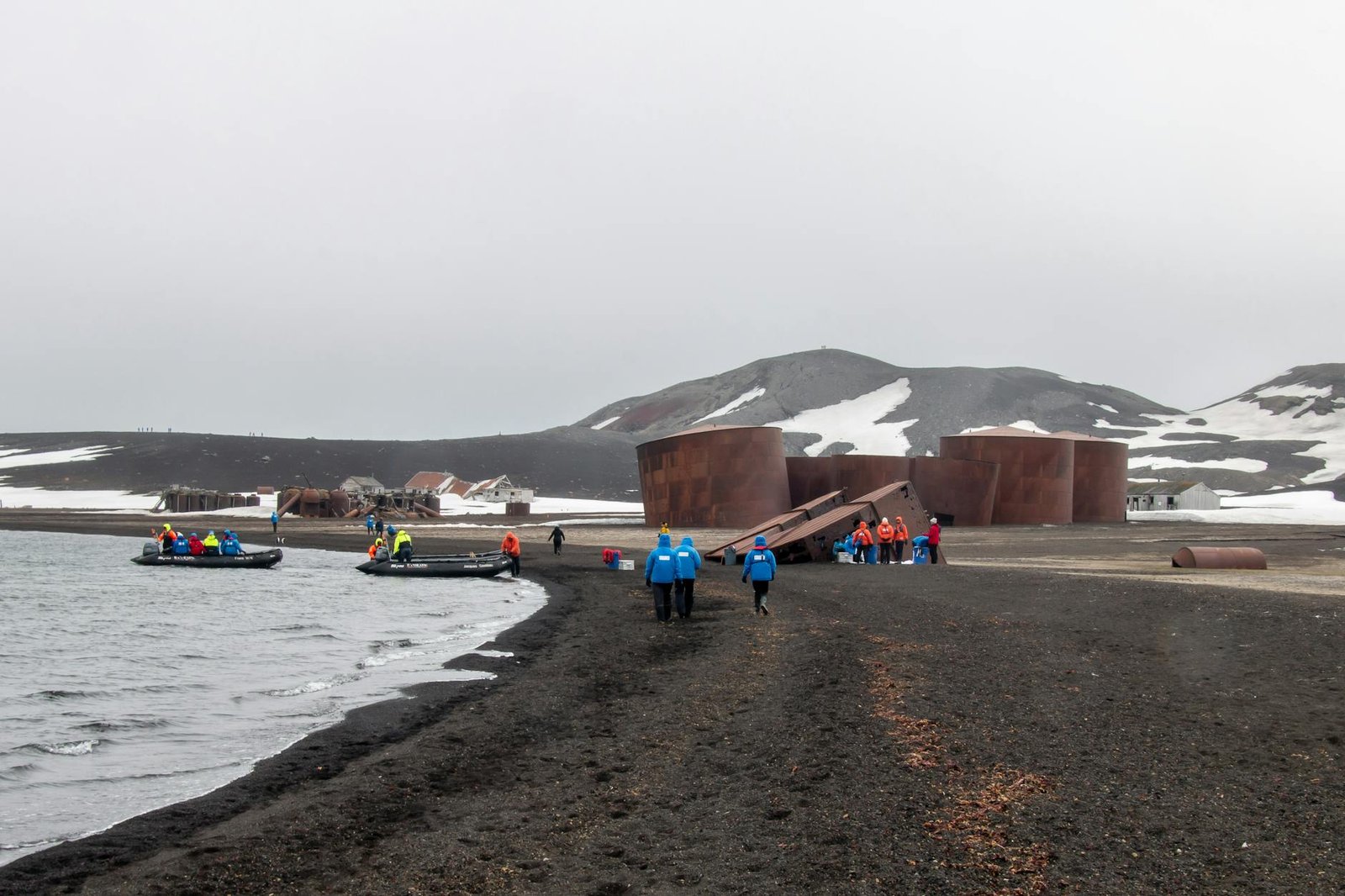
- Arrival method: 100% Zodiac tender. Your ship anchors in the island’s lee, typically off the northwestern coastline where calmer water and a rocky beach landing are possible. Zodiac loading typically takes 20–30 minutes per full ship rotation.
- Terminal facilities: None ashore. ATMs, luggage storage, Wi-Fi, tourist info desks — none of these exist. All briefings, gear storage, and safety procedures happen aboard your ship before disembarkation.
- Landing registration: Your ship’s expedition team registers the landing with IAATO; passenger numbers are strictly limited (typically 100 passengers ashore at any one time per IAATO rules). Expect a staggered departure from your vessel.
- Distance to “civilization”: The nearest permanent human settlement is Argentina’s Esperanza Base (~160 km north), and the nearest city is Ushuaia, Argentina — approximately 1,100 km north across the Drake Passage. Check [Google Maps](https://www.google.com/maps/search/Astrolabe+Island+Antarctica+cruise+terminal) for geographic orientation relative to the Peninsula.
—
Getting to the Island

This section works differently from any other port guide you’ve ever read — because you don’t “get to” Astrolabe Island independently. You arrive exclusively as a passenger on an expedition cruise vessel that has included it as a programmed landing. Here’s how that movement works in practice:
- On Foot (aboard ship to Zodiac platform): You walk from your cabin to the ship’s Zodiac embarkation deck (usually Deck 3 or 4 on expedition vessels, operator-dependent). Wear all your landing gear before you go — you won’t come back for it. The Zodiac ride ashore is typically 5–10 minutes each way depending on anchorage distance.
- Zodiac (ship → island): Included in your expedition cruise fare. The Zodiac ride is managed by trained expedition staff; expect wet landings (stepping out into ankle-deep water on a rocky beach) in most conditions. Waterproof boots provided or required by virtually all operators.
- Bus/Metro: Does not exist.
- Taxi: Does not exist.
- Hop-On Hop-Off: Does not exist.
- Rental Car/Scooter: Does not exist.
- Ship Shore Excursion: Your entire landing IS the shore excursion. Optional add-ons (see activities below) such as sea kayaking are pre-booked through your expedition operator, often months before departure. If you haven’t booked optional activities before boarding, availability is very limited. Browse pre-departure options via [Viator](https://www.viator.com/search/Astrolabe+Island+Antarctica) or [GetYourGuide](https://www.getyourguide.com/s/?q=Astrolabe+Island+Antarctica¤cy=USD&partner_id=MHU0UHU) when planning your broader Antarctica expedition.
—
Top Things to Do at Astrolabe Island Antarctica
There are no admission fees, no tour buses, and no queue-jump tickets here — just extraordinary wilderness that demands respect, preparation, and complete presence. Here are the experiences that make this landing genuinely unforgettable.
Must-See
1. Chinstrap Penguin Colony (free) — Astrolabe Island supports one of the most accessible chinstrap penguin rookeries on the entire Peninsula, with thousands of birds nesting in dense colonies on the island’s rocky upper slopes. You don’t approach them — they approach you, standing within 1 meter under IAATO’s 5-meter visitor rule (which the penguins cheerfully ignore). The noise, the smell, the sheer chaotic vitality of a working rookery is something no wildlife documentary captures accurately. Book your broader Antarctic expedition with optional kayaking via [guided tour on Viator](https://www.viator.com/search/Astrolabe+Island+Antarctica) to position yourself near wildlife at water level too. Allow 45–90 minutes just in the colony.
2. Zodiac Cruising the Island Perimeter (included with ship) — Many expedition operators offer a dedicated Zodiac “cruise” around Astrolabe’s ice cliffs and sea caves before or after the beach landing. This is where you get face-level encounters with leopard seals hauled out on ice floes, crabeater seals, and the full dramatic geology of the island — basalt columns plunging into steel-grey water. It’s not always offered, but ask your expedition team specifically. Allow 60–90 minutes.
3. Summit Walk to Penguin Ridgeline (free) — A steep, unmarked route leads from the beach landing zone up through penguin colonies to a high ridgeline with panoramic views of the Bransfield Strait, the South Shetland Islands, and — on clear days — the distant spine of the Antarctic Peninsula. It’s demanding (loose rock, guano-slicked surfaces, possible snow), but the reward is a 360-degree Antarctic landscape that no photograph does justice. Allow 60–75 minutes return.
4. Sea Kayaking the Island’s Western Shoreline (from USD 139.52) — If your expedition operator offers it, sea kayaking at Astrolabe is transformative. You paddle at water level past chinstrap colonies diving from rocks, beneath glacial ice walls, and occasionally alongside curious penguins porpoising alongside your hull. This is the activity that separates a standard Antarctic cruise from something you’ll be describing to strangers at dinner parties for the rest of your life. Pre-book via [Viator’s Kayak & Walk experience](https://www.viator.com/search/Astrolabe+Island+Antarctica) 🎟 Book: Kayak & Walk. Allow the full landing window — typically 3–4 hours for a combined kayak and walk day.
Beaches & Nature
5. Rocky Beach Landing Zone (free) — The “beach” at Astrolabe is not sand — it’s cobbled volcanic rock, often edged with brash ice and kelp, with Weddell seals flopped completely indifferently at the water’s edge. Spend time here before heading uphill; the foreshore is where most wildlife encounters happen spontaneously and where the light (especially in Antarctic summer’s low-angle golden hours) is spectacular for photography. Allow 20–30 minutes.
6. Ice & Brash Field Photography (free) — Depending on season and recent conditions, the anchorage area around Astrolabe is often dotted with spectacular bergy bits — house-sized chunks of glacial ice in impossible shades of blue. Your Zodiac ride through this field is arguably the most visually dramatic 10 minutes of any Antarctic itinerary. Have your camera accessible on the Zodiac ride in, not buried in your dry bag. Allow the full transit time — 10–15 minutes each way.
7. Birdwatching: Antarctic Terns, Skuas & Snow Petrels (free) — Astrolabe’s upper cliffs host nesting south polar skuas and Antarctic terns alongside the penguins, and snow petrels — the most purely white birds on the planet — are commonly spotted riding thermals above the ridgeline. Bring binoculars; the cliff faces are worth scanning carefully. Allow ongoing attention throughout your landing.
8. Geology Walk: Basalt Columns & Volcanic Formations (free) — Astrolabe is volcanic in origin and the exposed geology on its western flanks is dramatic — columnar jointing, dolerite intrusions, and striated rock faces polished by glacier retreat. Your ship’s geologist or naturalist guide will typically narrate this during the shore walk; it’s a worthwhile parallel narrative to the wildlife story. Allow 30–45 minutes alongside your ridge walk.
Day Trips
9. Ushuaia Pre-Cruise Exploration (from USD 250) — If you’re sailing from Ushuaia (the most common embarkation port for Antarctic Peninsula itineraries), arriving 2–3 days early gives you time to explore “the world’s southernmost city” — its waterfront, Tierra del Fuego National Park, and the fascinating End of the World Museum. This half-day city tour from [Viator’s Ushuaia discovery experience](https://www.viator.com/search/Astrolabe+Island+Antarctica) 🎟 Book: Ushuaia Discover the Last City Before Antarctica is excellent context-setting before you cross the Drake. Allow 2.5 hours for the tour plus additional time at leisure.
10. Guided Kayak Exploration — New Zealand Departures (from USD 160.76) — If your Antarctica expedition routes via Christchurch or New Zealand, the [Kayak & Pitt Head Nature Loop on Viator](https://www.viator.com/search/Astrolabe+Island+Antarctica) 🎟 Book: Kayak & Pitt Head Nature Loop – Guided Kayak & Unguided Walk – New Zealand offers superb cold-water kayaking preparation and wildlife immersion in similarly dramatic scenery — excellent physical and psychological preparation for Antarctic paddling. Allow 8 hours.
Family Picks
11. Penguin Behaviour Watching with Expedition Naturalists (included) — Your ship’s naturalist team typically provides interpretive guidance ashore, narrating penguin nesting behavior, chick development (in season, December–February), and colony social dynamics in real time. For younger passengers, this structured wildlife observation — guided by genuine field experts, not tour scripts — is genuinely educational and memorable in a way classroom biology never matches. Allow 45–60 minutes with a naturalist guide.
12. Zodiac Boarding & Antarctic Safety Briefing (included) — For children aboard expedition ships, the Zodiac embarkation process itself — the gear, the procedures, the controlled excitement of stepping into an inflatable craft in Antarctic conditions — is a formative experience. Many operators offer brief “Junior Expedition Member” programs. Check with your ship’s expedition team before departure.
Off the Beaten Track
13. Pre-Dawn or Midnight Sun Landing (weather permitting, included) — In midsummer (December–January), Antarctic daylight is 20+ hours, and some expedition operators schedule optional early-morning or late-evening Zodiac runs for photographers and wildlife enthusiasts when human traffic ashore is minimal and the light is extraordinary. Ask specifically about this when booking; it’s not always advertised prominently but is often available on request.
14. Hydrophone Listening Session Aboard Ship (included with select operators) — Some high-end expedition vessels deploy hydrophones (underwater microphones) in the anchorage at Astrolabe to capture ambient ocean sound — whale calls, ice movement, the clicks and whistles of the underwater environment just meters from the penguin colony. It’s bizarre, haunting, and completely unlike any wildlife experience on land. Ask your expedition director if this is available.
—
What to Eat & Drink

There are no restaurants, cafes, food stalls, or fresh water sources at Astrolabe Island — all meals and beverages are provided aboard your expedition ship, and IAATO regulations strictly prohibit bringing food or drink ashore (no exceptions, no matter how long the landing). The food culture here is entirely defined by your ship’s galley, which on quality expedition vessels is typically excellent — hot soup and warm drinks waiting for you when you return from a cold landing are a genuine comfort.
- Post-landing hot chocolate or soup — The universal Antarctic expedition tradition; available at your ship’s buffet or dining room immediately after Zodiac return. Free (included in cruise fare). Non-negotiable ritual.
- Ship dining — expedition-grade cuisine — Most mid-to-premium expedition vessels (Quark, Hurtigruten, Ponant, Silversea Expeditions, Aurora Expeditions) serve restaurant-quality meals; included in cruise fare, with wine/spirits at additional cost. Budget USD 10–20 per person per day for beverages depending on operator.
- Ushuaia pre-cruise dining — Centolla (king crab) — If embarking from Ushuaia, centolla (southern king crab) is the local specialty and genuinely exceptional. Try La Casa de los Mariscos or Chez Manu restaurant for centolla gratinado. Mains ARS 4,000–8,000 (approximately USD 12–25 at current rates).
- Ushuaia — Patagonian lamb — Slow-roasted cordero patagónico is another must in Ushuaia’s restaurants. Rustic, smoky, served with chimichurri. Mains USD 18–30 at mid-range restaurants along San Martín pedestrian street.
- Ship bar — end-of-expedition whisky or pisco sour — The tradition of celebrating a successful Antarctic landing at the ship’s bar is real and universal. Budget USD 8–15 per drink depending on vessel class.
- Drake Passage survival snacks — If you cross the Drake (2 days each way), keep crackers, ginger tablets, and light snacks in your cabin. Your ship’s shop typically stocks these; USD 3–8.
—
Shopping
There is absolutely nothing to buy at Astrolabe Island itself — no vendors, no stalls, no pop-up gift shops. What you will find are your ship’s onboard boutique and, critically, the shops and markets of your embarkation port, which for most Antarctic Peninsula itineraries means Ushuaia, Argentina. Ushuaia’s San Martín Street pedestrian zone is worth 2–3 hours of browsing; look for high-quality Patagonian wool goods (gloves, ponchos, scarves), locally-made carved wood, Antarctic wildlife photography books, and Tierra del Fuego artisan silver jewelry. Prices are genuinely reasonable by international standards — wool ponchos around USD 30–60, silver pieces USD 20–80.
Avoid the mass-produced “souvenir Antarctica” merchandise sold in bulk at cruise-adjacent shops — plastic penguins made in China and synthetic fleece branded with “End of the World.” What’s worth spending on: a serious photographic book about the Antarctic Peninsula (check your ship’s library first), a high-quality wool base layer from local Ushuaian outfitters if you realize mid-voyage yours isn’t warm enough (extremely practical), and perhaps a bottle of locally-produced Patagonian wine or artisan spirits as a keepsake. Your ship’s boutique will also stock branded expedition gear and clothing — often of surprisingly good quality — which makes excellent practical souvenirs.
—
How to Plan Your Day
4 hours ashore (typical standard landing window):
Begin with Zodiac transit from ship (~10 minutes). Immediately after wet landing on the rocky beach, spend 20 minutes on the foreshore observing Weddell seals and taking in the ice conditions. Move uphill to the first penguin colony level — spend 45–60 minutes here with your ship’s naturalist. Continue up to the ridge viewpoint (30 minutes climbing, 20 minutes at top). Descend back through the colony via a slightly different route (~30 minutes). Return to foreshore for final photography and Zodiac embarkation queue (~20 minutes). Return to ship and proceed immediately to the galley for hot soup.
6–7 hours ashore (extended landing or combined Zodiac cruise day):
Begin as above with foreshore arrival and penguin colony visit (90 minutes total). Opt for the dedicated Zodiac cruise around the island’s ice cliffs and sea caves (90 minutes) — coordinate with your ship’s expedition team for the timing. Return to beach, take the ridge summit walk with full naturalist commentary (75 minutes). Spend remaining time photographing, watching penguin highway traffic between colony and sea, and observing skua behavior on the upper slopes. Extended Zodiac return with deliberate passage through the brash ice field.
Full day (8+ hours — rare, but possible in optimal conditions):
This is a sea kayaking day. Pre-booked kayakers launch from the ship (or beach) for a 3–4 hour guided paddle around the island’s western and northern shores (~3–4 hours on water). Non-kayakers do the full ridge walk and Zodiac cruise as described above. Everyone reassembles ashore for a mid-day Zodiac return for lunch aboard ship. Some operators offer a second afternoon landing — an “evening” landing in the 24-hour summer daylight — for low-angle photography and a quieter colony experience when other ships have departed. This full-day structure requires an operator who specifically
🎟️ Things to Book in Advance
These highly-rated experiences fill up fast — book before you arrive to avoid missing out.


This page contains affiliate links. If you book through them, we may earn a small commission at no extra cost to you.
Leave a Reply