

European River Cruises
European River Cruises
Châteauneuf-du-Pape Cruise Port Guide: Things to Do, Transport & What to Expect
France
Ships anchor offshore; tenders transport passengers to the river port in central Châteauneuf-du-Pape.
Choose the Right Port Day
Best Overall
One or two focused winery visits followed by a long lunch at a village restaurant. Don't try to do more — the village rewards a slow pace, and rushing tastings wastes the point of being here.
Best Beach
Not relevant — this is a landlocked wine village with no beach access.
With Kids
The château ruins are genuinely fun for kids to scramble around, and the village is small enough to manage easily. Skip the tasting rooms and budget extra time for the panoramic viewpoint instead.
Only 3-4 Hours
Walk up to the château ruins for the Rhône valley view, then pick one or two cave tastings on the main strip (Château Rayas or Maison Bouachon are reliable stops), grab lunch at a terrace bistro, and walk back down before your return transfer.
Cheapest Option
Walk the village for free, do one entry-level cave tasting (check locally for current rates, typically a few euros), and buy a baguette and charcuterie from a local shop for a picnic near the ruins.
What To Avoid
Don't over-schedule multiple wineries back to back and rush every stop. Also avoid buying heavy wine bottles early in the day if you have a long transfer back — ship storage for wine purchases can be limited on river cruises.
Top Things To Do
1
Walk to the Château des Papes Ruins
The ruined papal château at the top of the village is the defining landmark and offers a panoramic view across the Rhône valley and vineyards that genuinely justifies the climb. It takes about 15 minutes to walk up from the village centre. Entry to the exterior viewpoint is free.
2
Wine Cave Tasting
The whole point of being here. Dozens of domaines and négociants offer tastings along the main strip and surrounding streets. Maison Bouachon, Château La Nerthe, and Château Rayas are well-regarded names. Most caves welcome walk-ins during the day. You are tasting one of France's great appellations at the source — take it seriously.
3
Lunch at a Village Restaurant
A proper Provençal lunch — think lamb, tapenade, local cheese, and a glass of the appellation — is one of the better ways to spend time here. Several restaurants on and around the central square serve lunch menus at reasonable prices. Book ahead if your ship visit falls on a weekend in high season.
Show 2 more things to do in Châteauneuf-du-Pape
4
Explore the Village Streets
The village is genuinely attractive — narrow stone lanes, Provençal architecture, small artisan shops, and wine-related boutiques. It is not manicured or theme-parked. A slow wander before or after a tasting takes 30-40 minutes and costs nothing.
5
Visit the Wine Museum (Musée du Vin)
A small museum dedicated to the history of winemaking in the appellation, housed in a cave near the village centre. Low-key and not essential, but worthwhile if you have extra time or want context before hitting the tasting rooms.
Book with the ship, or on your own?
Booking independently
- Often noticeably cheaper than the ship’s version of the same tour.
- Smaller groups and local operators, with traveler reviews you can read before you pay.
- Free cancellation on most tours, usually up to 24 hours before.
When the ship’s excursion makes sense
- Short port calls or long transfers where the timing is tight.
- Tender-only stops where getting ashore can run late.
- The ship waits for its own delayed excursions — it won’t wait for independent ones, so leave a buffer before all-aboard.
We may earn a commission when you book through our links, at no extra cost to you — it’s how we keep these guides free.
Quick Take
- Port Type
- Scenic Wine Village Stop
- Best For
- Wine lovers, slow walkers who enjoy medieval villages, and anyone happy with a half-day of tastings and a château ruin
- Avoid If
- You want beaches, big-city energy, or active excursions — there are none here
- Walkability
- High within the village itself; the compact centre is easily covered on foot in 1-2 hours
- Budget Fit
- Moderate — wine tastings can add up fast, but the village itself is free to explore
- Good For Short Calls?
- Yes, almost perfectly sized for a 3-4 hour call
Port Overview
Châteauneuf-du-Pape is not a cruise port in any conventional sense — there is no dock, no terminal, and no tender operation. River cruise ships sailing the Rhône typically moor at Avignon or at a nearby quay and transfer guests by included coach or local taxi to the village, which sits about 15-20 km north of Avignon. That transfer eats into your time ashore, so a realistic call here is 3-4 hours, not a full day.
The village itself is small, medieval, and almost entirely organized around wine. The famous appellation produces some of the most respected red wines in France, and the caves and tasting rooms lining the main streets make the purpose of a visit obvious. There is also a ruined papal château at the top of the hill with commanding views over the Rhône valley and the surrounding vineyards — genuinely worth the short climb.
This is a focused, unhurried stop. It works well for wine lovers and anyone who appreciates a compact Provençal village without tourist-park polish. If you want beaches, museums, or active excursions, you are better served staying aboard or heading to Avignon on a different excursion.
Is It Safe?
Châteauneuf-du-Pape is a safe, low-crime Provençal village. Normal European travel awareness applies — watch your belongings in crowds and keep valuables secure. No specific safety concerns for cruise visitors.
Accessibility & Walkability
The village is compact but hilly. The main tasting street is walkable on relatively flat ground, but reaching the château ruins requires a moderately steep climb on uneven surfaces and is not wheelchair accessible. Mobility-limited visitors can still enjoy the village centre, wine caves, and restaurants without attempting the hilltop. Advise your cruise line in advance if you have accessibility needs so they can confirm coach suitability.
Outside the Terminal
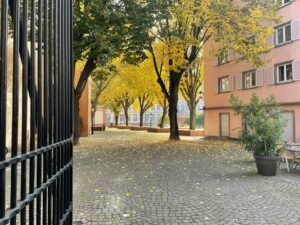
There is no terminal. You will step off a coach or taxi directly onto the village streets, typically near the main wine route or the central square. The atmosphere is immediately Provençal — stone buildings, vine-draped facades, and the smell of sun-warmed gravel. Get your bearings quickly: the château ruins are uphill, the main tasting caves are along the central strip, and restaurants cluster around the square.
Local Food & Drink
Eating here is genuinely good if you choose the right place. The village restaurants lean Provençal — expect lamb, duck, wild boar, local cheeses, olives, and tapenade alongside the obvious wine list. Set lunch menus (entrée, plat, dessert) offer the best value. Avoid anywhere with a laminated tourist menu photo-board at the entrance. If you are short on time, a charcuterie and cheese board from a local shop with a glass of the appellation wine is a perfectly respectable alternative. Note that many restaurants close between lunch and dinner service, so time your meal accordingly.
Shopping
Shopping here means wine, wine accessories, and Provençal food products. Most caves will ship bottles internationally — ask about shipping if you are concerned about carrying bottles back to the ship. There are also a handful of small boutiques selling lavender products, local honey, and artisan goods, though the selection is limited compared to Avignon or larger Provençal markets.
Money & Currency
- Currency
- Euro (EUR)
- USD Accepted?
- No
- Card Payments
- Good in most wine caves and restaurants; carry some cash for smaller purchases
- ATMs
- Limited — withdraw cash in Avignon before your visit if possible
- Tipping
- Not obligatory in France; rounding up or leaving a few euros for good service is appreciated
- Notes
- Wine caves generally accept cards, but small artisan stalls may be cash only.
Weather & Best Time
- Best months
- April to June and September to October — warm, clear, and less crowded
- Avoid
- July and August are hot and busy; the Mistral wind can make any season feel colder than expected
- Temperature
- 15-28°C (59-82°F) during spring and autumn river cruise season
- Notes
- The Mistral wind blows frequently down the Rhône valley and can be strong even on sunny days. Bring a light layer regardless of the season.
Airport Information
- Airport
- Avignon Provence Airport (AVN) or Marseille Provence Airport (MRS)
- Distance
- AVN is approximately 10 km from Avignon city; MRS is approximately 90 km
- Getting there
- Taxi or rental car from either airport to Avignon, then onward to the village. AVN has limited international connections; MRS is the main regional hub.
- Notes
- Most cruisers embark and disembark in Avignon or Lyon — confirm your ship's home port before booking flights.
Getting Around from the Port
Ship-organised coach transfer
Most Rhône river cruise lines include a guided excursion or at minimum a transfer to Châteauneuf-du-Pape. Check your cruise programme — this is often the easiest and most time-efficient option.
Book a transfer 5% off with code TPO5 at checkoutTaxi from Avignon
If you are going independently, a taxi from Avignon city centre or the ship's quay is the most practical option. Agree a return pickup time before the driver leaves.
Book a transfer 5% off with code TPO5 at checkoutWalking within the village
Once in the village, everything is walkable. The château ruins, main tasting street, and restaurants are all within a 10-15 minute walk of each other.
Details last checked April 2026
Check The Port Traffic
Cruise Ships in Port
Once you have your shore plan, use the schedule to see how busy the harbour will be on your date, plus the ships, lines, and published call windows.
Sun
Mon
Tue
Wed
Thu
Fri
Sat
1
2
3
4
5
6
7
8
9
10
11
12
13
14
15
16
17
18
19
20
21
22
23
24
25
26
27
28
29
30
31
Quiet (1–2)
Busy (3–4)
Packed (5+)
0 scheduled calls
July 30, 2026
No scheduled cruise ship calls were found for this date selection. Pick a highlighted day on the calendar above, widen the range, or search for a different ship or line.
Planning a cruise here?
Uniworld, AmaWaterways, Emerald Waterways & more sail to Châteauneuf-du-Pape.
Practical Tips for Cruise Passengers
- Confirm your ship's exact excursion or transfer arrangements before you arrive — Châteauneuf-du-Pape is not independently easy to reach without a car or pre-arranged taxi.
- The village is very small and very wine-focused. If you do not drink, there is still a pleasant 2-hour visit available (château ruins, village walk, lunch), but it will feel complete, not short.
- Buy wine carefully — river cruise cabins have limited storage, and bottles are heavy. Consider shipping direct from a cave rather than lugging bottles through transfers.
- Time your tasting room visits for early in the call, before lunch, when cave staff are most attentive and less rushed.
- Book lunch in advance if visiting on a weekend in May, June, or September — the best village restaurants fill up quickly.
- Wear comfortable shoes with grip. The path to the château ruins and many of the village lanes are uneven cobblestone or gravel.
Frequently Asked Questions
No. Ships moor at Avignon or a nearby Rhône quay and guests travel to the village by coach or taxi — typically a 20-30 minute drive. There is no dock, terminal, or direct water access at Châteauneuf-du-Pape.
There is still a pleasant half-morning here — the château ruins, village architecture, and a good Provençal lunch are genuinely worthwhile. However, most of the village's identity and energy revolves around wine, so non-drinkers may find it limited after 1-2 hours.
Yes, but you will need to arrange your own transport from the ship's mooring, which typically means a pre-booked taxi or rental car from Avignon. Public transport to the village is very limited and impractical for a short port call.
Expect to lose 40-60 minutes total to transfers each way. On a 4-hour call, you realistically have 2.5-3 hours in the village itself — enough for a tasting or two, the château ruins, and a quick lunch, but not all three at a relaxed pace.
Generally yes, but check your cruise line's policy on bottles in cabins and whether storage is available. Many caves can arrange direct international shipping, which is often more practical than carrying bottles through transfers and onto the ship.
Find cruises to Châteauneuf-du-Pape, France
Compare sailings and book with no fees — best price guaranteed.
We may earn a commission when you book through our links, at no extra cost to you — it’s how we keep these guides free.
✉ Sailing to Châteauneuf-du-Pape? Get your port-day plan
Tell us your sail date and we’ll email you a short Châteauneuf-du-Pape plan about 60 days out — when the good excursions start selling out — plus a final checklist 2 weeks before. Two emails, then done. Unsubscribe anytime.
European River Cruises
View All
More European River Cruises Ports

European River Cruises

European River Cruises
European River Cruises
