

European River Cruises
European River Cruises
Frankfurt Am Main Cruise Port Guide: Things to Do & Practical Tips
Germany
Frankfurt cruise ships dock at the Main River terminals in the Sachsenhausen district, approximately 3-4 km south of the city center.
Choose the Right Port Day
Best Overall
Spend the morning in the reconstructed Altstadt around Römerberg, visit the Dom, then cross to Sachsenhausen for an authentic apple wine lunch and a walk back along the Museumsufer embankment.
Best Beach
Not relevant. Frankfurt is an inland river city with no beach access.
With Kids
Ride the U-Bahn one stop to the Museumsufer and visit the Naturmuseum Senckenberg — one of the best natural history museums in Germany, with full dinosaur skeletons and child-friendly exhibits.
Only 3-4 Hours
Walk the Eiserner Steg bridge for river views, cross into Römerberg square, duck into the Cathedral (Dom) for free, and grab a lunch of Grüne Soße with eggs at a Sachsenhausen tavern across the river.
Cheapest Option
Walk from the dock to Römerberg, visit the Dom for free, stroll the Sachsenhausen apple wine district, and grab a traditional lunch at an Apfelwein tavern for around €12-18 per person.
What To Avoid
Avoid wasting time in the modern shopping malls around Zeil — it's generic retail you can find anywhere. Also skip the hop-on hop-off bus; Frankfurt's core is compact enough that walking beats it comfortably.
Quick Take
- Port Type
- River City Port
- Best For
- History buffs, architecture lovers, food and market fans, and anyone who enjoys a very walkable European city
- Avoid If
- You expect a quaint medieval town — Frankfurt is a modern financial hub with a reconstructed old town, not the fairy-tale Germany you might picture
- Walkability
- Excellent. The Altstadt, Römerberg, and riverfront promenade are all easily reached on foot from the dock in 10-20 minutes
- Budget Fit
- Moderate. Free sights exist but food and drinks run higher than in smaller German river towns
- Good For Short Calls?
- Yes, very comfortably. The core historic area, market, and cathedral can be covered in 3-4 hours
Top Things To Do
1
Frankfurt Highlights English Walking Tour
We are the #1 tour in Frankfurt for many reasons, but mainly our passion and desire to make your visit here memorable. We want you to…
2h
2
Heidelberg Castle and City Day Tour from Frankfurt
Day tour to the beautiful city of Heidelberg, this historic old city on the Neckar is visited by millions of visitors from all over the world…
5h 30m
Our picks in Frankfurt Am Main
3
Römerberg Square and the Reconstructed Altstadt
Frankfurt's most photographed space — the half-timbered facades surrounding the central square were rebuilt after WWII and the newer Dom-Römer reconstruction fills in the surrounding blocks. It's genuine in spirit if not entirely in age. Worth an hour to walk through, pop into the Römer city hall, and get your bearings.
4
Kaiserdom (Imperial Cathedral)
The real medieval standout in Frankfurt. This Gothic cathedral served as the coronation church for Holy Roman Emperors. The tower climb gives the best elevated view in the city, and the interior is free to enter. Genuinely worth the stop — not just a box-tick.
5
Sachsenhausen Apple Wine Taverns
Cross the river into the Sachsenhausen district for lunch or a mid-morning break at one of the traditional Apfelwein (apple wine) taverns. Classics like Zur Sonne or Wagner have been serving Frankfurt's signature drink and hearty local food for generations. Grüne Soße (green herb sauce) with boiled eggs or schnitzel is the dish to order.
Show 3 more things to do in Frankfurt Am Main
6
Museumsufer (Museum Embankment)
Over a dozen museums line the south bank of the Main in a walkable stretch. Standouts include the Städel (one of Germany's top art museums), the German Film Museum, and the Museum of World Cultures. You won't cover them all, so pick one based on your interest rather than trying to sprint through several.
7
Naturmuseum Senckenberg
One of the finest natural history museums in Europe — full dinosaur skeletons, geological collections, and well-designed exhibits. It's a short U-Bahn ride from the riverfront. Families with kids will get the most from it, but genuinely interesting for adults too. Rarely feels overcrowded.
8
Kleinmarkthalle (Indoor Market Hall)
A covered food market a short walk from Römerberg where local vendors sell fresh produce, cheeses, meats, baked goods, and Frankfurt specialties. It's the best place to try Handkäse mit Musik (marinated sour cheese) or pick up a proper pretzel. Lively, local, and free to browse.
Book with the ship, or on your own?
Booking independently
- Often noticeably cheaper than the ship’s version of the same tour.
- Smaller groups and local operators, with traveler reviews you can read before you pay.
- Free cancellation on most tours, usually up to 24 hours before.
When the ship’s excursion makes sense
- Short port calls or long transfers where the timing is tight.
- Tender-only stops where getting ashore can run late.
- The ship waits for its own delayed excursions — it won’t wait for independent ones, so leave a buffer before all-aboard.
Going independent? Compare tours in Frankfurt Am Main → — the best-reviewed ones sell out first.
We may earn a commission when you book through our links, at no extra cost to you — it’s how we keep these guides free.
Check The Port Traffic
Cruise Ships in Port
Once you have your shore plan, use the schedule to see how busy the harbour will be on your date, plus the ships, lines, and published call windows.
Sun
Mon
Tue
Wed
Thu
Fri
Sat
1
2
3
4
5
6
7
8
9
10
11
12
13
1 ship
14
15
16
17
1 ship
18
19
1 ship
20
21
22
23
3 ships
24
1 ship
25
1 ship
26
27
1 ship
28
29
30
Quiet (1–2)
Busy (3–4)
Packed (5+)
0 scheduled calls
September 21, 2026
No scheduled cruise ship calls were found for this date selection. Pick a highlighted day on the calendar above, widen the range, or search for a different ship or line.
Port Overview
Frankfurt's river cruise ships dock along the Main River embankment, typically near the Deutschherrnufer or the Sachsenhausen side, placing you within easy walking distance of the city's historic core. This is one of the most convenient urban docking situations on any European river itinerary — no shuttle, no tender, just a walk over one of the city's pedestrian bridges and you're in the action.
Frankfurt is Germany's financial capital and a major international hub, which means it's polished, well-connected, and expensive by German standards. Don't expect Rothenburg ob der Tauber. The old town was largely destroyed in WWII and has been carefully reconstructed — it's attractive and historically informed, but it's new stone, not ancient streets. The Cathedral (Kaiserdom) is the real medieval standout.
The Museumsufer embankment lines the south bank with over a dozen museums within walking distance of each other — one of the highest concentrations in Germany. If you're stopping here for embarkation or debarkation, Frankfurt's airport connectivity makes it one of the most practical start or end points on any Main or Rhine itinerary.
Is It Safe?
Frankfurt is a safe city by any European standard. The area around the Hauptbahnhof (central train station) has a visible drug and homelessness presence — it's not dangerous but can be confronting if you wander that direction. Stick to the riverfront, Römerberg, and Sachsenhausen areas and you'll encounter no issues. Normal city precautions apply: keep bags zipped in crowded areas and on public transport.
Accessibility & Walkability
Frankfurt's riverfront promenade and Römerberg area are largely flat and paved, making wheelchair and mobility-aid access reasonable. The Dom interior has some uneven stone flooring. Museum access varies — most of the Museumsufer institutions have elevator access. The metro and trams have accessible options but older stations may have stairs; check ahead if this matters.
Outside the Terminal
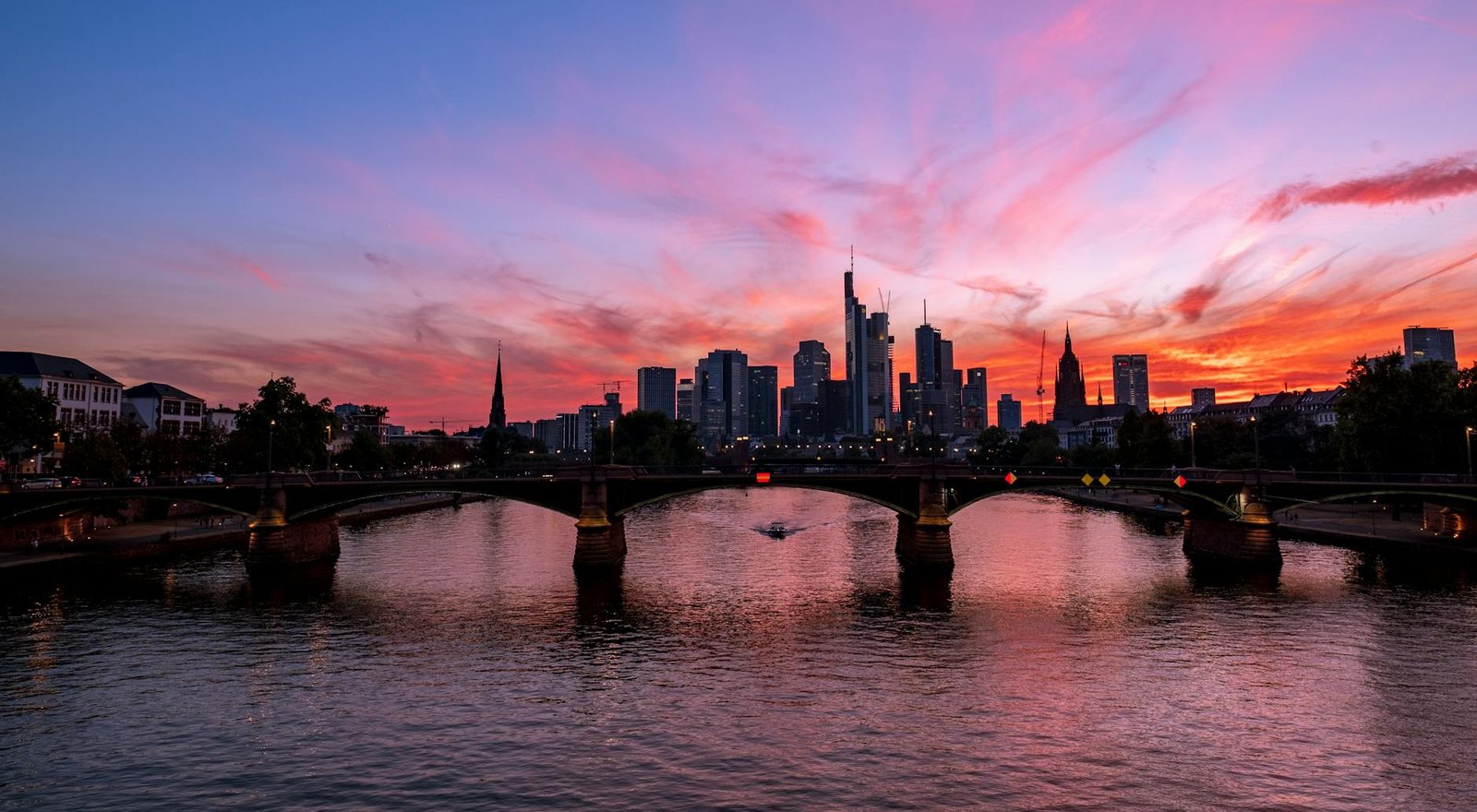
Stepping off the ship you'll find yourself on the Main riverbank with the Eiserner Steg footbridge visible nearby and the Frankfurt skyline directly ahead. There's no commercial port terminal to navigate — you walk off the gangway onto the promenade. The contrast between the modern glass towers and the reconstructed medieval facades across the river is immediate and actually striking. Orientation is easy: river to one side, city ahead.
Local Food & Drink
Frankfurt has a distinct food identity that most cruisers miss. Apfelwein (apple wine, served in a ribbed earthenware jug called a Bembel) is the local drink and tastes nothing like English cider — it's drier and more acidic. Pair it with Grüne Soße, a cold herb sauce served over boiled eggs or beef, which is a Frankfurt original. Handkäse mit Musik is a marinated sour cheese with onions — acquired taste but worth trying once. The Sachsenhausen district is the best neighborhood for authentic tavern dining. The riverfront has tourist-facing cafes that are fine but unremarkable. For a quick grab-and-go lunch, the Kleinmarkthalle has quality options at reasonable prices. Budget roughly €15-25 per person for a sit-down meal with drinks in a traditional tavern.
Shopping
Frankfurt's main shopping is along the Zeil pedestrian street — large chain stores, modern malls, nothing that makes it worth prioritizing on a shore day. For more interesting options, try the boutiques and independent shops in the Berger Strasse area in Bornheim district, or browse the stalls inside Kleinmarkthalle for local food products to take home. Christmas market season (late November through December) transforms Römerberg into one of Germany's better Weihnachtsmärkte and is genuinely worth the port stop if your cruise runs in that window.
Money & Currency
- Currency
- Euro (EUR)
- USD Accepted?
- No
- Card Payments
- Very high. Contactless and chip-and-pin cards accepted almost everywhere including restaurants, museums, and transit. Some traditional taverns and market stalls prefer cash — carry €20-40 to be safe.
- ATMs
- Abundant throughout the city center. Use bank-branded ATMs over standalone machines to avoid high fees.
- Tipping
- Round up or add 5-10% at restaurants. Not obligatory but appreciated. Taxi drivers expect rounding up to the nearest euro.
- Notes
- Frankfurt is one of Germany's more expensive cities. Expect to pay 15-20% more for food and drinks than in smaller river towns on the same itinerary.
Weather & Best Time
- Best months
- May, June, September, October
- Avoid
- January and February are cold and grey with limited appeal for walking. July and August can be hot and crowded.
- Temperature
- 12-25°C (54-77°F) during main river cruise season of April through October
- Notes
- River cruise season on the Main runs primarily spring through autumn. Summer afternoons can be humid. Rain is possible year-round — pack a light layer regardless of season.
Airport Information
- Airport
- Frankfurt Airport (Flughafen Frankfurt, FRA)
- Distance
- Approximately 12 km from the city docking area
- Getting there
- S-Bahn lines S8 and S9 connect Frankfurt Hauptbahnhof to the airport in about 11-15 minutes. Taxi takes 20-35 min depending on traffic and costs roughly $35-50 USD. The S-Bahn is the faster and cheaper option for most travelers.
- Notes
- Frankfurt Airport is one of Europe's busiest hubs, making it the most practical embarkation or debarkation point for Rhine and Main river cruises. Pre-cruise overnight stays in Frankfurt are a common and sensible choice given the airport connections.
Getting Around from the Port
Walking
The riverfront promenade connects directly to Römerberg, Sachsenhausen, and the Museumsufer. Most key sights are within 20 minutes on foot from the dock.
U-Bahn / S-Bahn (Metro)
Frankfurt's metro is fast and clean. Nearest stations to the docking area are Schweizer Platz or Lokalbahnhof. Useful for reaching the Senckenberg Museum, main train station (Hauptbahnhof), or further districts.
Routes & timesTaxi / Rideshare
Taxis are metered and reliable. Uber also operates in Frankfurt. Useful if mobility is limited or weather is poor.
Check Uber fareTram
Several tram lines run along the riverbank and through the city center, connecting the Sachsenhausen side to the Innenstadt and Römerberg area.
Routes & timesDetails last checked April 2026
Planning a cruise here?
Avalon Waterways, CroisiEurope, Uniworld Boutique River Cruise Collection & more sail to Frankfurt Am Main.
Practical Tips for Cruise Passengers
- If your ship is docked in Sachsenhausen, you may be able to walk directly to the apple wine taverns in under 10 minutes — ask your cruise director exactly where you're moored before planning your day.
- The Eiserner Steg footbridge is worth crossing just for the views back toward the skyline — it's free and takes five minutes.
- Buy a Tageskarte (day transit pass) if you plan to use the U-Bahn or tram more than twice — it pays for itself quickly and covers all zones in the central city.
- Frankfurt's Altstadt reconstruction looks best in early morning light before tour groups arrive — get there by 9am if your schedule allows.
- If you're embarking or disembarking here, build in at least one extra night in Frankfurt — the airport is close, the hotel infrastructure is strong, and the city rewards a bit more time than a single shore day allows.
- German museums typically close on Mondays — check days of opening for any museum you plan to visit before committing to it as your main shore day activity.
Frequently Asked Questions
Most river cruise ships dock along the Main riverbank within 15-25 minutes' walk of Römerberg and the historic core. No shuttle or taxi is needed to reach the main sights.
A half day covers the essentials comfortably — Römerberg, the Dom, and lunch in Sachsenhausen. A full day lets you add a museum or explore neighborhoods like Bornheim at a relaxed pace.
Yes, it's one of the best. The airport has direct connections from most of the world, the city is easy to navigate, and there's genuinely interesting things to do if you arrive a day early.
Apfelwein is Frankfurt's traditional fermented apple drink — drier and more tart than cider, served in a ribbed earthenware jug. Try it at a Sachsenhausen tavern; it's a genuine local experience and costs around €3-4 per glass.
Mostly rebuilt — the original Altstadt was largely destroyed in WWII. The Dom-Römer reconstruction completed in 2018 is historically informed and attractive, but it's new construction, not ancient streets. Manage expectations accordingly.
Find cruises to Frankfurt Am Main, Germany
Compare sailings and book with no fees — best price guaranteed.
We may earn a commission when you book through our links, at no extra cost to you — it’s how we keep these guides free.
✉ Sailing to Frankfurt Am Main? Get your port-day plan
Tell us your sail date and we’ll email you a short Frankfurt Am Main plan about 60 days out — when the good excursions start selling out — plus a final checklist 2 weeks before. Two emails, then done. We’ll send one note to confirm it’s really you — unsubscribe anytime.
Same itinerary network
View All
Ports Often Paired With Frankfurt Am Main

European River Cruises

European River Cruises

European River Cruises