MS Polarlys
Times not published
Itinerary: Bergen – Kirkenes – Bergen (11 nights)
Norway
Ships dock at the main pier or anchor in the harbor with tender boats to shore depending on vessel size.
The main event. A 307-meter basalt cliff dropping into the Arctic Ocean, topped by the globe monument and considered Europe's northernmost accessible point for most visitors. The views on a clear day are extraordinary. The visitor center has exhibits, a café, and a chapel. Even in low cloud or fog, standing at the edge of the Arctic Ocean has genuine impact.
Between mid-May and late July the sun does not set — a disorienting and beautiful phenomenon. Winter cruises (November–January) offer polar night and potential Northern Lights. Neither is guaranteed, but both are life-list experiences if conditions cooperate. The plateau is the best viewing spot if transport allows.
A small but solid local museum in Honningsvåg covering the history of the fishing industry, the town's wartime destruction and rebuilding (the Nazis razed most of it in 1944), and the story of North Cape as a destination. Genuinely informative and a good option for those who cannot or choose not to make the plateau trip.
The road from Honningsvåg through the undersea tunnel to Magerøya's interior and north to the plateau passes through treeless tundra, reindeer territory, and dramatic fjord scenery. If you have a rental car or a flexible guide, stopping along the route adds real value beyond the plateau itself. Reindeer on the road are common and completely unfazed by vehicles.
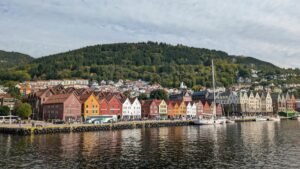
A short and easy walk along the harbor gives a genuine sense of a working Arctic fishing community. Colorful wooden buildings, fishing boats, and mountains reflected in the fjord. Honest, unpretentious, and completely free. Not a highlight by itself, but a good use of spare time before or after excursions.
Magerøya is home to free-roaming reindeer, sea eagles, Arctic foxes (harder to spot), and seabirds including puffins at coastal cliffs in summer. Keep eyes open on any transport to or from North Cape. Dedicated wildlife-focused excursions are offered by some operators, particularly Lindblad, Hurtigruten, and Ponant.
Book with the ship, or on your own?
Booking independently
When the ship’s excursion makes sense
We may earn a commission when you book through our links, at no extra cost to you — it’s how we keep these guides free.
Honningsvåg sits at 70°59'N on the island of Magerøya, making it one of the northernmost towns on earth and the primary gateway for cruise passengers heading to North Cape (Nordkapp). Most ships dock at the town pier or tender into the small harbor, placing you in a compact fishing village with a population of around 2,500. Do not come expecting a destination rich in shoreside activity — the town is functional and authentic but limited. The reason you are here is 34 km north: the North Cape plateau, a 307-meter cliff dropping directly into the Arctic Ocean, marked by the famous globe monument and considered one of Europe's most dramatic geographical landmarks.
Cruise lines running Honningsvåg range from Hurtigruten — which calls here as part of its regular coastal route — to luxury expedition operators like Silversea, Ponant, and Quark. Regardless of ship, the logistics challenge is the same: you have a finite window, the weather is unpredictable year-round, and the plateau visit requires transport. Plan ahead and you will have an unforgettable experience. Wing it and you risk spending your port time watching buses leave without you.
Season matters enormously here. Summer visits (May–August) offer the midnight sun — the sun stays above the horizon for weeks at a stretch, which is otherworldly. Winter calls (November–January) bring polar night and, on lucky evenings, the Northern Lights. Both are legitimate reasons to visit, but winter logistics are harder and conditions are more extreme. Whatever the season, wind on the plateau is serious and the temperature is always colder than the town below.
Honningsvåg is an exceptionally safe town. Crime is essentially a non-issue. The real safety considerations are environmental. Wind on the North Cape plateau can be severe — gusts strong enough to knock you off balance are not unusual, and the cliff edge has no railing in many sections. Stay well back from the edge, particularly with children or in poor visibility. In winter, ice on the plateau surface and on roads into town is a genuine hazard. Wear footwear with grip.
Weather can change fast at this latitude. A clear sky in the harbor does not guarantee clear conditions on the plateau 300 meters above and 34 km north. Fog, sleet, and near-zero visibility are common even in summer. Dress for the worst and consider the experience a bonus if you get clear skies. Hypothermia is a real risk for underdressed passengers who dismiss the wind chill on the plateau.
The town waterfront and main street are relatively flat and manageable for most mobility levels. The North Cape plateau itself is a different story. The visitor center is accessible and there is a viewing area near the building, but the iconic cliff-edge views involve uneven ground, gravel surfaces, and wind exposure. Passengers using wheelchairs or with limited mobility can reach the visitor center by coach and access indoor exhibits and a sheltered viewpoint. The full plateau experience — walking to the globe monument and edge — is challenging without good mobility. The tunnel road (E69) has no pedestrian route, so foot travel to North Cape is not an option regardless of fitness.
Stepping off the ship or tender, you land in a compact harbor area with the town immediately in front of you. There are no aggressive vendors or taxis swarming the dock — this is Norway, not a Caribbean port. The atmosphere is quiet and working-class. A small cluster of shops, a café or two, and the North Cape Museum are within a short walk. If you have booked a ship excursion, coaches are usually staged near the pier and you will be directed to them quickly. If you are going independently, your job in the first ten minutes is to locate your bus or arrange your taxi before the limited options get taken. The town is not visually spectacular at dock level — look past it toward the surrounding Arctic landscape, which is the real setting.
Honningsvåg has a handful of cafés and restaurants in town, most clustered near the harbor. Expect Norwegian staples — fish soup (a must), king crab if in season, and simple hot meals. The North Cape visitor center has a café on the plateau, which is convenient if you are spending time up there, though prices reflect the remote location. King crab is a regional specialty and worth trying if your ship excursion or a local restaurant offers it — Finnmark waters produce some of the best in the world. Do not expect a wide dining scene; this is a small working town. If you are a foodie, manage expectations — quality over variety is the operating principle here. Bring snacks if you run cold or need fuel for the plateau wind.
The most reliable option. Ships typically run organized coaches directly to the plateau with a guided return. Timing is coordinated with ship departure so you will not be left behind.
Book bus ticketsA public or scheduled bus service runs between Honningsvåg and North Cape during cruise and tourist season. Independent and cheaper than ship excursions.
Book bus ticketsAvailable in town but limited in number. At peak ship arrival times, demand far exceeds supply. Expensive for a solo traveler but reasonable if split among four.
Book a transfer 5% off with code TPO5 at checkoutHonningsvåg's town center, harbor, and museum are all walkable. Flat near the waterfront, hilly toward residential areas. Walking to North Cape is not a realistic port-day option.
Available but rarely practical for a single port call. Useful only if you have several hours and want flexibility to stop along the E69 road to North Cape for scenery.
Details last checked April 2026
Check The Port Traffic
Once you have your shore plan, use the schedule to see how busy the harbour will be on your date, plus the ships, lines, and published call windows.
Times not published
Itinerary: Bergen – Kirkenes – Bergen (11 nights)
Planning a cruise here?
Hurtigruten, Cunard, Seabourn & more sail to Honningsvåg.
It is mixed — some ships dock directly at the town pier while smaller expedition vessels may tender. Check your ship's port briefing in advance as conditions can also force tendering even when docking is planned.
North Cape plateau is 34 km from the Honningsvåg pier, roughly 45–55 minutes by road through an undersea tunnel. Your options are ship excursion coach, local seasonal bus, or taxi — walking is not feasible on a port day.
Dress for cold, wind, and potential rain regardless of the season. A thermal base layer, insulating mid-layer, and a waterproof windproof outer shell are non-negotiable. Add gloves, a warm hat, and footwear with grip for the plateau surface.
Yes, but only during polar night — roughly November through January when skies are dark enough. You need clear skies, which are not guaranteed, and the best viewing is away from town lights. Summer cruises will not see the Northern Lights regardless of conditions.
Technically no — the nearby headland of Knivskjellodden is slightly further north but requires a 9 km hike each way. North Cape is the northernmost point reachable by road and is treated as the symbolic endpoint by virtually all visitors and cruise itineraries.
Find cruises to Honningsvåg, Norway
Compare sailings and book with no fees — best price guaranteed.
We may earn a commission when you book through our links, at no extra cost to you — it’s how we keep these guides free.
Tell us your sail date and we’ll email you a short Honningsvåg plan about 60 days out — when the good excursions start selling out — plus a final checklist 2 weeks before. Two emails, then done. Unsubscribe anytime.