
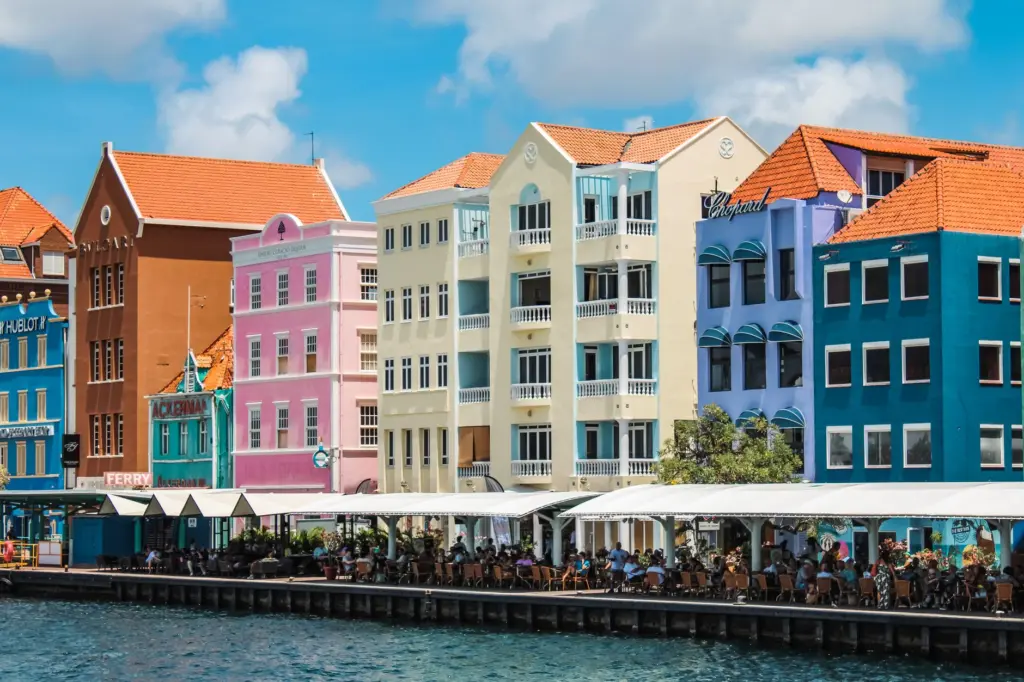
Aruba and Curaçao are easy places to overplan. A vehicle puts beaches, coastline and island sights within reach, then tempts you to add one more stop until the return becomes the most stressful part of the day. The useful plan is a loop with one main beach, one or two named sights and enough margin to return the vehicle before all-aboard.
Both Oranjestad and Willemstad are pier ports with walkable centers. That means you do not need a vehicle to have a good day. Rent one when the coast or a farther beach is the priority, then save the town walk for after the keys are back.
Our schedule covers the sailings we track and undercounts some lines. The late-departure percentages below are useful for comparing these ports in the same snapshot, and the time printed for your own sailing remains the one that matters.
Aruba loop: north coast, Eagle Beach, Oranjestad
The pier is a 5-10 minute walk from Oranjestad’s shopping and dining streets. Collecting a rental car is worthwhile only when you want to go beyond that compact center. Rental companies operate near the terminal, but confirm availability and pickup arrangements before the cruise.
Use this rough order:
- Leave Oranjestad for the California Lighthouse and dunes. The lighthouse area gives you the rocky north-coast scenery and a clear first stop before beach time. Keep the visit to the exterior and the surrounding views.
- Continue to Eagle Beach. This is the broad, quieter beach choice. Palm Beach is the alternative when you prefer a busier strip with restaurants, resort facilities and water sports.
- Return to Oranjestad. Give the vehicle back before the final walk. The center has colorful Dutch-Caribbean buildings, L.G. Smith Boulevard, a local market and restaurants within walking distance of the pier.
That route deliberately leaves out the Natural Pool. Reaching it requires a 4×4 vehicle or a dedicated off-road tour, so it should not be added to an ordinary vehicle loop. Arikok National Park is another possible anchor for a longer day, with caves, desert landscape and dramatic coastline. If you choose Arikok, make it the main outing and trim the beach portion rather than trying to squeeze both versions of Aruba into one call.
Oranjestad has an 11-hour median scheduled window across 225 timed calls. In the same set, 49.3% depart at or after 8:00 PM, and the median departure is 7:00 PM. A later departure creates room for the loop, yet the vehicle return and walk back to the pier still need their own buffer.
Know the Aruba road rules before leaving town
Aruba drives on the right. Licences issued by Geneva Convention countries are valid, including US licences. Traffic approaching a roundabout yields to vehicles already on it, and a right turn on red is prohibited.
The speed limits published by the Aruba Tourism Authority are 30 km/h in urban areas, 60 km/h outside town and 80 km/h on faster roads. Many fuel stations have attendants who pump for you. At self-service lanes, pay inside first. Downtown Oranjestad uses metered parking. Check the current rules on the Aruba Tourism Authority driving page before pickup.
Rental companies set their own minimum ages, driving-experience rules and young-driver fees. Read the terms for the exact vehicle rather than assuming the licence rule settles the rental contract.
Curaçao loop: a city walk, distillery and Mambo Beach
Willemstad’s Mega Pier is on the Otrobanda side of St. Anna Bay, about a 5-15 minute walk from the historic center. Punda, Otrobanda and the Queen Emma Bridge already make a complete short port day. A rental car earns its place when you add a stop outside the center.
Keep the order simple:
- Start or finish on foot in Otrobanda and Punda. Cross the Queen Emma Bridge area, follow the waterfront and use the city walk as the flexible part of the day. It can be shortened if pickup takes longer than expected.
- Choose the distillery as the inland stop. A local liqueur-focused visit is a one-to-two-hour option for adults. It gives the loop a Curaçao-specific stop before the beach.
- Continue to Mambo Beach and the Sea Aquarium area. Mambo is the straightforward beach choice with facilities and food. Families can pair it with the nearby Curaçao Sea Aquarium area if the sailing leaves enough time.
- Return to the Mega Pier with margin. Give the vehicle back before relying on the final walk through the port area.
The larger island tour described for Willemstad can take three to six hours. Do that instead of this compact loop if farther beaches are the priority. It should not be layered on top of the city, distillery and Mambo Beach plan.
Among 208 timed same-day calls at Willemstad, 39.4% are scheduled to depart at or after 8:00 PM. The median departure is 6:00 PM. That split is a reason to read the sailing detail early: some calls offer an evening after the vehicle is returned, while the midpoint still calls for a disciplined afternoon return.
Driving in Curaçao
You need a valid driver’s licence in Curaçao, and rental companies apply their own age and experience requirements. Drive on the right. The Curaçao Tourist Board licence guidance is the place to check before booking.
Agree on the fuel and return conditions at pickup. Keep the final destination in your map set to the return location, and work backward from all-aboard rather than from the ship’s scheduled departure. A later sailing is useful only when the rental desk and port return are completed comfortably before the deadline.
Bonaire is the useful third comparison
Kralendijk is a pier port with downtown about 0.5 km away. Its main draws are snorkeling, diving, beaches and marine life. The center is walkable, while the meaningful beach and water stops generally require transport.
The median scheduled time ashore is 10 hours, based on 116 timed calls. Of those calls, 38.8% depart at or after 8:00 PM, with a median departure of 6:00 PM. That places Kralendijk close to Willemstad on late-departure share, though the day itself is much more water-focused.
Treat Bonaire as an aside rather than forcing it into the two-island driving plan. A snorkeling or diving day uses the island’s strongest feature and removes the pressure to collect distant road stops.
Protect the return before adding the last stop
The safest version of each loop has an expendable final stop. In Aruba, the downtown walk can shrink if the north coast or beach runs long. In Curaçao, Punda and Otrobanda can move to the beginning or end depending on vehicle pickup. The main outing stays intact while the schedule absorbs small delays.
Set three times before leaving the terminal: the latest vehicle-return time, the time you want to be walking back through the port and the ship’s all-aboard deadline. They should not be the same time. Fueling, paperwork and a wrong turn can consume a margin quickly.
One island loop is enough.