
As an Amazon Associate I earn from qualifying purchases.
The useful cruise packing list starts with the ports, not the length of the sailing. A tender transfer changes what you carry ashore. A beach-led itinerary puts water protection ahead of an extra outfit. Historic walking cities reward a lighter day bag, while Alaska, Norway and Iceland call for layers and rain protection.
Four port groups make the first sort: tender or anchorage calls, beach-first stops, historic walking cities and cold-weather ports. Some places belong in more than one group. Santorini, for example, is a tender stop and also a historic, hilly town.
Our schedule covers the sailings we track and undercounts some lines, so the cruise-line counts below are comparison points rather than a complete measure of service.
Pack the cabin basics once
Three small items work across almost every itinerary. Magnetic hooks give loose cabin items a place on a steel wall. A cruise card lanyard keeps the card together with the things you take off the ship. A compact charger reduces the need to rotate devices through one outlet.
The charger distinction matters because cruise lines write their electrical rules differently. Check your own line before travel rather than assuming an item accepted on one ship will be accepted on another.
Tender ports need a shore-transfer plan
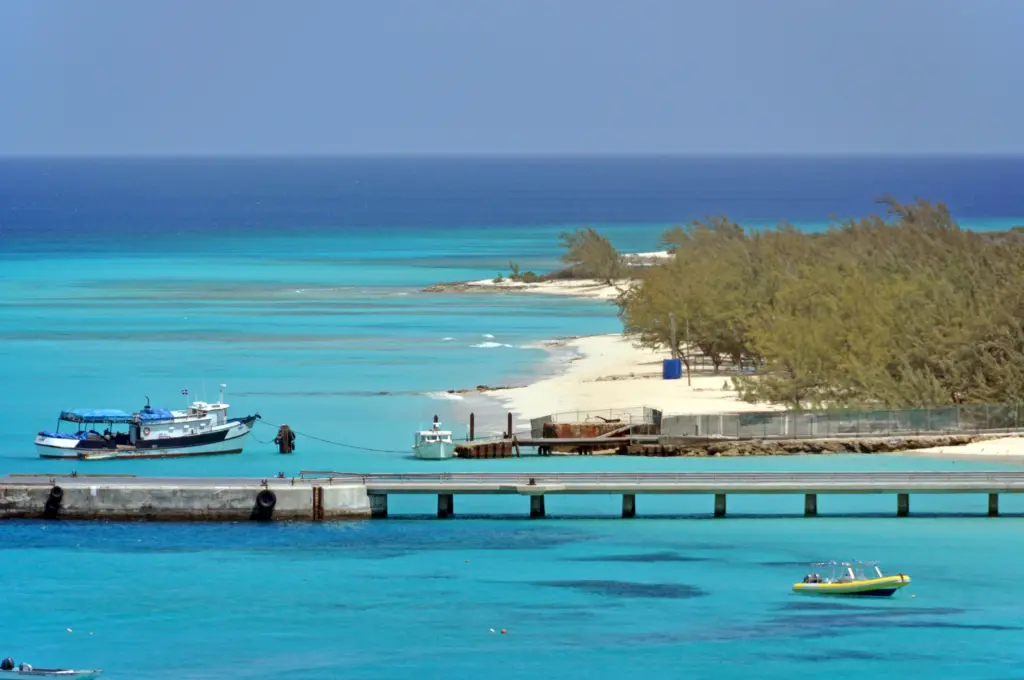
Tender, anchorage and mixed-dock calls can add a small-boat transfer between ship and shore. More than 450 ocean ports can involve a tender or a mixed dock-and-tender arrival. The examples served by the broadest range of cruise lines include Dubrovnik, Funchal, Mykonos, Roseau, Santorini, Chania and Lerwick, spanning routes in the Mediterranean, Caribbean and Northern Europe.
Dubrovnik, Funchal, Mykonos and Roseau can be either a pier or a tender, depending on the call. Santorini is a tender stop. Read the itinerary details before deciding how much time and gear the transfer will require.
Keep both hands available, avoid an overfilled shore bag and put anything that should stay dry inside its own protection. Some travelers also pack motion sickness wristbands for small-boat transfers. They are a personal comfort item, not a substitute for medical advice or any medication you already use.
Santorini is served by 20 cruise lines in the schedule. It is a tender port, so keep the shore bag compact and leave room in the day’s timing for the boat transfer.
Sitka appears with 17 cruise lines. Most large ships dock at a terminal north of town and shuttle guests in, while smaller ships tender to the waterfront. Its Alaska setting makes the rain layer useful either way.
Beach-first ports put water protection first
Beach days dominate at roughly 100 ports. The eight served by the broadest range of cruise lines are Bridgetown, Philipsburg, Cozumel, Oranjestad, Santa Cruz de Tenerife, Fort-de-France, San Juan and Cagliari. The first four make this kit especially useful across Caribbean routes.
Bridgetown and Philipsburg each appear with 21 cruise lines in the schedule. Cozumel and Oranjestad each appear with 20. Those are useful examples of why a beach kit should be ready before the cruise, even when the itinerary contains several very different islands.
A waterproof phone pouch separates the phone from splashes and wet hands. A roll-top dry bag gives towels and spare clothing their own container. Water shoes are useful when the day involves an unfamiliar shoreline. Mineral sunscreen belongs in the same small kit.
Cozumel is a pier port where the beach is usually a separate ride. The water kit should be ready to leave the ship rather than buried in checked luggage.
Historic walking cities reward a lighter bag
About 250 ports are best explored on foot through a historic center. The examples served by the broadest range of cruise lines are Ålesund, Gibraltar, St. John’s, Zadar, Chania, Halifax, Vigo and Belfast.
Most of these examples are pier or mixed-dock calls. The useful packing move is restraint. Carry the cruise card, phone, weather layer and the few items the day’s plan actually needs. A heavy bag becomes more noticeable over a full walking route and makes it harder to adjust when the town is close to the ship.
Ålesund appears with 20 cruise lines in the schedule. It is a small historic port where a compact walking kit matters more than carrying every possible extra.
Halifax appears with 19 cruise lines. It applies the same lighter-bag idea to a Canada and New England call, while Gibraltar, St. John’s and Zadar show how widely the historic walking pattern appears.
Cold-weather ports need layers and a view
For a genuinely cold-weather list, focus on Alaska, Norway, Iceland, Greenland, Antarctica and Canada. The relevant examples here are Ålesund, Ísafjörður, Stavanger and Bergen, all within the Northern Europe region.
All four are pier calls. Ålesund, Ísafjörður and Stavanger each appear with 20 cruise lines in the schedule, while Bergen appears with 19. A pier reduces tender handling, but it does not remove the need for a weather layer that can be added or packed away during the day.
Compact binoculars add a closer view without taking over the shore bag. Keep them accessible on scenic sail-ins and carry them ashore when the day’s plan centers on landscape or wildlife viewing.
Cold-weather packing works best as an adjustable system. Wear the layers that suit the departure, keep the poncho within reach and leave enough space in the shore bag to remove a layer later. That avoids carrying a second bulky bag through a full port day.
What not to pack
Royal Caribbean’s prohibited-items policy lists extension cords, power strips and multi-plug outlets as prohibited. It makes an exception for device and USB chargers marked with a recognized U.S. or European conformity certification. The same policy prohibits clothing irons and garment steamers. Personal hair appliances such as flat irons are allowed for personal use, while hair dryers can be prohibited depending on their specifications.
Carnival’s position differs. In a company statement reported by Cruise Hive on October 3, 2025, the line said power strips, multi-plug box outlets or adapters, and extension cords without surge protectors are allowed when used with proper caution. Damaged or hazardous devices can be confiscated. Surge-protected strips are the problem under that wording.
Rules differ by line and can change. Check the prohibited-items page for the line and ship you will actually sail before placing any electrical item in the bag. The safest packing decision comes from the current rule, the construction of the item and the certification mark on its plug.