
The hardest excursion choice usually arrives after you have found two tours that look close enough. One is sold by the cruise line. The other is on Viator, may suit your interests better and carries a reassuring label about getting back to the ship.
The useful difference is responsibility. A ship-sold excursion is coordinated with the ship, and the cruise line takes responsibility for the return if its tour runs late. Viator’s extra shore-excursion protection applies only to products carrying its Worry-Free tag and has its own terms.
The right choice changes with the port. Tender logistics, a long transfer or a tight call can make the ship option easier to defend. A walkable pier and a long scheduled window can give an independent tour more room.
The scheduled medians come from sailings tracked by Cruises.To, and the schedule undercounts some lines. They describe published time between arrival and departure, not guaranteed time ashore on your sailing.
What each option means on a port day
A ship excursion is bought through the cruise line. The important operational point is coordination: when a ship-sold tour runs late, the line takes responsibility for returning its guests. Confirm the exact promise in your own line’s excursion terms before booking.
A Viator excursion is booked separately from the cruise line. Some products display a Worry-Free Shore Excursion tag on the product page, and Viator provides a Worry-Free filter in search results. Viator says more than 1,500 experiences carry the designation.
The tag has to be present on the actual product you book. Seeing other Viator tours at the same destination does not extend the policy to every listing there. Open the product page, find the tag and read the policy terms before paying.
Viator also says most experiences have a 24-hour cancellation policy with a full refund. Check the cancellation line on the selected product because “most” still leaves exceptions.
The Worry-Free protection covers three tour problems
Viator describes extra support for a tagged Worry-Free shore excursion in three situations:
- The ship misses the port of call.
- The ship is delayed beyond the excursion’s start time.
- The tour operator does not return travelers to the ship on time.
Those protections address disruption involving the ship’s arrival or the tour operator’s return. Read Viator’s Worry-Free Shore Excursions page and its shore-excursion cruising guide, then follow the full terms linked from the product page.
Check the current terms and conditions before booking. Do not assume a cash cap, a particular form of transport or a specific recovery arrangement.
Going off independently after the tour ends the protection
The Worry-Free protection concerns the tour operator’s side of the day. If the operator returns you as agreed and you then head off independently, the later part is your responsibility. Coming back late after shopping, eating or taking another trip is outside the protection described for the tour.
That boundary is easy to blur in a long port window. A morning tour can finish with hours still visible on the schedule, and it is tempting to treat the tag as protection for the whole day. It is protection for the covered excursion under its terms.
The cruise line is not obliged to wait when a traveler on an independent outing misses all-aboard. The traveler is responsible for reaching the next port. This is the consequence to plan around even when the independent tour itself is covered by Viator’s Worry-Free policy.
Keep the booking confirmation, operator contact and ship instructions together. Once the covered tour ends, use the remaining time as an ordinary independent port visit and preserve your own return margin.
The ship excursion wins when the route carries the risk
A ship-sold tour earns its advantage when most of the day depends on transport that you cannot easily replace. The line coordinates the excursion with the ship and takes responsibility for the return if that tour runs late, subject to its own terms.
Tender ports add a transfer before the excursion begins. Santorini illustrates the issue: the scheduled median is 12 hours, yet passengers tender to the old port and then use the cable car or a steep walk to reach Fira. The headline window is generous, while the route ashore still has moving parts.
Long transfers create a different version of the same problem. Civitavecchia is about 70 km from Rome. A Rome day depends on the journey in both directions, so ship coordination may matter more than having the widest excursion menu.
A tight window pushes in the same direction. Compare the actual sailing with the medians below. If your call is shorter, an independent plan has less room for a delayed start or a slow return. Confirm what the cruise line promises in its terms rather than relying on a general phrase about the ship waiting.
An independent Viator tour wins when the day has room
A pier beside town reduces the number of things that need to go right before the tour starts. Nassau’s city centre is directly adjacent to the pier. Downtown Juneau begins within a few minutes. Falmouth town starts outside the cruise-village gates.
Longer windows can also support a separate booking, especially when the tour has the Worry-Free tag. Across these six ports, the medians range from 9 hours at Falmouth and Nassau to 12 hours at Santorini and Civitavecchia. Your sailing’s published hours still take precedence.
Viator can be the stronger search when you want a small-group format or a specific interest that the ship’s menu does not match. Compare the exact itinerary, meeting point and cancellation terms. Then check for the Worry-Free tag rather than assuming it follows the destination.
The independent option is easiest to defend when you can explain the whole return route in one sentence. A walk back to the pier is simpler than a tour followed by a separate transfer followed by independent sightseeing.
Six ports, worked through
Viator tours are available for all six ports. The individual product still needs the Worry-Free tag if that protection is part of your decision.
Falmouth: a walkable start and a 9-hour median
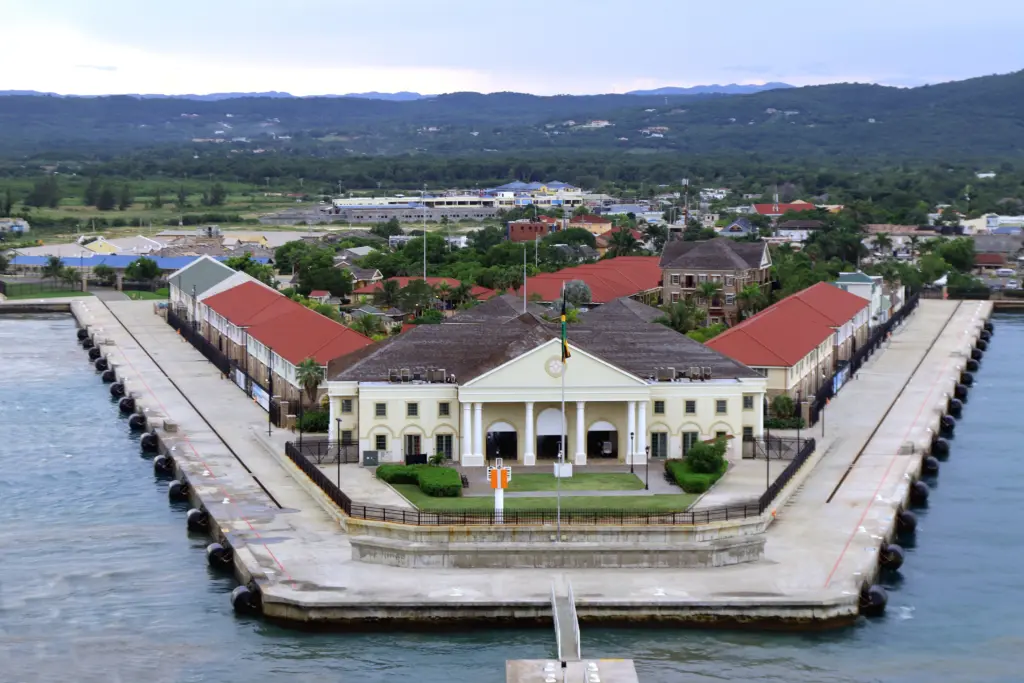
Falmouth is a pier port with a 9-hour median scheduled window, based on 74 timed calls. The cruise village is walkable, and Falmouth town begins just outside the port gates.
This is a strong independent-tour setup when the meeting point is at or near the cruise village. The return does not automatically require a second transfer through town. Choose the ship excursion when your selected activity adds a long road journey or when the cruise line’s return responsibility is the deciding factor.
Falmouth sits within the wider Caribbean port collection.
Cozumel: check the pier before choosing
Cozumel has a 10-hour median scheduled window across 357 timed calls and is listed as a pier port. Punta Langosta is about a 5-10 minute walk from central San Miguel, while the southern piers are a short taxi ride from town.
An independent tour can fit well when its meeting point matches your pier. The ship option becomes more attractive when the plan adds several transfers or leaves little flexibility before departure. Start with the terminal name, because “Cozumel pier” is not specific enough for the day.
See the broader Mexico & Pacific Coast collection for nearby route comparisons.
Nassau: the city is beside the ship
Nassau is a pier port with a 9-hour median based on 414 timed calls. The city centre is directly adjacent to the pier.
That layout favors an independent tour with a clear downtown meeting point. You can reach the city without first solving a transfer. A ship excursion still wins when its particular route or return responsibility matters more than choosing the operator separately.
Santorini: a 12-hour median with tender logistics
Santorini has a 12-hour median scheduled window across 231 timed calls. It is the only tender port among these six. Passengers tender to the old port, then reach Fira by cable car or a steep walk.
The ship excursion has a clear case when you want those tender and onward movements coordinated. A tagged Viator tour can still be considered, but the meeting point and return route deserve more scrutiny than the 12-hour figure alone suggests.
Santorini is part of the Mediterranean port collection.
Juneau: downtown begins within minutes
Juneau is a pier port with a 9.75-hour median, using 273 timed calls. Downtown begins within a few minutes of the pier.
The short connection to town gives an independent tour a clean start, especially for a specific-interest or small-group listing with a nearby meeting point. Choose the ship option when the excursion’s transport is the main source of return risk, and verify the line’s current terms.
Compare it with the other ports in the Alaska collection.
Civitavecchia: Rome changes the calculation
Civitavecchia is a pier port with a 12-hour median across 361 timed calls. Central Civitavecchia is about 1-3 km away depending on the terminal. Rome is about 70 km away.
For a Rome excursion, the ship option has the strongest case among these ports because the day depends on a long return journey. A Viator tour needs the right meeting point, a schedule that fits and the Worry-Free tag if you want that policy. Staying in Civitavecchia produces a shorter and simpler independent day.
Choose according to the hardest part of the day
Use the ship excursion when the tender, transfer or short window is the part most likely to disrupt the return. Use an independent Viator tour when the pier is simple, the window is comfortable and the product fits your interests better.
For Viator, verify the Worry-Free tag on the product itself and read the current terms. For a ship excursion, confirm the cruise line’s return promise in its excursion terms. Either choice becomes weaker when you add independent plans after the protected tour and use the remaining schedule as though it were a guarantee.