South America
South America
Islas Guanape Cruise Port Guide: Wildlife Viewing & Tips
Peru
Ships anchor offshore; tender boats required to reach the islands.
Choose the Right Port Day
Best Overall
Guided zodiac morning tour to approach nesting areas of boobies, cormorants, and Humboldt penguins; bring binoculars and a zoom camera.
Best Beach
Not relevant; islands are rocky, guano-covered seabird colonies with no beach recreation.
With Kids
Zodiac wildlife tours work if kids are 6+, motion-tolerant, and interested in live birds and seals; ship-based observation may be safer for younger children.
Only 3-4 Hours
Take a zodiac tour at sunrise or early morning for best bird activity; focus on the guano islands themselves rather than trying to cover multiple locations.
Cheapest Option
Skip paid excursions and watch from the ship deck; wildlife is visible from offshore. Zodiac tours are ship-offered and typically included or bundled.
What To Avoid
Do not expect pristine white-sand beaches or easy island walks. Guano smell is real and unpleasant. Tides and wildlife nesting season affect access; some tours may be cancelled for conservation or weather.
Top Things To Do
1
Guided zodiac wildlife tour (Humboldt penguin and seabird colony viewing)
Ship-led zodiac tours approach nesting colonies of Humboldt penguins, Peruvian boobies, guano cormorants, and occasionally Humboldt seals. Expeditions naturalists provide commentary on behavior, breeding cycles, and conservation. Tours time-coordinate with wildlife activity and tide. Early morning is best.
⚡ Popular — books out early. Reserve before you sail.
2
Deck observation and photography
Remain on ship's upper deck with binoculars and camera to observe birds, seals, and ocean activity from anchored position. Naturalists often offer informal talks and identification tips nearby. Sunrise and late-afternoon light ideal for photography.
Book with the ship, or on your own?
Booking independently
- Often noticeably cheaper than the ship’s version of the same tour.
- Smaller groups and local operators, with traveler reviews you can read before you pay.
- Free cancellation on most tours, usually up to 24 hours before.
When the ship’s excursion makes sense
- Short port calls or long transfers where the timing is tight.
- Tender-only stops where getting ashore can run late.
- The ship waits for its own delayed excursions — it won’t wait for independent ones, so leave a buffer before all-aboard.
We may earn a commission when you book through our links, at no extra cost to you — it’s how we keep these guides free.
Quick Take
- Port Type
- Remote wildlife expedition anchorage
- Best For
- Bird watchers, wildlife photographers, expedition cruisers willing to rough it
- Avoid If
- You want shops, restaurants, cultural attractions, or easy comfort
- Walkability
- Not applicable; island has no developed infrastructure
- Budget Fit
- All-inclusive on ship; minimal additional spending
- Good For Short Calls?
- Yes—zodiac tours typically 2–4 hours depending on wildlife activity
Port Overview
Islas Guanape is a pair of small, rocky islands 25 km north of Chimbote on Peru's Pacific coast. Ships anchor offshore only; no dock or developed port exists. Access is entirely by zodiac (small rigid-hull inflatable boats) operated by your cruise line. The islands are a UNESCO-protected seabird sanctuary and marine reserve, home to Humboldt penguins, Peruvian boobies, guano cormorants, and seals. This is a wildlife-viewing port, not a town visit.
The experience hinges entirely on guided zodiac tours. Your ship's naturalists and crew manage approach distances to protect nesting birds. Morning tours (early light, calmer water) are far better than afternoon. The smell of accumulated guano is distinctive and persistent—not unpleasant for serious birders, but noticeable. Expect no facilities, no shops, no fresh water, and no ability to leave the zodiac or walk the islands. This port suits expedition cruisers and wildlife enthusiasts; it is not a leisure day ashore.
Is It Safe?
Islas Guanape is a protected natural area with minimal human infrastructure. The main safety concerns are maritime: zodiac operations depend on sea state and weather. Heavy swells, strong winds, or fog can cancel tours or limit access. Wear layers and sun protection even on cool days—UV reflection off water is intense. Life vests are mandatory and provided. There are no medical facilities on the islands. Crew supervision is strict to protect the wildlife sanctuary; do not attempt to leave zodiac or approach birds beyond authorized viewing zones. Seabirds and seals are wild animals and will defend nests; respect distance guidelines.
Accessibility & Walkability
Not wheelchair accessible. Zodiac boarding requires moderate mobility: stepping over a high gunwale, sitting in a moving boat, and tolerating motion for 30–60 minutes. Terrain on the islands is not accessible—access is prohibited anyway to protect wildlife. Older cruisers or those with joint or balance issues should discuss zodiac safety with ship medical staff beforehand. Ship observation from deck may be a better alternative for limited-mobility passengers.
Outside the Terminal
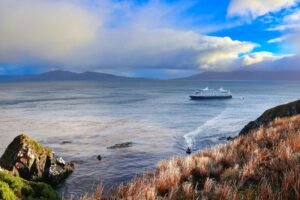
There is no terminal. The ship anchors in open water 1–2 km offshore. A zodiac tender departs from the ship's side. The 10–15 minute boat ride takes you over open Pacific swells toward the rocky, brown-grey islands crowded with white and dark-colored birds. The water is cold (Humboldt Current) and often choppy. No buildings, docks, or people are visible on the islands themselves. The experience begins the moment you step into the zodiac.
Beaches Near the Port
Islas Guanape islands (no beach recreation)
Rocky, guano-covered seabird colonies. Not a beach destination. No swimming, no landing, no facilities. Wildlife viewing only by zodiac at authorized distance.
Local Food & Drink
No food service or restaurants exist on the islands or in the port area. All meals are on the ship. If your cruise offers extended time at anchor, the ship may prepare packed lunches or snacks for zodiac passengers. Bring water and wear sun protection; dehydration risk is real on a small boat in bright sun. Some expedition cruises offer a light breakfast briefing before early-morning zodiac launches. Confirm meal timing with ship staff when zodiac tours are scheduled.
Shopping
No shops, market, or commerce of any kind. Islas Guanape is a protected nature reserve. Your ship's on-board gift shop may sell books on Peruvian seabirds or expedition-themed merchandise. If your cruise makes a longer port call in Chimbote or another Peruvian port, shopping will be available there.
Money & Currency
- Currency
- Peruvian sol (PEN); USD sometimes accepted in tourist areas.
- USD Accepted?
- No
- Card Payments
- No card services available on islands; carry cash only if venturing to Chimbote or nearby ports.
- ATMs
- None on islands. Nearest ATMs in Chimbote, ~25 km away.
- Tipping
- No tipping opportunity; all services are ship-managed.
- Notes
- No money transactions occur at this port. All costs are pre-arranged with the cruise line.
Weather & Best Time
- Best months
- May–September (austral winter, cooler, less fog, calmer seas for zodiac operations).
- Avoid
- November–March (austral summer, warmer, choppy seas, nesting disturbance, seabird dispersal).
- Temperature
- 60–70°F (15–21°C); water temp 55–65°F (13–18°C). Wind and fog common year-round.
- Notes
- Humboldt Current keeps water cold year-round. Early morning is always calmer and has better light. Afternoon swells and afternoon fog reduce zodiac tour quality and visibility.
Airport Information
- Airport
- Chimbote Airport (CHM) or Jorge Chávez International Airport, Lima (LIM)
- Distance
- Chimbote ~25 km south by road; Lima ~400 km south.
- Getting there
- Most expedition cruises arrange flights to/from Lima; check cruise itinerary. Private transfer or taxi from Chimbote possible but uncommon.
- Notes
- Islas Guanape is a tiny outport; pre-cruise flights typically land in Lima or Trujillo. Check cruise line's air-inclusive or air-optional terms.
Getting Around from the Port
Zodiac (ship-operated)
Small rigid-hull inflatable boats, 8–15 passengers per boat. Mandatory life vests. Operated by ship crew and expedition staff. Access entirely dependent on weather and tide.
Ship observation deck
View wildlife from the ship as it remains at anchor. Binoculars essential; zoom camera recommended.
Details last checked April 2026
Check The Port Traffic
Cruise Ships in Port
Once you have your shore plan, use the schedule to see how busy the harbour will be on your date, plus the ships, lines, and published call windows.
Sun
Mon
Tue
Wed
Thu
Fri
Sat
1
2
3
4
5
6
7
8
9
10
11
12
13
14
15
16
17
18
19
20
21
22
23
24
25
26
27
28
29
30
31
Quiet (1–2)
Busy (3–4)
Packed (5+)
0 scheduled calls
August 9, 2026
No scheduled cruise ship calls were found for this date selection. Pick a highlighted day on the calendar above, widen the range, or search for a different ship or line.
Planning a cruise here?
Lindblad Expeditions, Hurtigruten, Ponant & more sail to Islas Guanape.
Practical Tips for Cruise Passengers
- Bring a zoom camera (200+ mm telephoto) and sturdy binoculars; close approach to birds is limited for conservation. Deck observation with good optics is often more rewarding than a zodiac in rough seas.
- Wear multiple layers and waterproof outer jacket. The boat is exposed; wind and spray cool you fast, and afternoon swells worsen seasickness. Dramamine before boarding helps.
- Go on the early-morning zodiac tour. Calmer water, better light for photography, higher wildlife activity, and fewer other boats mean a superior experience.
- Respect all distance guidelines and do not attempt to touch, feed, or remove wildlife. Guano bird colonies are sensitive; nesting disturbance can harm breeding success. Ship staff enforce rules strictly.
Frequently Asked Questions
Likely if seas are rough or if you are motion-sensitive. Early-morning tours on calm days are gentler. Take seasickness medication before boarding, stay hydrated, and focus on the horizon. If motion is a major concern, observe from ship deck instead.
No. The islands are a protected UNESCO seabird sanctuary. Landing and walking are prohibited to preserve nesting habitat. All viewing is from zodiac at authorized distances only, enforced by crew.
Humboldt penguins, Peruvian boobies, guano cormorants, and Humboldt seals are the main draw. Species composition depends on season and nesting cycle. Ship naturalists will identify birds and explain behavior during tours.
Find cruises to Islas Guanape, Peru
Compare sailings and book with no fees — best price guaranteed.
We may earn a commission when you book through our links, at no extra cost to you — it’s how we keep these guides free.
✉ Sailing to Islas Guanape? Get your port-day plan
Tell us your sail date and we’ll email you a short Islas Guanape plan about 60 days out — when the good excursions start selling out — plus a final checklist 2 weeks before. Two emails, then done. We’ll send one note to confirm it’s really you — unsubscribe anytime.
South America
View All
More South America Ports

South America

South America
South America