Viking Vidar
Times not published
Itinerary: 10-Night European River Cruises: Budapest to Bucharest (10 nights)
Find shore excursions for this day →Croatia
Osijek cruise terminal is located at the Danube River port with direct pier access to the city center.
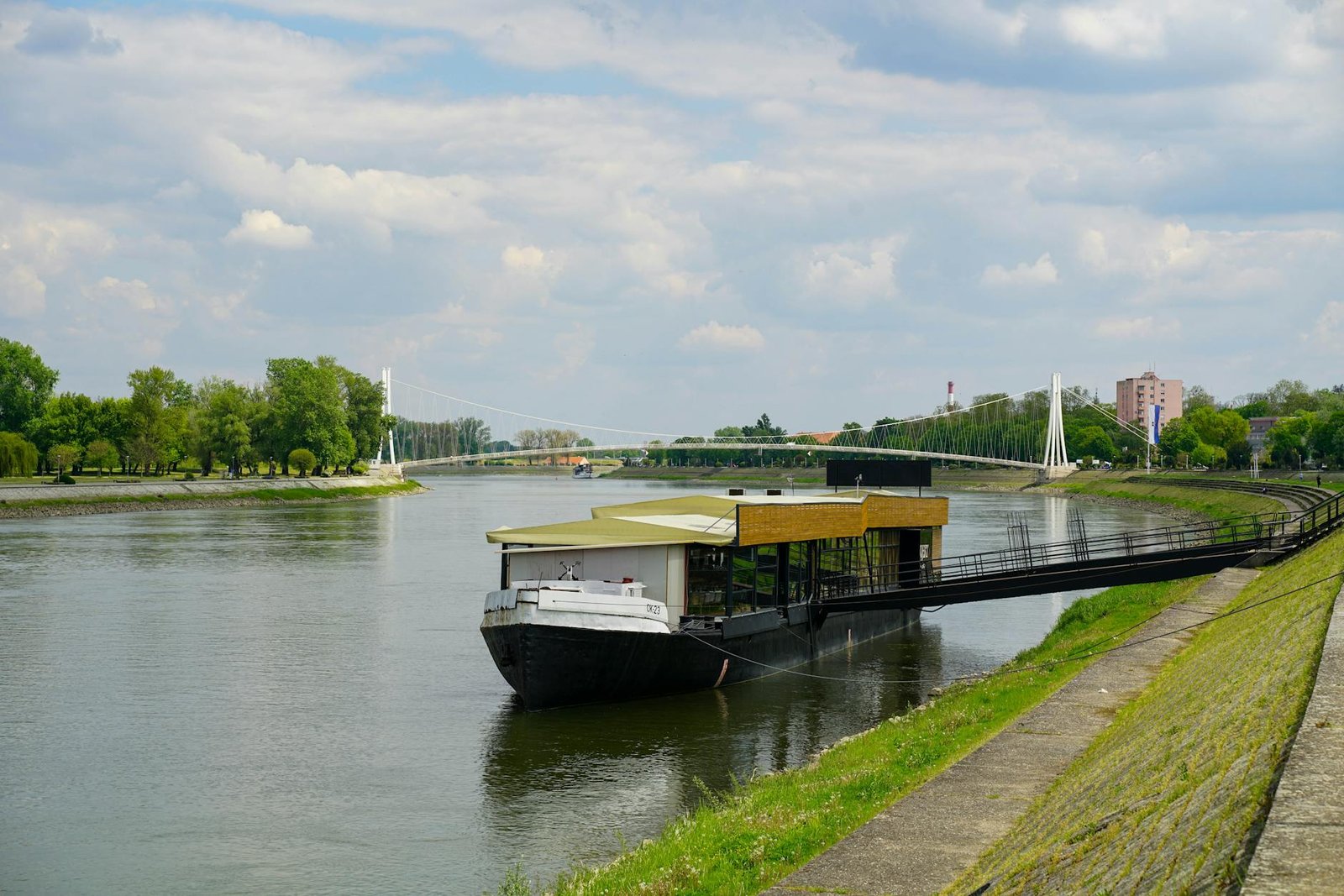
Osijek sits on the south bank of the Drava River in Slavonia, eastern Croatia's agricultural heartland — a region most Mediterranean cruisers never reach. River cruise ships dock directly on the Drava riverbank, typically within easy walking distance of the city center. It's not a port built for tourism, which is both its weakness and its appeal.
The city's standout feature is Tvrđa, a remarkably intact 18th-century Baroque fortress district that somehow avoided the mass commercialisation that has hit Croatia's coastal towns. You'll find real cafés, local students, and crumbling-beautiful architecture rather than souvenir shops and tour groups. The main pedestrian street and the Drava promenade round out a very walkable city core.
Osijek is a genuine half-day port. It won't overwhelm you with things to do, and that's fine — it's best treated as a calm, authentic contrast to busier stops on a Danube or Sava river itinerary. If your ship overnights or offers an extended stay, the city has enough good restaurants and a bit of evening atmosphere to fill your extra hours well.
This is Osijek's defining attraction — a largely intact 18th-century Austro-Hungarian fortress district with wide cobbled squares, monumental stone buildings, and a Trinity plague column at its center. It functions as a real neighbourhood, not a museum piece, which makes it far more interesting than a polished historic site. Walk every street, duck into a courtyard, and grab coffee at one of the student-filled kafići.
A long, flat, well-maintained promenade runs along the Drava and connects the port area to Tvrđa and beyond. It's pleasant in good weather, popular with locals jogging or cycling, and gives you a clear sense of how the city relates to its river. Walk it as your route between dock and old town rather than treating it as a separate activity.
Osijek's neo-Gothic cathedral is one of the tallest buildings in Croatia and a proper landmark — sometimes called the 'Cathedral of Slavonia.' The interior is worth a quick visit for the stained glass and sheer scale. It's in the newer part of the city center, a short walk from Tvrđa.
Osijek's covered city market is a genuine working market selling Slavonian produce — paprika, kulen sausage, local honey, cheese, and seasonal vegetables. It's compact, unhurried, and gives you a real feel for what the region actually eats. Good spot to pick up edible souvenirs that you won't find at a tourist shop.
Located in the Tvrđa town hall building, this regional museum covers Slavonian history, archaeology, and ethnography. It's modest in scale but well-curated and gives useful context for what you're seeing in the wider region. Don't expect world-class, but it's a worthwhile 45-minute stop if you're interested in local history.
Book with the ship, or on your own?
Booking independently
When the ship’s excursion makes sense
Going independent? Compare tours in Osijek → — the best-reviewed ones sell out first.
We may earn a commission when you book through our links, at no extra cost to you — it’s how we keep these guides free.
Osijek is a safe, low-crime city by any reasonable measure. Petty crime targeting tourists is rare, partly because mass tourism hasn't arrived here yet. Standard city awareness applies — keep an eye on belongings in crowded café areas — but there's no specific threat profile worth worrying about.
The city was affected by the Balkan conflicts in the early 1990s, and some older residents will remember that period clearly. Be respectful if conversations touch on local history. The city has rebuilt well and there's no tension visible to visitors today.
The terrain is flat and genuinely manageable. The Drava promenade, Tvrđa's main square, and the pedestrian city center are all on level ground with paved surfaces. Trams have limited accessibility features on older rolling stock, so check before boarding if you use a wheelchair. The walk from the dock to the main sights is straightforward for most mobility levels. Some of Tvrđa's side streets have uneven cobblestones, so stick to the main square if that's a concern.
Ships dock along the Drava riverbank — you'll step off onto a quayside with the river behind you and the city immediately ahead. There's no formal cruise terminal building to navigate. Within a couple of minutes of walking, you'll be on a tree-lined riverside promenade. The Tvrđa fortress district is visible and signposted. It's an unusually gentle arrival — no port chaos, no vendor gauntlet, just a quiet riverbank city going about its day.
Slavonian food is hearty, paprika-heavy, and largely unfamiliar to most visitors — which is a good thing. The region's signature item is kulen, a spicy cured pork sausage with Protected Designation of Origin status; try it as a starter or pick some up at the market. Fish paprikash (freshwater fish in a rich paprika broth) is another local staple worth ordering.
Tvrđa has the best concentration of honest local restaurants and cafés. Prices are low by any Western European standard — a full lunch with a glass of local wine typically runs $12-20 USD per person. Avoid anything near the dock that's obviously geared toward tour groups. Walk five minutes into Tvrđa and the quality and value both improve immediately.
Coffee culture is strong here — Croatians take their espresso seriously and you'll find good coffee at almost any kafić. A coffee and something small to eat makes for an easy, cheap, and thoroughly local mid-morning break.
Shopping is not a strong reason to come ashore in Osijek, and that's fine. The city has no crafted tourist-souvenir strip. What it does have is the market for edible goods — kulen, local paprika, honey, and spirits like rakija are the most packable and worthwhile finds. A few small shops in the city center sell Croatian-made products and embroidery, which is a traditional Slavonian craft.
Skip the modern shopping centers entirely unless you need a pharmacy or supermarket. The local Konzum or Lidl will have basic Croatian food products at local prices if you want to stock up on olive oil, wine, or packaged goods.
The dock to Tvrđa old town is roughly a 10-15 minute walk along the riverbank. The city center and main pedestrian street are similarly close. Almost everything worth seeing is within a 25-minute walk of the pier.
Osijek has a tram network, one of the few remaining in Croatia. Trams run through the city center and are useful if you want to reach neighborhoods further out. Buy tickets from the driver or at kiosks.
Routes & timesLocal taxis are available and reasonably priced. Cammeo is a local ride-hailing app used in Croatia. Taxis can be flagged on the street or arranged via your ship.
Book a transfer 5% off with code TPO5 at checkoutThe Drava riverbank has flat cycling paths and some rental options exist in the city. Good for active cruisers who want to cover more ground along the river.
Details last checked April 2026
Check The Port Traffic
Once you have your shore plan, use the schedule to see how busy the harbour will be on your date, plus the ships, lines, and published call windows.
Times not published
Itinerary: 10-Night European River Cruises: Budapest to Bucharest (10 nights)
Find shore excursions for this day →Planning a cruise here?
Viking River Cruises sail to Osijek.
Yes, if you have any interest in authentic Central European city life, history, or local food. It's not a showstopper port, but Tvrđa alone justifies a few hours ashore. Cruisers who stay on the ship tend to regret it.
Yes, easily. Tvrđa is about 10-15 minutes on foot along a flat riverfront promenade. The cathedral and city center are similarly close. No transport needed unless mobility is limited.
Yes. It's a quiet, low-crime city with very little tourist-targeted petty crime. Normal city awareness is sufficient — there's nothing specific to worry about here.
Croatia uses the euro since January 2023. Cards are accepted at most restaurants and shops, but carry some cash for the market and smaller cafés.
Three to four hours covers Tvrđa, the promenade, the cathedral, and a proper lunch with time to spare. It's a comfortable half-day port — a full day would require a deliberate slow pace or a trip further into the Slavonian countryside.
Find cruises to Osijek, Croatia
Compare sailings and book with no fees — best price guaranteed.
We may earn a commission when you book through our links, at no extra cost to you — it’s how we keep these guides free.
Tell us your sail date and we’ll email you a short Osijek plan about 60 days out — when the good excursions start selling out — plus a final checklist 2 weeks before. Two emails, then done. We’ll send one note to confirm it’s really you — unsubscribe anytime.