Avalon Impression
Times not published
Itinerary: 14 Nights Europe Cruise (14 nights)
Find shore excursions for this day →Austria
Ships dock at Melk or Krems piers with some vessels anchoring in the Danube requiring tender boats to shore.
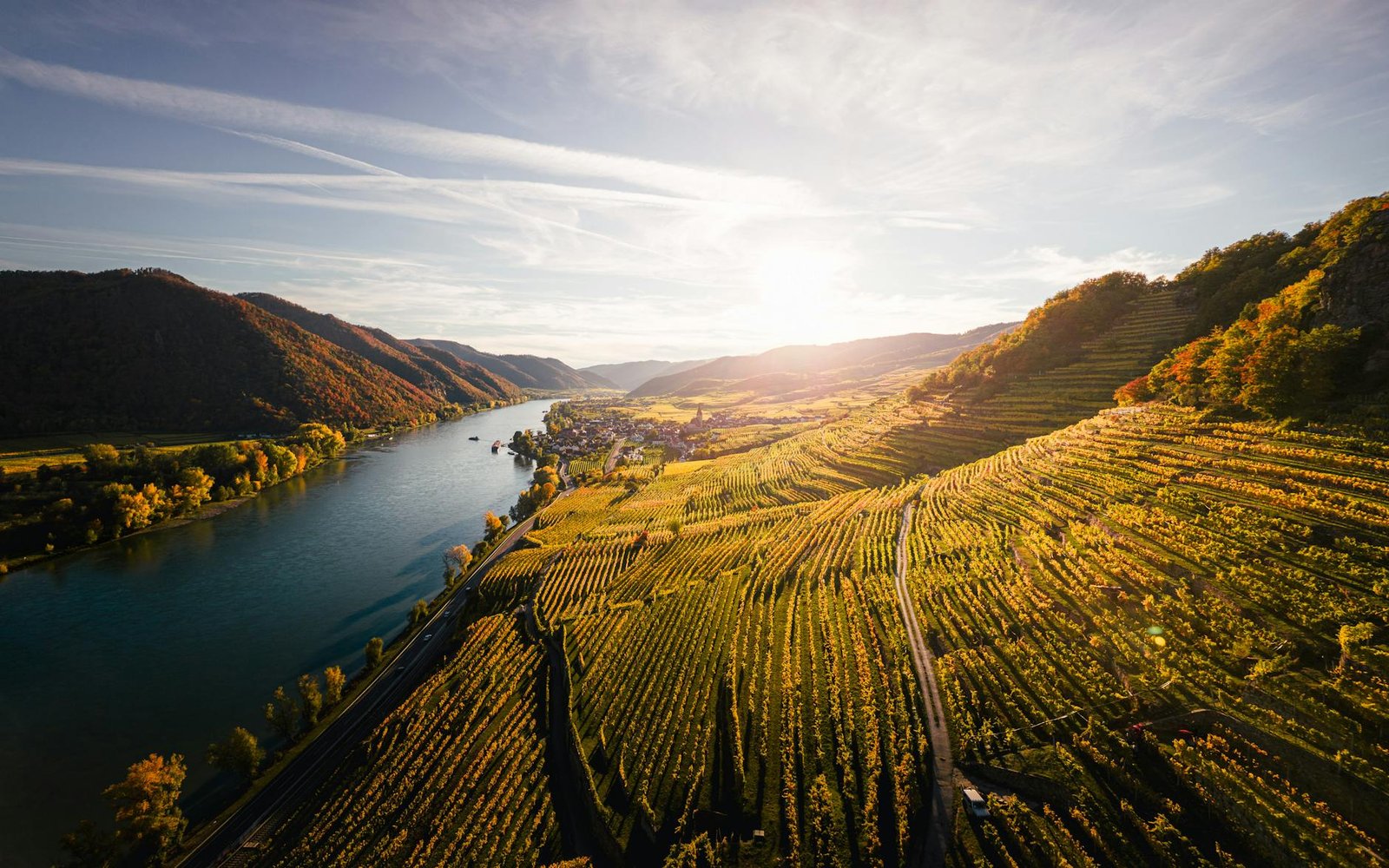
The Wachau Valley is a 36-kilometre stretch of the Danube between Melk and Krems in Lower Austria, and it is one of the most scenic river passages in Europe — UNESCO World Heritage listed since 2000. River cruise ships moor at small village landings: most commonly Melk, Spitz, Weissenkirchen, Dürnstein, or Krems depending on the itinerary. There is no single 'cruise terminal'; instead your ship ties up at a quayside or floating pontoon and you step directly into a village or alongside a vineyard.
The valley's appeal is immediate and genuinely deserved. Steep terraced vineyards drop to the river, apricot orchards line the banks in spring, and medieval villages sit below ruined castles on rocky outcrops. The two anchor sights are Melk Abbey — a spectacular Baroque monastery on a cliff above the town — and Dürnstein, famous for its ruined castle where Richard the Lionheart was held prisoner. Both are worth your time.
Most river cruise itineraries treat the Wachau as a scenic sailing passage with one or two village stops, or occasionally a full afternoon moored at Dürnstein or Krems. If your ship sails through in the evening, you may not go ashore at all — that's actually a highlight since the valley looks stunning from the deck at dusk. If you do get a shore stop, the valley genuinely rewards it.
Spend a day away from Vienna to discover the picturesque Wachau Valley in the Austrian countryside on this small-group, fully guided tour. Satisfy your cravings with…
Book on ViatorOur picks in Wachau Valley
One of the most impressive Baroque monasteries in Europe, perched on a cliff above the Danube. The library, church, and terraced gardens are genuinely spectacular — not a case of inflated expectations. Allow at least 90 minutes inside.
⚡ Popular — books out early. Reserve before you sail.
The blue-and-white Augustinian church tower is the valley's most photographed sight; the ruined castle above it is where Richard the Lionheart was imprisoned in 1192. The 30-45 minute climb on rocky footpaths rewards with panoramic Danube views. The village itself takes 20 minutes to walk end-to-end.
The Wachau produces two of Austria's best white wines — Grüner Veltliner and Riesling. A Heuriger is a traditional Austrian wine tavern, often run by the winemaking family. Dürnstein, Spitz, and Weissenkirchen all have them. Unpretentious, good value, and authentically local.
The flat EuroVelo 6 path through the Wachau is one of Europe's great cycling routes. Even a one-hour out-and-back ride gives you vineyards, river views, and passing apricot orchards without needing fitness or experience. Bikes rent easily in main villages.
Krems is the Wachau's main town and has a well-preserved medieval old town (Altstadt) with pedestrian lanes, a good wine museum (Weinstadt Museum), and more dining options than the smaller villages. It's a better choice if you want a half-day with urban character rather than a single sight.
The valley is famous for its Wachauer Marille — a protected-origin apricot grown only here. In season (late June to early August) you'll find apricot jam, schnapps, cakes, and fresh fruit sold from small stands and village shops. Even off-season, jarred and bottled Marille products make excellent and genuinely local souvenirs.
Book with the ship, or on your own?
Booking independently
When the ship’s excursion makes sense
Going independent? Compare tours in Wachau Valley → — the best-reviewed ones sell out first.
We may earn a commission when you book through our links, at no extra cost to you — it’s how we keep these guides free.
The Wachau Valley is one of the safest regions in Europe for visitors. Petty crime is extremely rare in the small villages. The only realistic hazards are practical ones: the castle ruin climb at Dürnstein involves uneven, steep rocky terrain with no guardrails in sections — wear proper footwear and be cautious in wet weather. Cycling along the Danube path is safe but watch for other cyclists, especially on busy summer days. Carry water in summer — village shops are small and spread out.
Village centers like Dürnstein and Spitz are compact but laid on cobblestones and slight inclines, which makes wheelchair navigation difficult. Melk Abbey has improved accessibility in some sections but the building is historic and uneven throughout. The Danube cycle path itself is paved and flat — suitable for most mobility levels for flat-ground walking. The Dürnstein castle ruin is not accessible for anyone with limited mobility. Inform your cruise line in advance if you have accessibility needs so they can plan shore time at more manageable locations like Krems.
There is no terminal building. You step off the gangway directly onto a village quayside or river embankment. In Dürnstein this means you are immediately on the edge of a medieval village with vines above you and the Danube behind you. In Melk you step onto a riverside path a short walk from the town center and abbey. Orientation is instant — the abbey or castle you came to see is visible from where you stand. There are no touts, no taxi queues pushing for your attention, and no commercial pressure. It is refreshingly calm.
Food in the Wachau leans traditional Austrian — Wiener Schnitzel, fresh river fish (particularly Zander and pike-perch from the Danube), hearty soups, and apricot-based desserts. Quality is generally solid in the villages, though the most tourist-facing restaurants on Dürnstein's main lane charge predictably high prices for average food. Step one street back and you'll find better value.
For a quick, affordable bite, most village bakeries sell filled rolls (Semmel) and pastries for under €5. Heurigen serve platters of bread, cheese, and charcuterie alongside wine — this is often the most satisfying meal option for a short stop. In Krems you have a wider range including cafes and modern Austrian restaurants.
Apricot Knödel (sweet apricot dumplings) are a valley specialty worth ordering if you see them on a menu. Local Wachau Riesling with fresh river fish is the combination most worth trying if your budget allows a sit-down meal.
Shopping in the Wachau is small-scale and largely focused on local food products — Wachauer Marille apricot jam and schnapps, local wine, and honey. These are the only things genuinely worth buying here. Dürnstein has a handful of gift shops selling ceramics, linen, and Austrian crafts, but nothing you could not find elsewhere in Austria. If you are looking for clothing, electronics, or mainstream shopping, Krems is the closest option with actual retail streets, though it is still a small town. The valley is not a shopping destination — it's a food, wine, and landscape destination.
Within each village — Dürnstein, Spitz, Weissenkirchen — everything is compact and walkable. The flat Danube cycle path also allows easy walking between some villages.
The EuroVelo 6 Danube cycle path runs the length of the Wachau on flat, well-maintained paths. Bike rental shops operate in Melk, Krems, and Dürnstein.
Useful for reaching Melk Abbey if your ship moors in Melk town, or for getting between Dürnstein and Krems quickly.
Book a transfer 5% off with code TPO5 at checkoutAll major lines — Viking, Uniworld, AmaWaterways, Emerald, Avalon, Scenic, Tauck, Riviera, APT — offer guided shore excursions covering Melk Abbey, wine tastings, and cycling tours.
A scenic heritage rail line runs along the south bank; useful for reaching Krems from Emmersdorf or connecting villages if your schedule allows.
Book train ticketsDetails last checked April 2026
Check The Port Traffic
Once you have your shore plan, use the schedule to see how busy the harbour will be on your date, plus the ships, lines, and published call windows.
Times not published
Itinerary: 14 Nights Europe Cruise (14 nights)
Find shore excursions for this day →Planning a cruise here?
Avalon Waterways, Celebrity Cruises, AmaWaterways sail to Wachau Valley.
Ships moor at small village quaysides — most commonly Melk, Dürnstein, Spitz, Weissenkirchen, or Krems depending on the cruise line and itinerary. There is no central terminal; you walk off the gangway directly into the village or onto a riverside path.
Both, honestly. If your ship moors in Dürnstein or at Melk, going ashore is worth it — the abbey and castle ruin are genuinely impressive. If the valley is a sailing passage with no stop, staying on deck for the scenery is one of the cruise's highlights.
Yes, easily. The villages are small, walkable, and self-explanatory. Rent a bike, walk the riverside path, or simply explore on foot — you do not need a guide for the valley itself, though a guide adds useful context at Melk Abbey.
They are about 30 km apart by road and around 33 km along the river. Visiting both in one shore day is possible by car or taxi but rushed — most cruise itineraries moor at one or the other, not both simultaneously.
Grüner Veltliner or Wachau Riesling at a local Heuriger, alongside a plate of bread, cheese, and charcuterie. In season, Apricot Knödel (sweet dumplings) are the standout dessert and a genuine regional specialty.
Find cruises to Wachau Valley, Austria
Compare sailings and book with no fees — best price guaranteed.
We may earn a commission when you book through our links, at no extra cost to you — it’s how we keep these guides free.
Tell us your sail date and we’ll email you a short Wachau Valley plan about 60 days out — when the good excursions start selling out — plus a final checklist 2 weeks before. Two emails, then done. We’ll send one note to confirm it’s really you — unsubscribe anytime.