

Africa & Middle East
Africa & Middle East
Asyut Cruise Port Guide: Things to Do, Transport & Practical Tips
Egypt
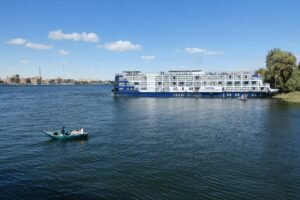
Ships anchor in the Nile River with tender boats ferrying passengers to shore.
Choose the Right Port Day
Best Overall
Book a private guide through your river cruise line or arrange one locally before arrival. The rock-cut tombs at Meir and the Convent of the Virgin Mary together make a genuinely rewarding cultural half-day that most tourists never experience.
Best Beach
Not relevant — Asyut is an inland city on the Nile with no beach access.
With Kids
The Asyut Barrage is a surprisingly pleasant open area along the Nile where kids can move around and take in the river views without the need for extensive walking or queuing.
Only 3-4 Hours
Hire a taxi or private guide from the dock and head straight to the Asyut Barrage area and the ancient rock-cut tombs of Meir. Spend the balance of time at the Convent of the Virgin Mary at Deir al-Muharraq if Coptic history interests you. Skip the town center market unless you have local guidance.
Cheapest Option
Agree on a fixed-price taxi from the dock for a half-day circuit covering the barrage and one archaeological site — expect to pay roughly $15-30 USD for the car, shared among your group.
What To Avoid
Avoid wandering the city center alone without a local contact — Asyut is a working Egyptian city, not a tourist zone, and navigation is genuinely difficult without Arabic. Also avoid overpriced unofficial 'guides' who approach near the dock.
Top Things To Do
1
Rock-Cut Tombs of Meir
An ancient necropolis with well-preserved Middle Kingdom tomb paintings dating back roughly 4,000 years. Far less crowded than Luxor's Valley of the Kings and genuinely impressive for serious history travelers. Requires a 30-40 minute drive and some hiking on uneven ground.
2
Deir al-Muharraq (Convent of the Virgin Mary)
One of the oldest and most sacred monasteries in Egypt, believed to be the site where the Holy Family sheltered during their flight into Egypt. Active Coptic Christian monastery with ancient church buildings and a serene atmosphere. Respectful dress required.
3
Asyut Barrage (Nile Dam)
A British-built early 20th-century barrage across the Nile. The surrounding area offers good Nile views, is relatively accessible, and gives a sense of the river's scale through Upper Egypt. Not a dramatic landmark, but a pleasant stop.
4
Asyut City Market and Old Bazaar
A working Egyptian souk rather than a tourist market. Sell fabrics, spices, household goods, and local produce. Interesting for atmosphere but requires patience, a sense of direction, and some tolerance for persistent attention. Best visited with a local guide.
5
Sohag Day Extension (White and Red Monasteries)
If your cruise schedule allows extra time, Sohag — about 90 km north — contains two of Upper Egypt's most architecturally striking early Christian monasteries. Better suited to full-day itineraries and best arranged through your cruise line.
Book with the ship, or on your own?
Booking independently
- Often noticeably cheaper than the ship’s version of the same tour.
- Smaller groups and local operators, with traveler reviews you can read before you pay.
- Free cancellation on most tours, usually up to 24 hours before.
When the ship’s excursion makes sense
- Short port calls or long transfers where the timing is tight.
- Tender-only stops where getting ashore can run late.
- The ship waits for its own delayed excursions — it won’t wait for independent ones, so leave a buffer before all-aboard.
We may earn a commission when you book through our links, at no extra cost to you — it’s how we keep these guides free.
Quick Take
- Port Type
- Nile River Cultural Stop
- Best For
- History-focused cruisers, Coptic Christian heritage, off-the-beaten-path Egypt explorers
- Avoid If
- You need beaches, prefer polished tourist infrastructure, or are short on patience for a less tourist-ready city
- Walkability
- Low — the dock area does not connect walkably to the main sites; transport is necessary
- Budget Fit
- Very budget-friendly once ashore; local food and transport are cheap
- Good For Short Calls?
- Yes — most key sites can be covered in 3-4 focused hours with a driver
Port Overview
Asyut sits on the west bank of the Nile in Upper Egypt, roughly halfway between Cairo and Luxor. River cruise lines including AmaWaterways, Uniworld, Avalon, and Emerald Waterways occasionally include it as a port call, though it is far less common than Luxor or Aswan. Ships anchor midstream and tender passengers ashore, so factor in some extra time getting to and from the vessel.
This is not a polished tourist port. Asyut is Egypt's third-largest city — a busy, authentic, largely non-touristy urban center. That is both its appeal and its challenge. You will see real Egyptian city life, but tourist facilities are minimal and English signage is nearly nonexistent outside organized excursions.
The payoff for those willing to venture ashore is genuine: ancient rock-cut tombs at nearby Meir, significant Coptic Christian heritage including one of Egypt's most important monasteries, and the Asyut Barrage — a colonial-era dam structure with pleasant Nile views. If your cruise line offers a guided excursion here, it is worth taking; going independently requires more planning than most ports.
Is It Safe?
Asyut has historically had a more conservative reputation than Egypt's main tourist cities, but for cruise passengers on organized or private tours, it is generally safe. Stay with your group or your hired driver, keep valuables out of sight, and avoid wandering into unfamiliar neighborhoods without guidance.
Petty hassle from unofficial guides and vendors near the dock is possible; be politely firm and walk on. Solo female travelers should be prepared for more unwanted attention than in Luxor or Cairo's tourist districts — traveling with at least one companion is advisable. Standard Egypt precautions apply: drink only bottled water, avoid unpeeled raw produce from street stalls, and keep a photocopy of your passport rather than the original.
Accessibility & Walkability
Asyut is a poor fit for wheelchair users or anyone with significant mobility limitations. The tender boarding process involves steps and movement on open water, the rock-cut tomb sites at Meir require uneven terrain climbing, and city streets are rough and crowded. The Asyut Barrage area is the most accessible option — relatively flat and open. Cruisers with mobility concerns should discuss options directly with their river cruise line before the port call.
Outside the Terminal
Stepping off the tender, you arrive at a basic dock area with little formal infrastructure. Taxi drivers and occasional unofficial guides will approach. There is no port shopping zone, no information booth, and no obvious orientation point. Your best move is to have your plan confirmed before you leave the ship — either your excursion group meeting point or your pre-arranged taxi. The city itself is a short drive away; you are not walking to anything of interest from where you land.
Local Food & Drink
Local Egyptian food in Asyut is genuinely good and very cheap by any standard. Look for kushari (rice, lentils, pasta, and spiced tomato sauce), ful medames (spiced fava beans), fresh flatbread, and grilled kofta. Small local restaurants and street stalls near the city center serve meals for $2-5 USD per person. Your river cruise ship will almost certainly be serving lunch and dinner on board, so eating ashore is more about experience than necessity.
Hygiene standards vary in local eateries. If you have a sensitive stomach, stick to cooked hot food, avoid salads with unpeeled ingredients, and drink bottled water only. Your cruise line excursion may include a meal at a local restaurant vetted by the guide — that is the lower-risk option.
Shopping
Asyut has a limited tourist shopping scene but is historically known for handmade assiuti silverwork — a traditional Egyptian craft involving silver or white metal thread woven into black fabric to create geometric patterns. You may find this in the city's bazaar area. It is a genuinely regional product worth looking for if you are a shopper.
Otherwise, the city market sells everyday Egyptian goods rather than tourist items. Bargaining is standard and expected. Do not buy from anyone who followed you from the dock — prices will be inflated.
Money & Currency
- Currency
- Egyptian Pound (EGP)
- USD Accepted?
- No
- Card Payments
- Very limited outside hotels; cash is essential ashore
- ATMs
- ATMs exist in the city center but are not near the dock; withdraw cash on the ship or at a city bank
- Tipping
- Expected for drivers, guides, and service staff; EGP 20-50 per person for small services is appropriate
- Notes
- Carry small denominations of EGP. Your river cruise ship will likely have currency exchange on board; use it before going ashore in Asyut.
Weather & Best Time
- Best months
- October to February — cooler and far more comfortable for sightseeing
- Avoid
- June to August — extreme heat regularly exceeds 40°C (104°F) and outdoor activity becomes genuinely dangerous
- Temperature
- 15-28°C (59-82°F) in peak Nile cruise season (Oct-Apr)
- Notes
- Upper Egypt is significantly hotter and drier than Cairo or the coast. Sun protection, a hat, and water are non-negotiable even in the cooler months.
Airport Information
- Airport
- Asyut Airport (ATZ)
- Distance
- Approximately 10 km northwest of the city center
- Getting there
- Taxi from airport to dock area; check locally for current rates
- Notes
- Limited flight connections; most Nile cruisers fly into Luxor or Cairo and join the ship there. Asyut Airport is rarely used for cruise embarkation.
Getting Around from the Port
Tender to Shore
Ships anchor midstream; small tender boats ferry passengers to the dock. Allow 15-20 minutes each way and check your ship's last tender time carefully.
Private Taxi (hired at dock)
Most practical option for independent travelers. Negotiate a fixed half-day rate before you get in. Drivers rarely speak English so have your destinations written in Arabic if possible.
Book a transfer 5% off with code TPO5 at checkoutCruise Line Shore Excursion
River cruise lines like Uniworld and AmaWaterways typically offer guided excursions from the ship. These include transport, an English-speaking guide, and set logistics — the easiest option at this port.
Tuk-tuk / Local Minibus
Available in town but not practical for reaching outlying sites like Meir. Useful for short hops within the city center only.
Book a transfer 5% off with code TPO5 at checkoutDetails last checked April 2026
Check The Port Traffic
Cruise Ships in Port
Once you have your shore plan, use the schedule to see how busy the harbour will be on your date, plus the ships, lines, and published call windows.
Sun
Mon
Tue
Wed
Thu
Fri
Sat
1
2
3
4
5
6
7
8
9
10
11
12
13
14
15
16
17
18
19
20
21
22
23
24
25
26
27
28
29
30
Quiet (1–2)
Busy (3–4)
Packed (5+)
0 scheduled calls
July 11, 2026
No scheduled cruise ship calls were found for this date selection. Pick a highlighted day on the calendar above, widen the range, or search for a different ship or line.
Planning a cruise here?
NCL, Uniworld, AmaWaterways & more sail to Asyut.
Practical Tips for Cruise Passengers
- Confirm your ship's last tender time before going ashore — missing it in Asyut is a much bigger problem than in a well-connected tourist port.
- Download an offline Arabic phrase app or have key destinations written in Arabic script on your phone; English is not widely spoken outside organized tour settings.
- Your river cruise line's excursion is genuinely worth considering here — Asyut is one port where independent travel without local contacts is more hassle than it is worth for most cruisers.
- Dress conservatively ashore — covered shoulders and knees for both men and women are strongly recommended and will reduce unwanted attention significantly.
- Bring EGP cash in small denominations before you leave the ship; the dock area has no currency exchange or ATMs.
- If visiting the Meir tombs or Deir al-Muharraq, bring a flashlight or use your phone torch — lighting inside historic sites is often minimal.
Frequently Asked Questions
Yes, with reasonable precautions. Stick with your tour group or hired driver, dress conservatively, and avoid wandering unfamiliar areas alone. It is a real working city, not a tourist zone, so common-sense awareness matters more here than at polished ports.
Technically yes, but it is harder than most Egypt ports. English signage is almost nonexistent, navigation is difficult, and tourist infrastructure is minimal. A local guide or pre-arranged driver makes a significant difference to what you can actually see in a short port day.
Most river cruise itineraries allow a half-day in Asyut, typically a morning or afternoon stop. Check your specific cruise schedule as timing varies by line and itinerary direction.
Asyut has ancient origins as a major city of Upper Egypt and was an important center in Middle Kingdom times. It is also significant in Coptic Christian tradition as part of the Holy Family's route into Egypt, and the nearby Deir al-Muharraq monastery is one of the most important Coptic pilgrimage sites in the country.
No. Asyut is an inland Nile city with no beach access. Water activities are limited to what your cruise ship offers on the Nile itself. Shore time here is entirely about cultural and historical sightseeing.
Find cruises to Asyut, Egypt
Compare sailings and book with no fees — best price guaranteed.
We may earn a commission when you book through our links, at no extra cost to you — it’s how we keep these guides free.
✉ Sailing to Asyut? Get your port-day plan
Tell us your sail date and we’ll email you a short Asyut plan about 60 days out — when the good excursions start selling out — plus a final checklist 2 weeks before. Two emails, then done. Unsubscribe anytime.
Africa & Middle East
View All
More Africa & Middle East Ports

Africa & Middle East

Africa & Middle East
Africa & Middle East
