


Africa & Middle East
Africa & Middle East
Luxor Cruise Port Guide: Things to Do & Practical Tips for River Cruisers
Egypt
River ships moor alongside at the riverside landing; passengers walk ashore by gangway.
Choose the Right Port Day
Best Overall
West Bank day — Valley of the Kings plus Hatshepsut's Temple via hired taxi or organized shore excursion. This is why people come to Luxor and it requires a full morning. Book through your ship or negotiate a private driver at the dock the evening before.
Book Valley of the Kings from $110Best Beach
Not relevant — Luxor is a desert river city. There are no beaches.
With Kids
Karnak Temple's scale and forest of columns tends to impress kids more than detailed tombs. Add a calèche (horse-drawn carriage) ride along the Corniche for roughly $5-10 USD for a memorable experience they'll talk about.
Only 3-4 Hours
Walk the Corniche to Luxor Temple (10-15 minutes from most docking areas), spend 45-60 minutes inside, then hire a taxi to Karnak for another hour. You'll have seen two of Egypt's greatest sites without crossing the Nile.
Cheapest Option
Walk to Luxor Temple independently ($10-15 USD entry), then catch a local minibus or microbus toward Karnak for under $1. Avoids vehicle hire and tour markup entirely.
What To Avoid
Calèche horses at tourist sites are sometimes in poor condition and rides can become drawn-out pressure-selling exercises — inspect the horse and agree on price before boarding. Also skip the 'free' papyrus and perfume shop detours that taxi drivers routinely include uninvited.
Quick Take
- Port Type
- Ancient Monuments River Port
- Best For
- History lovers, archaeology enthusiasts, anyone who wants to see Egypt's most important ancient sites in a single day
- Avoid If
- You struggle with extreme heat, large crowds, persistent street vendors, or have limited mobility on uneven terrain
- Walkability
- Moderate — Luxor Temple is walkable from the Corniche docks, but the West Bank sites require transport and significant walking on sandy, uneven ground
- Budget Fit
- Mid-range; entry fees add up quickly but independent visits are far cheaper than ship-organized excursions
- Good For Short Calls?
- Yes — a focused half-day can cover Luxor Temple and Karnak comfortably; Valley of the Kings needs at least 3-4 hours plus travel time
Top Things To Do
1
Hot Air Balloon Ride in Luxor Egypt with Transfers Included
Safety is our #1 priority for passengers and crewmembers, with over 30 years in business and zero accidents under our belt! We are also ranked the…
3hFree cancellation
2
Luxor Day Tour: Valley of Kings & Queens & Hatchepsut Temples
Whilst in Luxor you can take a Private Full Day Tour of the West Bank. Here you have the opportunity to visit the amazing Valley of…
8hFree cancellation
Our picks in Luxor
3
Valley of the Kings
The single most important site in Luxor. Sixty-three royal tombs cut into the limestone cliffs of the West Bank, including Tutankhamun's. The scale of the painted burial chambers — still vivid after 3,000 years — is extraordinary. Standard entry covers three tombs; Tutankhamun's and a few others require separate tickets. Go early, it fills up fast.
4
Karnak Temple Complex
The largest ancient religious site on earth — a vast compound of temples, pylons, obelisks, and the famous Hypostyle Hall with 134 massive columns. Allow more time than you think you need. The scale is genuinely hard to process. A guide adds significant value here.
5
Luxor Temple
Right on the Corniche, easily walkable from docked ships. Two massive pylons, giant statues of Ramesses II, and the famous avenue of sphinxes. Less overwhelming than Karnak — a good orientation site. Particularly worth visiting in the evening when it's flood-lit and the heat has dropped.
Show 3 more things to do in Luxor
6
Hatshepsut's Temple (Deir el-Bahari)
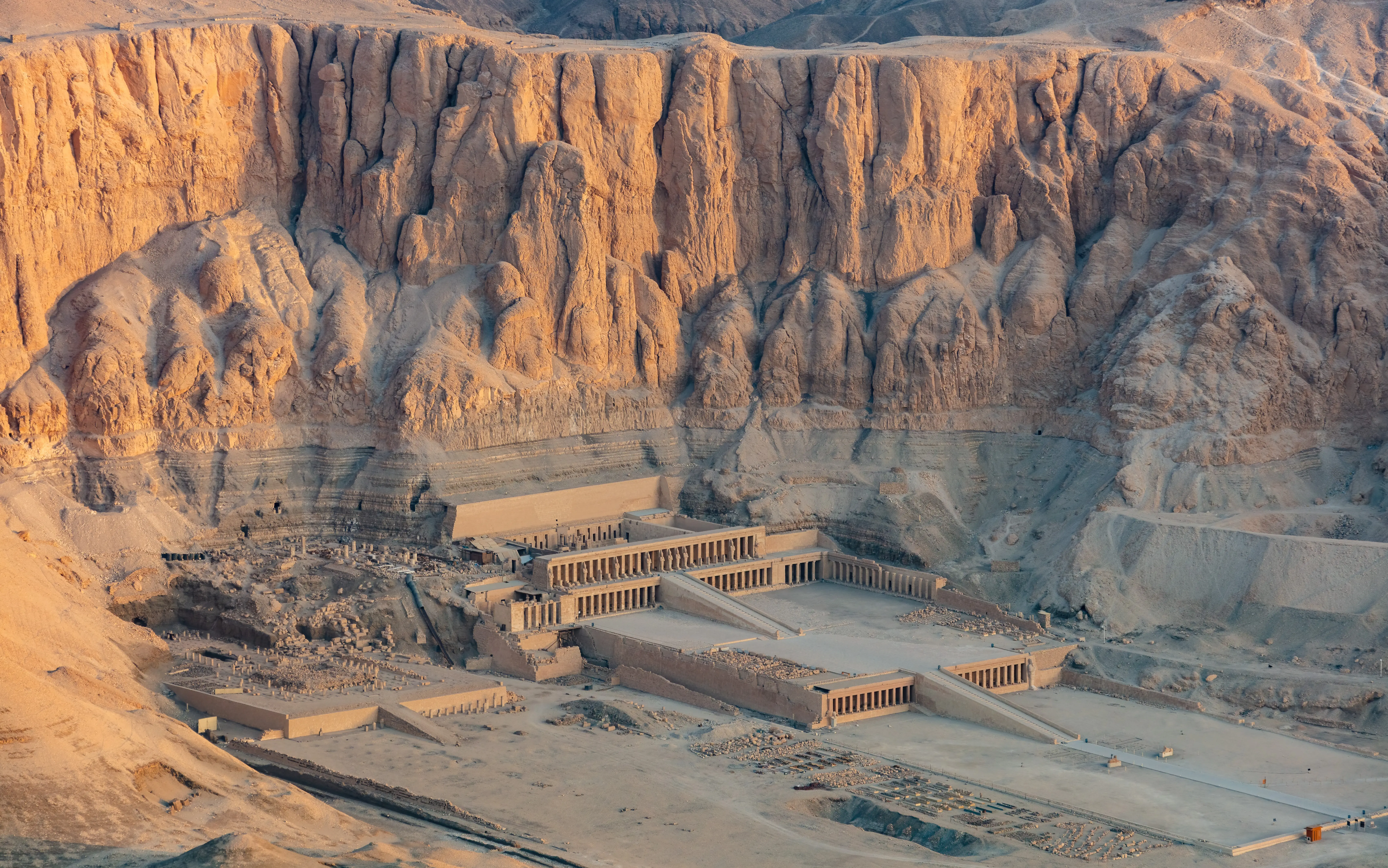
Three colonnaded terraces cut dramatically into the cliffs of the West Bank. Architecturally unlike anything else in Egypt — clean, geometric lines that look almost modern. Usually combined with a Valley of the Kings visit. The site itself is genuinely impressive and less claustrophobic than the tomb interiors.
7
Luxor Museum
Small, well-curated museum on the Corniche with a high-quality collection of New Kingdom artifacts. Far less crowded than Cairo's Egyptian Museum and better labeled. Worth 90 minutes if you want context for what you're seeing at the temples and tombs. Air-conditioned, which matters in summer.
8
Colossi of Memnon
Two enormous seated statues of Pharaoh Amenhotep III standing in an open field on the West Bank. Free to view from the road — no entry required. Usually a quick stop en route to other West Bank sites. Impressive for their size and isolation; not worth a dedicated trip on its own.
Book with the ship, or on your own?
Booking independently
- Often noticeably cheaper than the ship’s version of the same tour.
- Smaller groups and local operators, with traveler reviews you can read before you pay.
- Free cancellation on most tours, usually up to 24 hours before.
When the ship’s excursion makes sense
- Short port calls or long transfers where the timing is tight.
- Tender-only stops where getting ashore can run late.
- The ship waits for its own delayed excursions — it won’t wait for independent ones, so leave a buffer before all-aboard.
Going independent? Compare tours in Luxor → — the best-reviewed ones sell out first.
We may earn a commission when you book through our links, at no extra cost to you — it’s how we keep these guides free.
Check The Port Traffic
Cruise Ships in Port
Once you have your shore plan, use the schedule to see how busy the harbour will be on your date, plus the ships, lines, and published call windows.
Sun
Mon
Tue
Wed
Thu
Fri
Sat
1
2
3
4
5
6
7
8
9
10
11
12
13
14
15
16
17
1 ship
18
1 ship
19
20
1 ship
21
22
1 ship
23
1 ship
24
2 ships
25
4 ships
26
4 ships
27
2 ships
28
3 ships
29
3 ships
30
3 ships
31
5 ships
Quiet (1–2)
Busy (3–4)
Packed (5+)
0 scheduled calls
October 21, 2026
No scheduled cruise ship calls were found for this date selection. Pick a highlighted day on the calendar above, widen the range, or search for a different ship or line.
Port Overview
Luxor sits on the east bank of the Nile in Upper Egypt and is the primary reason most Nile river cruises exist. The city is essentially an open-air museum sitting on top of ancient Thebes, once the capital of the New Kingdom pharaohs. The concentration of monuments here — Karnak, Luxor Temple, the Valley of the Kings, Hatshepsut's Temple, the Colossi of Memnon — is unmatched anywhere on earth.
River cruise ships dock along the Corniche el-Nil, Luxor's main riverside promenade. In busy season ships are moored two or three deep, so getting ashore may mean crossing through neighboring vessels. Most major lines (Viking, Uniworld, AmaWaterways, Scenic, Tauck, and others) treat Luxor as a multi-day stop or embarkation/disembarkation point, which means you likely have more time here than at other ports — use it.
The city is divided by the Nile: the East Bank has Luxor Temple and Karnak; the West Bank has the Valley of the Kings, Valley of the Queens, Hatshepsut's Temple, and the Colossi of Memnon. You need at least one full day to do justice to both sides. If your itinerary only allows a half-day, prioritize by your interests — West Bank for tombs and desert drama, East Bank for temple scale and walkability.
Be realistic about heat. From May through September, midday temperatures regularly exceed 40°C (104°F). Most cruise lines schedule shore excursions to start early for good reason. Even in winter cruise season (October–March), midday sun is intense. Carry water, wear a hat, and start as early as possible.
Is It Safe?
Luxor is one of Egypt's most heavily touristed cities and is generally safe for cruise visitors. Tourism police are present at all major sites. Petty hassle — persistent vendors, unsolicited 'guides', and taxi drivers pressuring shop stops — is the main irritant rather than any genuine threat. A firm but polite no works; engaging in debate just prolongs it.
Dress modestly by local standards, particularly on the West Bank where you'll encounter more local residential areas. Women traveling independently should expect more attention but are not at elevated risk. Avoid wandering into non-tourist areas late at night, though this is rarely relevant on a ship schedule.
The main practical risks are heat exhaustion and dehydration — both easily avoided by starting early, carrying 1.5 liters of water per person minimum, and retreating to shade or air conditioning by noon in summer months.
Accessibility & Walkability
Luxor is challenging for wheelchair users and those with significant mobility limitations. Temple floors are largely original ancient stone — heavily worn, uneven, with occasional large steps and sandy patches. The Valley of the Kings involves descending into tombs on steep ramps and stairs. Karnak is very large with some paved paths but also considerable unpaved areas.
Luxor Temple on the East Bank is the most accessible site — portions of it have relatively level ground and it is closest to the dock. Ships from Uniworld, Viking, and others typically brief passengers on mobility considerations before excursions. If mobility is a concern, discuss specific site conditions with your cruise line before the port day.
Outside the Terminal
Most ships dock directly on the Corniche el-Nil, Luxor's main riverside road. When you step off the gangway (or cross through neighboring ships), you land directly on or adjacent to the Corniche. Taxis, calèche drivers, and vendors will approach immediately. The Corniche itself is a wide, walkable promenade with the Nile on one side and hotels, restaurants, and souvenir shops on the other. Luxor Temple's entrance is visible within a short walk north. The atmosphere is busy but navigable — keep moving if you don't want to engage with vendors and you'll be fine within two minutes.
Local Food & Drink
Food options in Luxor range from hotel restaurants (reliable, air-conditioned, pricier) to local kushari shops and falafel stands that are cheap, filling, and authentic. Most cruise lines provide meals on board, so eating ashore is usually a choice rather than a necessity.
For a sit-down meal ashore, the restaurants along the Corniche and in the Winter Palace Hotel area cater to tourists and are safe bets for hygiene and English menus. Expect Egyptian staples — ful medames (fava bean stew), ta'ameya (Egyptian falafel), grilled meats, and fresh flatbread. Avoid buffet-style tourist restaurants near the major sites that are mediocre and overpriced.
Drink sealed bottled water only. Most cafes and restaurants serving tourists understand this and provide it. A filling local lunch at a non-Corniche restaurant will run $5-10 USD per person; hotel restaurant meals are $15-25 USD.
Shopping
The Luxor souvenir trade is aggressive and omnipresent around every major site. Alabaster workshops on the West Bank, papyrus shops, and scarab vendors are everywhere. If you want to buy, the covered Luxor Souk (market) in the town center offers a wider range at generally more negotiable prices than the roadside stalls near temples. Expect to negotiate — initial asking prices are typically 3-5x what vendors will accept.
Actual quality items — hand-painted papyrus, quality alabaster, silver cartouche jewelry — exist but require time and discernment. Many 'papyrus' scrolls sold near sites are banana leaf. If provenance matters, buy from established shops with fixed-price receipts. Your ship's cruise director can usually recommend reputable vendors.
Money & Currency
- Currency
- Egyptian Pound (EGP)
- USD Accepted?
- Yes
- Card Payments
- Accepted at hotels, larger restaurants, and some shops; not reliable at market stalls, local transport, or smaller vendors
- ATMs
- ATMs available on the Corniche and near major hotels; withdraw EGP for local purchases as USD acceptance is inconsistent outside tourist venues
- Tipping
- Expected and important — tip guides $5-10 USD per person, drivers $3-5 USD, tomb attendants who offer unofficial assistance $1-2 USD
- Notes
- USD is widely accepted at tourist sites and for taxis, but you will get better rates paying in EGP. Keep small bills for tips and market purchases.
Weather & Best Time
- Best months
- October through February — warm days (20-28°C), cool evenings, manageable crowds
- Avoid
- June through August — extreme heat regularly exceeds 40°C; temple visits become genuinely dangerous without early starts and constant hydration
- Temperature
- 15-30°C (59-86°F) during peak river cruise season (October–April); expect sun and low humidity
- Notes
- Rain is almost nonexistent in Luxor year-round. Wind off the desert can kick up dust. Mornings are almost always the most comfortable time to be at open-air sites.
Airport Information
- Airport
- Luxor International Airport (LXR)
- Distance
- Approximately 7 km east of the Corniche docks
- Getting there
- Taxi from Corniche to airport takes 15-20 minutes; agree on price before departing — check locally for current rates
- Notes
- Many Nile river cruises begin or end in Luxor, making LXR a practical embarkation/disembarkation airport. International connections are limited; Cairo (CAI) is the main hub for onward travel.
Getting Around from the Port
Private Taxi (full day hire)
Most practical way to cover both banks. Drivers wait at the Corniche docks. Negotiate a half-day or full-day rate covering the sites you want. Clarify stops in advance and agree on no shop detours.
Book a transfer 5% off with code TPO5 at checkoutNile Ferry to West Bank
Local ferries cross from the East Bank landing near the Corniche to the West Bank. Cheap and authentic but you still need transport on the other side.
Book ferry ticketsOrganized Ship Excursion
All major lines (Viking, Avalon, Emerald, APT, etc.) run guided tours to key sites. Guide commentary adds real value at Egyptian sites, especially inside tombs where context is everything.
Calèche (Horse Carriage)
Available along the Corniche for short trips between Luxor Temple and Karnak on the East Bank. Atmospheric but slow.
Walking (East Bank only)
Luxor Temple is a 10-15 minute walk from most Corniche docks. The avenue of sphinxes connecting to Karnak is partially walkable but Karnak itself is 2.5 km north — hot and long on foot.
Details last checked April 2026
Planning a cruise here?
CroisiEurope, Viking River Cruises, AmaWaterways & more sail to Luxor.
Practical Tips for Cruise Passengers
- Start the Valley of the Kings as early as your ship schedule allows — ideally before 8am. By 10am it is crowded and by midday the heat inside tombs is oppressive.
- Your ship's Egyptologist guide, if provided, is worth using for at least one major site — the hieroglyph and historical context they provide transforms what you're looking at.
- Carry small EGP bills at all times. Many attendants, vendors, and informal helpers expect small tips, and not having change creates awkward situations.
- Wear closed-toe shoes with grip — ancient stone floors are worn smooth and often slightly sandy underfoot, and tomb ramps can be slippery.
- If a taxi driver suggests a 'free' papyrus factory or perfume shop stop, decline firmly before you get in the car. These detours are commissions-based and will eat into your limited time.
- Evening at Luxor Temple is genuinely worth staying up for — the illumination is dramatic, the heat is gone, and crowds thin out significantly after 6pm.
Frequently Asked Questions
Most nationalities need a visa to enter Egypt, which is typically arranged by your river cruise line as part of embarkation formalities. Check with your specific cruise line well in advance — this is not a port where you can sort it out spontaneously at the dock.
Honestly, for many visitors, no — the tomb is smaller and less visually spectacular than others included in standard entry. The gold death mask is in Cairo, not here. Skip it unless you have a specific personal connection to Tutankhamun's story.
Yes, and many experienced travelers prefer it. The sites are well-signed and signage has improved in recent years. That said, a good Egyptologist guide adds genuine depth at Karnak and the Valley of the Kings — consider a guide for at least one major site.
Most Nile river cruises spend 2-3 days in or around Luxor, which is enough time to cover the main sites comfortably without rushing. Some itineraries use Luxor as an embarkation point with a pre-cruise day included — worth taking advantage of.
Absolutely — the Valley of the Kings alone justifies the entire trip to Luxor for most visitors. Don't skip the West Bank to stay on the easier East Bank side. Arrange a driver the evening before your shore day if possible to maximize early-morning access.
Find cruises to Luxor, Egypt
Compare sailings and book with no fees — best price guaranteed.
We may earn a commission when you book through our links, at no extra cost to you — it’s how we keep these guides free.
✉ Sailing to Luxor? Get your port-day plan
Tell us your sail date and we’ll email you a short Luxor plan about 60 days out — when the good excursions start selling out — plus a final checklist 2 weeks before. Two emails, then done. We’ll send one note to confirm it’s really you — unsubscribe anytime.
Same itinerary network
View All
Ports Often Paired With Luxor

Africa & Middle East

Africa & Middle East

Africa & Middle East
