

Northern Europe
Northern Europe
Binz Cruise Port Guide: Things to Do, Beaches & Practical Tips
Germany
Binz cruise terminal is a modern pier facility located directly in the town center with immediate access to the promenade and main attractions.
Choose the Right Port Day
Best Overall
Walk the Strandpromenade, visit the Seebrücke, spend an hour on the beach, then take the narrow-gauge railway (Rasender Roland) one stop toward Sellin or Granitz for a taste of the island — and return in time for sailaway.
Best Beach
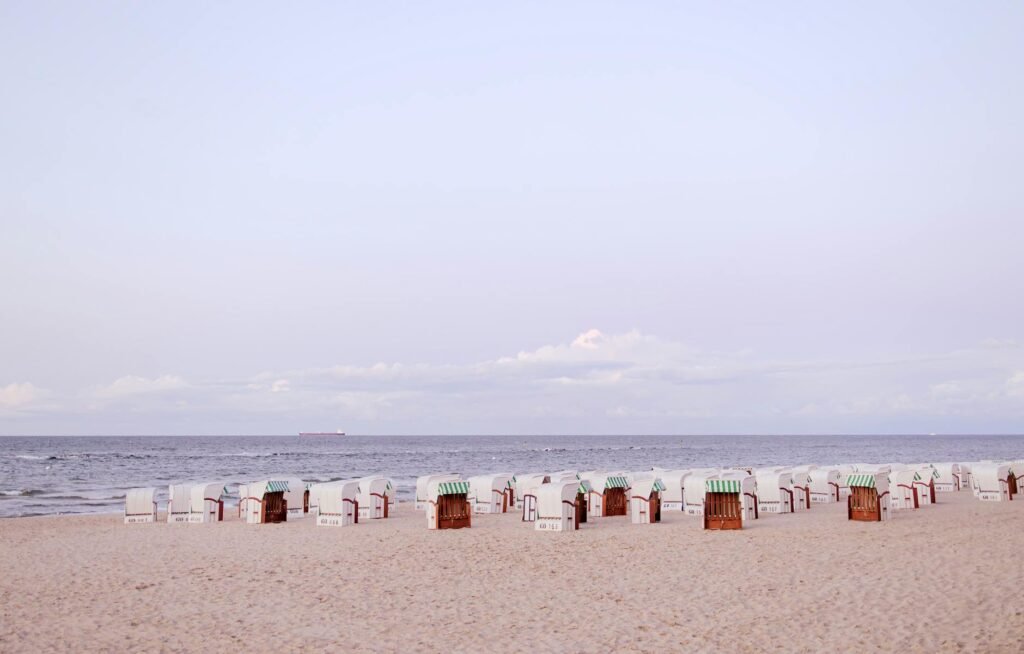
Binz Hauptstrand — the main beach directly in front of town is broad, clean, and walkable from the pier. It's a classic Baltic strand with white sand and the famous Strandkörbe (hooded wicker chairs) for hire.
With Kids
The main beach with the shallow Baltic water is ideal for families. Rent a Strandkorb for the day and let kids play in the surf. The Seebrücke (pier) has views and small vendors — kids enjoy the walk out over the water.
Only 3-4 Hours
Walk straight from the pier to the Strandpromenade, grab a coffee at one of the white-and-timber beach cafes, walk the boardwalk to the historic pier (Seebrücke), dip your feet in the Baltic if the weather holds, and browse the main street. You won't need transport for this plan.
Cheapest Option
Walk the promenade, spend time on the free public beach, and eat a Fischbrötchen (fish roll) from a harbour or beachfront kiosk for around €3–5. A full enjoyable morning can cost almost nothing.
What To Avoid
Don't spend your whole day waiting for a shuttle or taxi to reach Königsstuhl chalk cliffs unless you have at least 5–6 hours ashore — it's a logistically tight trip. Also skip the overpriced souvenir shops immediately at the pier entrance; better deals and more authentic items are a few streets in.
Quick Take
- Port Type
- Baltic Beach Resort & Promenade Town
- Best For
- Relaxed beach days, strolling the historic Wilhelminian promenade, and exploring the quiet charm of Rügen Island
- Avoid If
- You want a big-city experience, world-class museums, or a packed itinerary of major sights — Binz is slow-paced by design
- Walkability
- High within town — the promenade, beach, and main street are all within easy walking distance of the pier
- Budget Fit
- Moderate — beach access is free, food is reasonably priced, but spa treatments and boat excursions add up
- Good For Short Calls?
- Yes — Binz rewards a half day well; a full day is only necessary if you plan to venture out to Jasmund National Park or Königsstuhl
Top Things To Do
1
Walk the Strandpromenade
Binz's famous seafront promenade is lined with ornate white Wilhelminian villas, cafes, and beach access points. It's the core experience of Binz and genuinely lovely — walk the full length, look at the architecture, and pick a cafe for a coffee or Fischbrötchen. This is what Binz is for.
2
Seebrücke Binz (Historic Pier)
The classic wooden pier extending 394 metres into the Baltic is a Binz landmark. Walk out for the sea views, watch the water, and enjoy the perspective back to shore. Small vendors and a cafe are on the pier itself.
3
Königsstuhl & Jasmund National Park
Rügen's most famous sight — dramatic white chalk cliffs rising above the Baltic Sea, set in a beech forest. The viewpoint at Königsstuhl is striking. There's a National Park Centre with exhibits. This is genuinely worth the trip if you have enough time, but don't underestimate the logistics.
Show 3 more things to do in Binz
4
Prora Beach & Historic Site
A few kilometres north of Binz lies the vast and bizarre remains of the Nazi-era KdF resort — a 4.5km-long concrete structure planned to house 20,000 workers. It's being converted to apartments and hotels, but the beach here is quieter and wilder than central Binz, and the history is genuinely thought-provoking.
5
Rasender Roland Steam Railway Ride
The narrow-gauge steam railway running along the southern Rügen coast is a genuine heritage attraction, not just a tourist gimmick. A short ride to Sellin and back — stopping to see Sellin's elegant pier — is a pleasant way to see more of the island without needing a car or taxi.
6
Beach Time at Binz Hauptstrand
The main Binz beach is wide, clean, and well-managed — the classic Baltic strand experience. Rent a Strandkorb (wicker beach chair) for a sheltered spot, dip in the sea if you're brave enough (it's cold but refreshing in summer), and simply sit with the view. It's honest, restorative, and free to access.
Book with the ship, or on your own?
Booking independently
- Often noticeably cheaper than the ship’s version of the same tour.
- Smaller groups and local operators, with traveler reviews you can read before you pay.
- Free cancellation on most tours, usually up to 24 hours before.
When the ship’s excursion makes sense
- Short port calls or long transfers where the timing is tight.
- Tender-only stops where getting ashore can run late.
- The ship waits for its own delayed excursions — it won’t wait for independent ones, so leave a buffer before all-aboard.
Going independent? Compare tours in Binz → — the best-reviewed ones sell out first.
We may earn a commission when you book through our links, at no extra cost to you — it’s how we keep these guides free.
Check The Port Traffic
Cruise Ships in Port
Once you have your shore plan, use the schedule to see how busy the harbour will be on your date, plus the ships, lines, and published call windows.
Sun
Mon
Tue
Wed
Thu
Fri
Sat
1
2
3
4
5
6
7
8
9
10
11
12
13
14
15
16
17
18
19
20
21
22
23
24
25
26
27
28
29
30
31
Quiet (1–2)
Busy (3–4)
Packed (5+)
0 scheduled calls
October 19, 2026
No scheduled cruise ship calls were found for this date selection. Pick a highlighted day on the calendar above, widen the range, or search for a different ship or line.
Port Overview
Binz is the largest and most well-known seaside resort on Rügen Island in northeastern Germany, situated along the Baltic coast. Ships dock at the Binz pier — a purpose-built cruise pier that puts you literally steps from the beach and promenade. There's no shuttle transfer needed to reach town; the port experience here is unusually direct and pleasant.
The town's character is defined by its late-19th-century Bäderstil (spa architecture) — ornate white timber-frame villas, leafy boulevards, and a long sandy beach flanked by the iconic Strandpromenade. It feels like stepping into a sepia postcard. This is a deliberately slow, elegant, old-fashioned resort, and it's best enjoyed at that pace.
Binz is a genuine destination in its own right for beach and promenade time, but it also serves as a launch point for Rügen's bigger natural draw: Jasmund National Park and the Königsstuhl chalk cliffs. That excursion is doable but requires planning. If you only have four hours, stay in Binz. If you have six or more, consider the cliffs.
Cruise traffic is real in peak summer months (June–August), and the promenade can get busy when multiple ships are in port. Outside those months, Binz is quieter, cooler, and arguably more characterful. The Baltic water temperature in summer is refreshing rather than warm — typically 16–20°C — so swimming is bracing but absolutely done by locals and visitors alike.
Is It Safe?
Binz is one of Germany's safest resort towns. Petty crime is rare and the streets are well-lit and well-policed, especially in season. Standard European travel sense applies: watch your bag in crowds near the pier when multiple ships are in, and don't leave valuables unattended on the beach.
The Baltic Sea has mild currents but can have sudden weather changes, especially in spring and autumn. If you plan to swim, note that lifeguards are on duty at the main beach in peak season but not necessarily at all times in shoulder months. Rip currents are not a significant concern here, but cold water is — dress accordingly.
Accessibility & Walkability
Binz town center and the Strandpromenade are largely flat and accessible. The boardwalk is well-maintained and suitable for wheelchairs and mobility aids. The pier itself may have some gaps or uneven sections depending on tidal conditions — check with ship staff on the day.
The beach uses Strandkörbe (wicker beach chairs) which sit on sand — getting to the water's edge requires walking on sand, which can be challenging for wheelchairs. The Rasender Roland steam train has limited accessibility. Jasmund National Park and Königsstuhl involve significant walking on uneven forest paths and are not wheelchair-friendly.
Outside the Terminal
Step off the pier and you're essentially on the resort promenade within two minutes. There's no industrial port area to navigate, no security perimeter to exit through a distant gate. The transition from ship to resort is unusually smooth for a cruise port. You'll see the beach immediately to your right or left, the white spa-era villas lining the boulevard ahead, and small cafes within eyeline. There are usually a handful of vendors, bike rental stands, and taxi drivers near the pier entrance in season. It's a pleasant arrival — one of the more civilised pier-to-town experiences in Northern Europe.

Beaches Near the Port
Binz Hauptstrand (Main Beach)
The central beach of Binz — broad, sandy, and clean with a gentle slope into the Baltic. The iconic hooded Strandkörbe wicker chairs line the shore and can be hired by the hour or day. The water is calm but cold by most standards. Backed by the beautiful promenade and white villas, this is a genuinely attractive beach.
Prora Beach
A quieter, less groomed stretch of Baltic beach north of Binz, backed by pine forest rather than hotels. The wild dune character is different from the manicured main beach. No facilities to speak of, but far fewer crowds. The adjacent Prora historical site adds context to a visit.
Local Food & Drink
Binz is a proper German resort town, so the food scene leans toward traditional northern German fare — fish is the star. Fischbrötchen (fish rolls, typically with herring, shrimp, or smoked fish) are available from kiosks along the promenade and near the pier for €3–6 and are the default quick, cheap, and authentic lunch option. Don't skip them.
For a sit-down meal, the promenade restaurants serve solid German and Baltic cuisine — think grilled fish, schnitzel, and local specialities. Prices are resort-level but not outrageous; expect €12–22 for a main course. The restaurants immediately flanking the pier entrance tend to be pricier and more tourist-facing; walk a few streets inland or along the promenade for better value.
German coffee culture is alive here — good espresso and cake (Kaffee und Kuchen) is available at multiple cafes. If the weather is decent, grab a table with a sea view and spend 30 minutes over a slice of cake. It's very much the local way.
Shopping
Shopping in Binz is modest and resort-oriented. The main Hauptstrasse has boutiques selling Baltic amber jewellery, local handicrafts, beach accessories, and German food products — amber is the most locally relevant purchase and Rügen has genuine amber washed up on its shores. Quality and prices vary, so compare before buying.
Avoid impulse-buying at the pier-entrance stalls where pricing is inflated for arriving passengers. Walk to the main shopping street for better selection and more honest pricing. Binz is not a serious shopping destination — treat it as a pleasant browse rather than a mission.

Money & Currency
- Currency
- Euro (EUR)
- USD Accepted?
- No
- Card Payments
- Card payment is widely accepted in restaurants, shops, and larger cafes. Some smaller kiosks and beach vendors are cash-only.
- ATMs
- ATMs are available in central Binz on and near the main shopping street. Not immediately at the pier — walk 5 minutes into town.
- Tipping
- Round up or tip 5–10% in restaurants. Not mandatory but appreciated. Taxi drivers expect a small rounding-up tip.
- Notes
- Germany uses Euros; no need to carry large amounts of cash but having €20–30 for kiosks and cash-only vendors is sensible.
Weather & Best Time
- Best months
- June, July, August — warmest, sunniest, and the full beach season is open
- Avoid
- November through March — Binz is quiet bordering on closed, many businesses shut, weather is cold and grey
- Temperature
- 15–24°C in summer months; sea temperature 16–20°C at peak
- Notes
- Baltic weather can be changeable even in summer. Pack a light layer regardless of forecast. Wind off the sea is common.
Airport Information
- Airport
- Rostock-Laage Airport (RLG) is the nearest significant airport; Heringsdorf Airport (HDF) on Usedom is closer but with very limited routes
- Distance
- Rostock-Laage is approximately 100 km from Binz; Heringsdorf is approximately 60 km
- Getting there
- Taxi or rental car from either airport. No direct train connection. Rostock has better rail links to the mainland if flying via Hamburg or Berlin airports.
- Notes
- Most cruisers joining or leaving the ship at Binz will route through Hamburg or Berlin airports and travel by train or transfer. Hamburg to Binz by train is around 3.5–4 hours with connections.
Getting Around from the Port
Walking
The pier deposits you directly onto the promenade. The entire resort core — beach, Seebrücke, main shopping street, restaurants — is walkable within 10–15 minutes.
Rasender Roland (Narrow-Gauge Steam Railway)
A historic narrow-gauge steam train connects Binz to other Rügen resort towns including Sellin, Baabe, and Göhren. Runs on a fixed timetable. Slow but charming.
Book train ticketsTaxi / Ride Services
Taxis are available near the pier for trips to Jasmund National Park or Königsstuhl. Agree on a price before departure.
Book a transfer 5% off with code TPO5 at checkoutBus (RPNV Regional Bus)
Regional buses connect Binz to other parts of Rügen including Sassnitz (near Königsstuhl). Infrequent but cheap.
Book bus ticketsBicycle Rental
Bike hire shops operate in central Binz. Rügen has good cycle paths and flat coastal terrain. A good option for active cruisers with a full day.
Details last checked April 2026
Planning a cruise here?
Windstar, Scenic Cruises sail to Binz.
Practical Tips for Cruise Passengers
- Arrive early on the promenade — the light in the morning on the white Wilhelminian villas is genuinely photogenic and crowds are thin before 10am.
- If you plan to visit Königsstuhl chalk cliffs, confirm your all-ashore time carefully and add at least 90 minutes of buffer — the trip is tight for shorter port calls.
- Strandkorb chairs on the main beach can sell out on busy summer days; secure one early if you want a full beach session.
- The Rasender Roland steam train runs on a fixed timetable — check it before committing to a round trip, as missing a train can derail your return schedule.
- Bring a light windproof layer even in July — the Baltic seafront is often breezier than the forecast suggests.
- If you have a half-day, skip the excursion planning entirely and just walk: promenade, Seebrücke, beach, lunch — it's a completely satisfying port day for most cruisers.
Frequently Asked Questions
Yes, especially if you enjoy beaches, seafront strolls, and old-fashioned European resort character. It's a gentle, pretty port day rather than an action-packed one. If you need big-city energy or landmark sightseeing, manage expectations.
Yes, absolutely — this is one of the easiest pier-to-beach transitions on any cruise itinerary. You step off the ship and you're on the promenade within two minutes. No shuttle needed.
Yes, if you have at least five to six hours ashore. It's a round trip of about 90 minutes by taxi and then walking time at the cliffs. On shorter port calls, skip it and enjoy Binz itself.
The Baltic at Binz is clean and calm but cold — typically 16–20°C in peak summer. Many visitors wade and some swim, but it's bracing rather than warm. Kids and the hardier end of adults manage it fine.
Yes, it's one of the better half-day ports in the Baltic. The promenade, pier, beach, and a good lunch fit easily into three to four hours without feeling rushed or like you've missed something important.
Find cruises to Binz, Germany
Compare sailings and book with no fees — best price guaranteed.
We may earn a commission when you book through our links, at no extra cost to you — it’s how we keep these guides free.
✉ Sailing to Binz? Get your port-day plan
Tell us your sail date and we’ll email you a short Binz plan about 60 days out — when the good excursions start selling out — plus a final checklist 2 weeks before. Two emails, then done. We’ll send one note to confirm it’s really you — unsubscribe anytime.
Same itinerary network
View All
Ports Often Paired With Binz

Northern Europe

Northern Europe

Northern Europe
