

Asia
Asia
Halong Bay Cruise Port Guide: Things to Do & Practical Tips
Vietnam
Large ships berth at Ha Long International Cruise Port in Bai Chay (Ha Long City), opened 2018-19. Ships may still anchor in the bay and tender when the berths are taken.
Choose the Right Port Day
Best Overall
Guided kayak tour among the karsts (2.5–3 hrs, ship excursion ~80–120 USD). Hits the iconic experience—paddling under towering limestone, cave exploration, and scenic isolation—without the hassle of independent logistics.
Best Beach
Not a beach port. Limestone cliffs and karst scenery dominate. Some tours include beach time on small islands, but water activities center on kayaking and boat cruising.
With Kids
Floating village boat tour (1.5–2 hrs) is low-stress and visually stunning for families. Kids enjoy observing pearl farms and local life without strenuous hiking or water sports.
Only 3-4 Hours
Book the ship's kayak tour or floating-village excursion (2–3 hrs). Return to tender pickup 30 min before all-aboard. Brings you directly to scenic spots without transport delays.
Cheapest Option
Skip the ship tour. Hire a private longtail boat at the tender dock (40–60 USD for 2–3 hrs, negotiate) or join a waiting group tour (20–30 USD/person). Less organized but substantially cheaper.
What To Avoid
Don't linger at tourist shops in the floating village; prices are inflated and stock is repetitive. Avoid unscheduled boat operators if you don't speak Vietnamese and can't verify safety or timing.
Quick Take
- Port Type
- Scenic Anchorage (Tender Port)
- Best For
- Kayaking, limestone karst sightseeing, photography, nature lovers avoiding crowds; less suitable for shopping or dining variety.
- Avoid If
- You need shopping, nightlife, or cultural attractions; prefer not to rely on tenders; have mobility issues or severe motion sensitivity.
- Walkability
- Not applicable; port is an anchorage. All activity depends on tender transfers and boat-based excursions.
- Budget Fit
- Mid-range; most experiences are pre-booked ship excursions. Independent kayak rentals and floating village visits are cheaper alternatives.
- Good For Short Calls?
- Yes, well-suited. Typical itineraries (3–4 hours ashore) allow a kayak tour or floating village visit with time to return.
Top Things To Do
1
Shore Excursion Discovery Hanoi City from Halong Bay Port
Discover the vibrant heart of Vietnam on our unforgettable private shore excursion from HaLong Bay to Hanoi. Journey through stunning landscapes to the bustling capital, where…
9hFree cancellation
2
Ho Chi Minh City: Motorbike Street Food Tour with 12 Tastings
Embark on a vibrant culinary adventure in Ho Chi Minh City, sampling 12 authentic street food delights. Your tasting journey includes: starting with a savory specialty,…
4hFree cancellation
Our picks in Halong Bay
3
Guided kayak tour among limestone karsts
Paddle in small groups under towering karst cliffs, explore sea caves, and visit hidden lagoons. Tours are led by local guides who share geology and ecology facts. Moderate physical effort; suitable for beginners with basic fitness.
4
Floating village boat tour and pearl farm visit
Cruise slowly through a working floating village—homes, shops, and pearl farms built on wooden platforms. Observe daily life, meet locals, sample fresh seafood if offered. No strenuous activity; very family-friendly.
5
Sung Sot (Surprise) Cave exploration
Board a larger tour boat that visits one of the larger sea caves accessible to cruise passengers. Cave interior has towering chambers and impressive stalactite formations. Requires walking uneven stone stairs; moderate difficulty.
Show 1 more thing to do in Halong Bay
6
Self-guided karst sightseeing from tour boat (non-landing)
Book a basic scenic cruise boat (no stops, no activities). Sit on deck, observe karsts, take photos, enjoy quiet time. Minimal physical effort and good for those with limited mobility or energy.
Book with the ship, or on your own?
Booking independently
- Often noticeably cheaper than the ship’s version of the same tour.
- Smaller groups and local operators, with traveler reviews you can read before you pay.
- Free cancellation on most tours, usually up to 24 hours before.
When the ship’s excursion makes sense
- Short port calls or long transfers where the timing is tight.
- Tender-only stops where getting ashore can run late.
- The ship waits for its own delayed excursions — it won’t wait for independent ones, so leave a buffer before all-aboard.
Going independent? Compare tours in Halong Bay → — the best-reviewed ones sell out first.
We may earn a commission when you book through our links, at no extra cost to you — it’s how we keep these guides free.
Check The Port Traffic
Cruise Ships in Port
Once you have your shore plan, use the schedule to see how busy the harbour will be on your date, plus the ships, lines, and published call windows.
Sun
Mon
Tue
Wed
Thu
Fri
Sat
1
2
3
4
5
6
7
8
9
10
11
12
13
14
2 ships
15
2 ships
16
1 ship
17
18
19
20
21
22
1 ship
23
1 ship
24
1 ship
25
26
27
28
29
30
31
Quiet (1–2)
Busy (3–4)
Packed (5+)
0 scheduled calls
October 18, 2026
No scheduled cruise ship calls were found for this date selection. Pick a highlighted day on the calendar above, widen the range, or search for a different ship or line.
Port Overview
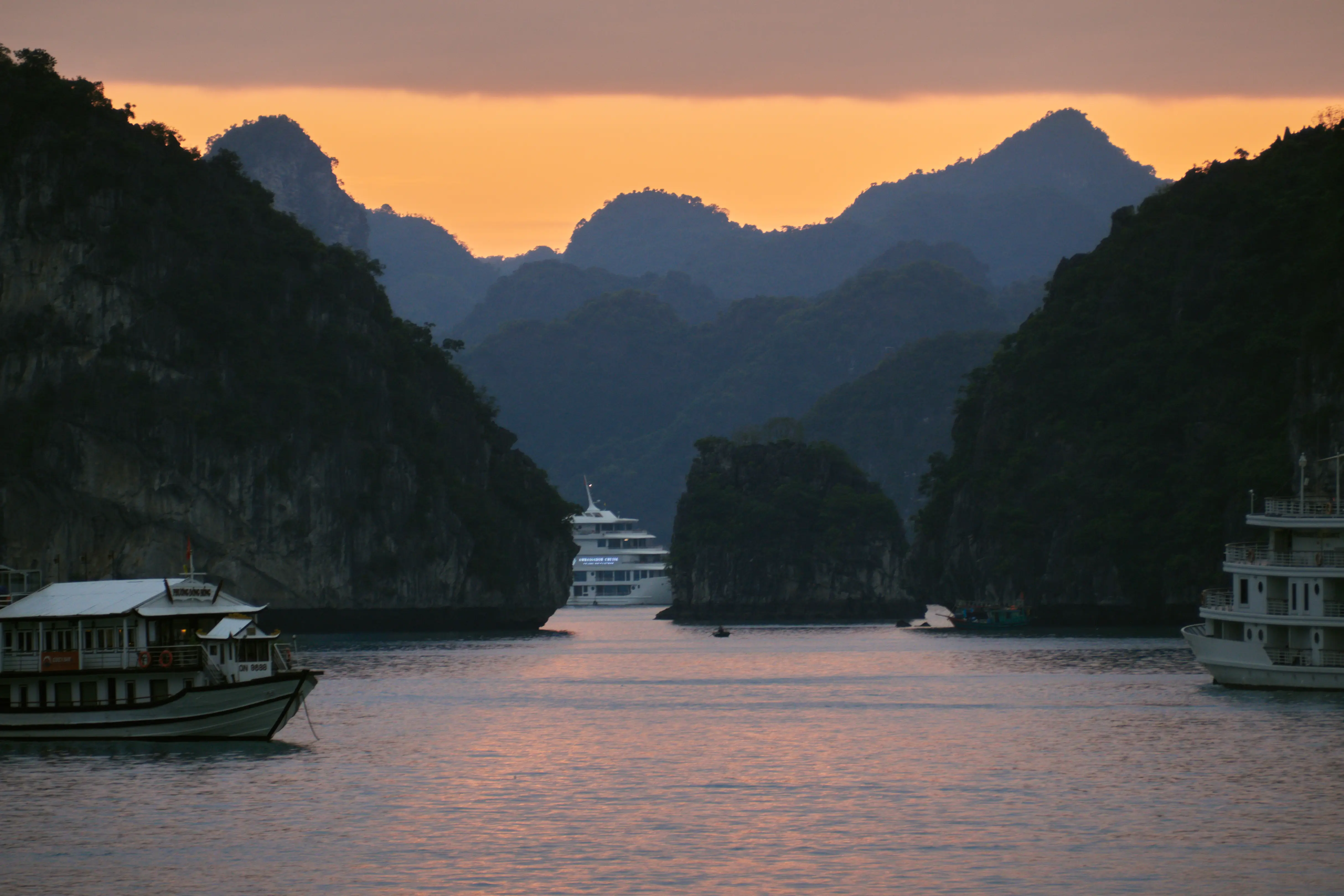
Halong Bay is a UNESCO World Heritage Site of dramatic limestone karsts rising from the Gulf of Tonkin, roughly 165 km east of Hanoi. Cruise ships anchor offshore; tenders ferry passengers to floating villages, cave entrances, and kayak launch points. The port is scenic and iconic but not a traditional dock—expect a quieter, nature-focused experience rather than urban exploration. Your port time is best used for guided or independent water-based activities; there is minimal shopping, dining, or walking infrastructure at the tender zone itself.
Is It Safe?
Halong Bay is generally safe for cruise passengers. Tender transfers are routine and well-managed, but seas can be rough in winter (Dec–Feb), particularly for those prone to seasickness. Water quality in some areas has improved but is not pristine; avoid swimming in open water if you have cuts or compromised immunity. Longtail boat operators vary in safety standards; verify life jackets are present and functional before embarking on independent tours. Petty theft from bags left unattended at floating villages is rare but possible. The floating-village area is heavily touristed and heavily policed; violent crime against visitors is not a realistic concern.
Accessibility & Walkability
Tender transfers are not accessible for wheelchair users; the narrow tender stairs and rocking boat entry are impractical. Floating-village platforms have uneven wooden decks and no handrails in many areas. Kayaking requires upper-body strength and balance; not suitable for mobility-impaired passengers. If you have limited mobility, discuss accommodations with the ship's accessibility team before arrival; some gentle boat-cruising excursions may be possible with advance notice and assistance.
Outside the Terminal
You will not step onto land. After tender arrival, you'll be at a floating dock or wooden platform surrounded by traditional wooden boats, kayaks, and small vendor stalls selling bottled water, postcards, and cheap souvenirs. The air smells of diesel fuel, salt water, and local food (grilled seafood, pho). Dozens of other cruise passengers will be processed simultaneously. Signage points toward tour operators and kayak rentals. Plan to move quickly if you've booked an excursion; if independent, expect mild chaos and friendly but pushy boat captains offering tours.
Beaches Near the Port
Titov Island beach (occasional inclusion in tours)
Small sandy/shale beach on an island within the bay, accessible only by organized tours. Shallow, calm water; suitable for wading. Not a traditional beach destination; included in some multi-activity tours.
Local Food & Drink
The tender dock area has floating food stalls selling bottled water, snacks, and simple meals (grilled seafood, banh mi sandwiches, instant noodles). Prices are slightly inflated (3–8 USD for a meal). Quality is acceptable but basic. If you join a tour, light refreshments (water, fruit, sometimes lunch) may be included; ask when booking. There is no formal restaurant or substantial dining at the port itself. Eat a good breakfast on the ship before tendering ashore, and carry snacks and water if you plan a full afternoon of activities. Evening dining options are only available back on the ship.
Shopping
Floating-village shops sell low-quality souvenirs: lacquerware boxes, stone carvings, t-shirts, postcards, and carved figurines. Prices are inflated 2–3× those in Hanoi. Quality is poor and designs are repetitive (same stock across multiple stalls). Pearl vendors pitch heavily; proceed with extreme caution—authenticity and value are frequently overinflated. A few handicraft items (woven baskets, traditional hats) have genuine local appeal. Unless you have a specific souvenir in mind, skip shopping; you'll find better quality and lower prices in Hanoi or at the ship's port.
Money & Currency
- Currency
- Vietnamese Dong (VND). 1 USD ≈ 24,000–25,000 VND (approximate; rates fluctuate).
- USD Accepted?
- Yes
- Card Payments
- Not practical at the port. Floating-village vendors accept cash only (VND preferred, USD grudgingly accepted). No card readers or ATMs at the tender dock.
- ATMs
- No ATMs at the port. Withdraw cash in Hanoi or from the ship's purser before tendering.
- Tipping
- Not customary for independent tour operators or boat rentals, but a 10% tip is appreciated if a guide or captain provides exceptional service. Ship excursion tips are optional and can be added to your account.
- Notes
- Bring sufficient cash (USD and/or VND) for activities, food, and small purchases. The ship's currency exchange rates are poor; exchange money in Hanoi if possible. Small bills (USD $1–5, VND 50,000–100,000) are useful for quick purchases and tips.
Weather & Best Time
- Best months
- October, November, April, May. Warm (25–28°C), low rainfall, calm seas, excellent visibility.
- Avoid
- June–September (typhoon season, high rainfall, rough seas); December–February (cooler, occasional chop, winter Northeast monsoon).
- Temperature
- Fall cruises (Oct–Nov): 22–26°C, pleasant. Spring cruises (Apr–May): 26–30°C, warm. Winter cruises (Dec–Feb): 15–20°C, occasional drizzle.
- Notes
- Halong Bay is most crowded Oct–Nov and Apr–May (peak season); expect other cruise ships and larger tender queues. Winter months are drier and less touristy but cooler and potentially choppy. Bring a light rain jacket year-round and motion-sickness medication if prone to seasickness.
Airport Information
- Airport
- Noi Bai International Airport (Hanoi)
- Distance
- Approximately 165 km west; 3–4 hours by road.
- Getting there
- Airport shuttle, private car hire, or taxi (~30–50 USD); book in advance through the ship or a third-party service. Many cruisers add a pre-cruise Hanoi stay (1–2 nights) to justify the travel distance.
- Notes
- Halong Bay is a common departure/arrival port for Regent Seven Seas, Seabourn, and Silversea cruises. If starting or ending your cruise here, arrange airport transfers well in advance. The drive is long; allow extra buffer time.
Getting Around from the Port
Tender boat
Ships anchor in Halong Bay proper. Tenders run continuously from early morning until 2–3 hours before departure. Ride times: 10–25 min depending on anchorage position.
Book ferry ticketsShip excursion boat (kayak, village tour, cave)
Organized tours depart from the tender dock or a nearby floating station. Staff guide passengers directly to activity sites. Return to tender dock is managed by the tour operator.
Book ferry ticketsIndependent longtail boat hire
Negotiate directly with boat operators at the floating-village tender dock. Operators offer 2–3 hour scenic cruises, village visits, or cave tours. Groups of 4–6 typically share a boat.
Book ferry ticketsKayak rental and self-guided paddling
Kayak stands at floating villages rent single and double kayaks. Paddle among nearby karsts on your own or in loose groups alongside other rentals.
Details last checked April 2026
Planning a cruise here?
Windstar, Scenic Cruises, Viking Ocean Cruises & more sail to Halong Bay.
Practical Tips for Cruise Passengers
- Book ship excursions (kayak or village tours) at embarkation or online before arrival; independent booking at the tender dock is cheaper but slower and less reliable for time-sensitive cruisers.
- Bring reef-safe sunscreen, a wide-brimmed hat, and a lightweight long-sleeve shirt; sun exposure over water is intense, and sun protection is limited on boats.
- Wear water shoes or sandals with grip; tender platforms and boat decks are slippery when wet, and uneven wooden village walkways are rough on bare feet.
- Carry motion-sickness medication if prone; tender rides can be choppy, especially in winter or if seas are rough. Acupressure bands or ginger lozenges are also helpful.
Frequently Asked Questions
Ships anchor offshore in Halong Bay. Tenders ferry passengers to a floating village dock or platform. Expect 15–30 min tender times each way and weather-dependent scheduling.
Yes. A 2–3 hour kayak tour or floating-village boat tour fits comfortably within a 3–4 hour port window if you book a ship excursion or negotiate with a longtail operator immediately upon tender arrival. Build in 30 min buffer for all-aboard.
Yes, generally safe if you verify life jackets are aboard and the operator speaks English. Costs are much lower (~20–40 USD vs. 90–130 USD). The trade-off is less formal guidance and timing risk—arrive back at the tender dock early to avoid delays.
Find cruises to Halong Bay, Vietnam
Compare sailings and book with no fees — best price guaranteed.
We may earn a commission when you book through our links, at no extra cost to you — it’s how we keep these guides free.
✉ Sailing to Halong Bay? Get your port-day plan
Tell us your sail date and we’ll email you a short Halong Bay plan about 60 days out — when the good excursions start selling out — plus a final checklist 2 weeks before. Two emails, then done. We’ll send one note to confirm it’s really you — unsubscribe anytime.
Same itinerary network
View All