
As an Amazon Associate I earn from qualifying purchases.
At a tender port, the ship anchors offshore and small boats carry passengers to land. That extra transfer changes the useful shape of the day. The scheduled arrival is not the moment your feet reach the pier, and the last safe return is earlier than the ship’s departure time.
Santorini in the Mediterranean, Grand Cayman and Belize City in the Caribbean, and Cabo San Lucas are among the tender stops that appear often in the Cruises.To schedule. Smaller island calls across French Polynesia, Vanuatu and New Caledonia in the Australia and Pacific region use the same basic process. Kona belongs on the list too: cruise ships anchor in Kailua Bay and tender to Kailua Pier.
The schedule covers the sailings we track and undercounts some cruise lines. Use the figures to compare these ports, then follow the tender instructions issued for your own sailing.
Sixteen tender ports to plan for
The median time is scheduled time between arrival and departure among calls with usable times. It does not subtract the tender queue, boat transfer or all-aboard buffer. Patmos and Portree did not have the 20 timed calls required for a median. Kona’s ten-hour median comes from 40 timed calls.
| Port | Region | Cruise lines | Calls we track | Median hours |
|---|---|---|---|---|
| Santorini | Mediterranean | 18 | 235 | 12 |
| George Town | Caribbean | 12 | 177 | 9 |
| Cabo San Lucas | Mexico & Pacific Coast | 13 | 153 | 8 |
| Bora Bora | Australia & Pacific | 9 | 111 | 13 |
| Belize City | Caribbean | 15 | 110 | 9 |
| Moorea | Australia & Pacific | 15 | 82 | 10 |
| Mystery Island | Australia & Pacific | 11 | 76 | 9 |
| Samaña | Caribbean | 9 | 56 | 8 |
| Catalina Island | Caribbean | 7 | 52 | 10 |
| Huahine | Australia & Pacific | 7 | 48 | 10 |
| Lifou | Australia & Pacific | 10 | 41 | 9 |
| Cannes | Mediterranean | 10 | 31 | 10 |
| La Paz | Mexico & Pacific Coast | 6 | 26 | 9 |
| Patmos | Mediterranean | 6 | 23 | Not available |
| Portree | Northern Europe | 4 | 16 | Not available |
| Kailua-Kona | Hawaii | 10 | 45 | 10 |
Santorini needs a transfer plan at both ends
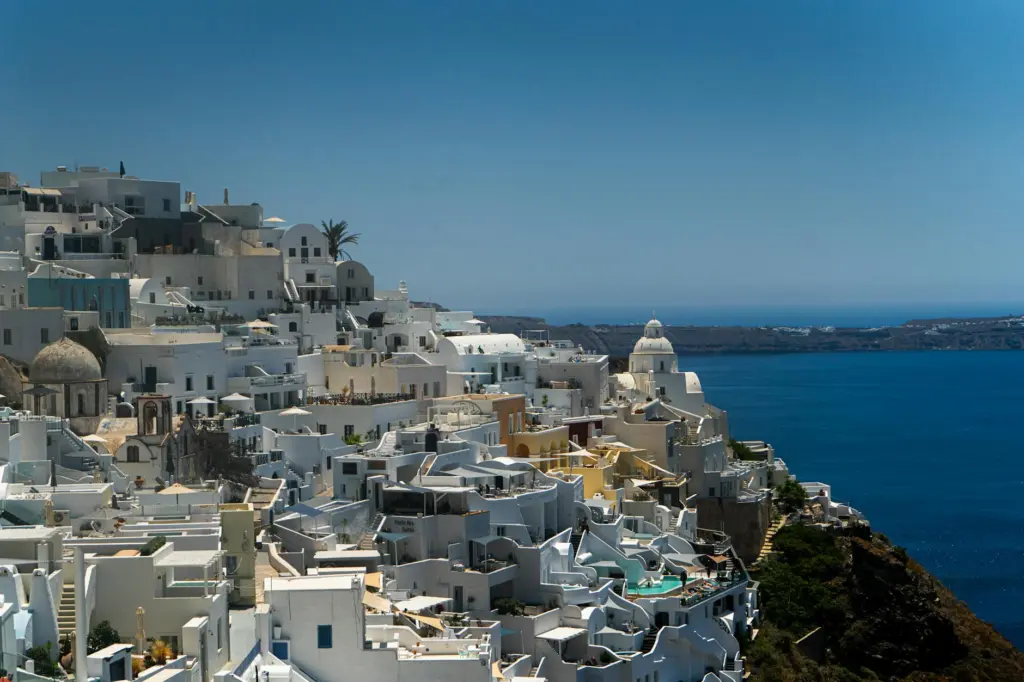
Large ships cannot berth at Santorini. They anchor in the caldera and tender passengers to Skala, the port below Fira. Its 12-hour median is generous, though that clock still includes the trip ashore and the return to the ship.
Decide how you will leave the waterfront before joining the first queue of the day. Keep the final return equally deliberate. A long scheduled call can absorb some delay, but it does not make the final tender optional.
Grand Cayman and Belize land you near town
Ships anchor outside George Town in Grand Cayman, then tenders land on the downtown waterfront. The nine-hour median gives room for a substantial plan, though Seven Mile Beach and the main offshore attractions still require onward transport or a booked boat.
At Belize City, most ships anchor offshore and use tenders to Fort Street Tourism Village on the central waterfront. Fifteen cruise lines appear in the tracked schedule, the broadest line spread among the Caribbean tender ports listed here. Treat the nine-hour median as the outer boundary and book a distant plan only when its return arrangements are clear.
Pacific islands make the boat ride part of the day
Bora Bora has the longest median on the list at 13 hours. Ships anchor in the lagoon and tenders land near Vaitape. Moorea uses a dock in Papetoai, Huahine lands at Fare, Lifou at a small pier in Wé, and Mystery Island uses a beach landing.
Those arrivals put footwear and bag choice ahead of a polished port outfit. Keep anything that cannot get wet inside a sealed pouch or dry bag, and carry only what you can manage while stepping between vessel and landing.
Kona follows the same offshore pattern. Ships anchor in Kailua Bay and tender to Kailua Pier in town. The waterfront is immediately usable after landing, which makes a compact town day easier than a long rental-car plan.
Mexico and the Mediterranean use different landings
At Cabo San Lucas, most ships anchor in the bay and tender into the marina area. Its eight-hour median makes a disciplined return especially important for a long outing. La Paz uses a downtown waterfront landing and has a nine-hour median.
Cannes usually tenders larger ships to the Old Port, while some smaller vessels may dock. Its ten-hour median gives room for a plan beyond the waterfront, though the arrival method still needs to be confirmed. Patmos lands tenders at Skala harbor, and its smaller timed sample does not support a median.
The landing location changes the first decision. A marina or central waterfront may let you begin nearby. A plan that immediately adds another vehicle or boat should carry a larger return buffer.
Beach landings need a compact shore bag
Samaña and Catalina Island in the Dominican Republic use beach landing areas. Mystery Island also uses a beach landing, while Lifou brings tenders to a small concrete pier in Wé. Footwear that can handle water and uneven steps is more useful than carrying a second pair for appearance.
Portree is different again: ships anchor in the bay and tenders land at the town-center pier. Its 16 tracked calls are spread across four cruise lines, with too few timed calls for a median. The town-center arrival removes one transfer but does not remove the tender return.
Check what is available at the landing before carrying a full beach-day load. A smaller bag is easier to control while boarding, and it leaves both hands available when crew give instructions.
How a tender day works
Tender rides are free. On busy mornings, many cruise lines issue tickets or numbers that determine the order passengers go ashore. The pickup place and procedure normally appear in the daily program or the line’s app.
Cruise-line excursion groups usually go ashore first. Suite guests and top-tier loyalty members often receive priority too. Independent travelers should check when general tender distribution begins and avoid scheduling a private meeting as though the published arrival were a guaranteed landing time.
The longest outbound queues often form in the first hours after arrival. Leaving a little later may reduce the wait, though it also shortens the day. Return tenders become busy near the end of the call, so aim for an earlier boat than the final one. Sea conditions can cancel tendering entirely, and the ship may skip the port when the transfer cannot operate safely.
Some ports switch between pier and tender
Mixed ports need an itinerary-specific check. Dubrovnik usually berths ships at Gruž, while some smaller or overflow vessels tender near the Old Town. Mykonos may use the New Port or a tender to the Old Port.
Funchal combines pier and tender operations according to ship size and berth availability. Roseau normally uses its central berth, while some smaller or overflow calls tender. Do not pack or time the day from the port name alone; check the arrival method shown for your sailing.
Pack for the transfer
The full port-by-port packing list is in What to pack for a cruise, sorted by the ports on your itinerary.
Protect the return first
Start with the final tender time, then work backward through your transport and activity. Keep a bigger buffer when the day includes a long drive, a separate tour boat or a rental return. If the plan barely fits on paper, the tender has already made it too tight.