


Africa & Middle East
Africa & Middle East
Abu Simbel Cruise Port Guide: Tender Tips, Things to Do & What to Expect
Egypt
River ships moor alongside at the riverside landing; passengers walk ashore by gangway.
Choose the Right Port Day
Best Overall
Hire a licensed local guide at the site entrance for a 90-minute private or small-group tour of both temples. You get expert context for the UNESCO relocation story and the hieroglyphic detail without the large excursion group blocking your view.
Best Beach
Not relevant — this is a desert lakeside archaeological site, not a beach destination.
With Kids
Older children who can handle heat and uneven ground will be genuinely awed by the colossal statues. Bring water, sun hats, and keep the visit to 90 minutes in high temperatures. Toddlers and pushchairs are not practical here.
Only 3-4 Hours
Take the tender straight to the site entrance, hire a local guide for 90 minutes around the Temple of Ramesses II and the smaller Temple of Nefertari, then walk the lakeside path before tendering back. That is the full experience.
Book Temple of Nefertari from $40Cheapest Option
Skip the cruise-line excursion, walk the short distance from the tender dock to the site entrance independently, and pay the temple entry fee directly. Check locally for current rates. Bring your own water from the ship.
What To Avoid
Do not linger too long inside the inner sanctum in peak heat — it sounds atmospheric but temperatures rise quickly in the enclosed stone chambers. Also avoid buying souvenirs from the cluster of vendors right at the site gate; quality is low and pressure is high.
Quick Take
- Port Type
- Scenic Tender Port
- Best For
- History lovers, archaeology enthusiasts, and anyone who wants to stand in front of Ramesses II's colossal statues without the full overland tourist convoy experience
- Avoid If
- You have mobility issues with uneven terrain, you are uncomfortable in extreme heat, or you expect a town with shops and restaurants
- Walkability
- Very limited — the temples are close to the tender landing but the site itself involves sandy paths and stone steps in open sun
- Budget Fit
- Temple entry is the main expense; beyond that there is almost nothing to spend money on ashore
- Good For Short Calls?
- Yes — Abu Simbel is genuinely a half-day destination; two to three hours covers it thoroughly
Top Things To Do
1
Aswan Abu Simble Private Tour Experience
Discover the sacred silence of Abu Simbel Temple — a place where history whispers through every wall and statue. This short reel captures a moment of…
8hFree cancellation
2
Private Abu Simbel Tour from Aswan
Discover Abu Simbel Your Way! Enjoy a comfortable private journey from Aswan with a dedicated vehicle, hotel pickup and drop-off, flexible departure times, and personalized service…
9hFree cancellation
Our picks in Abu Simbel
3
Great Temple of Ramesses II
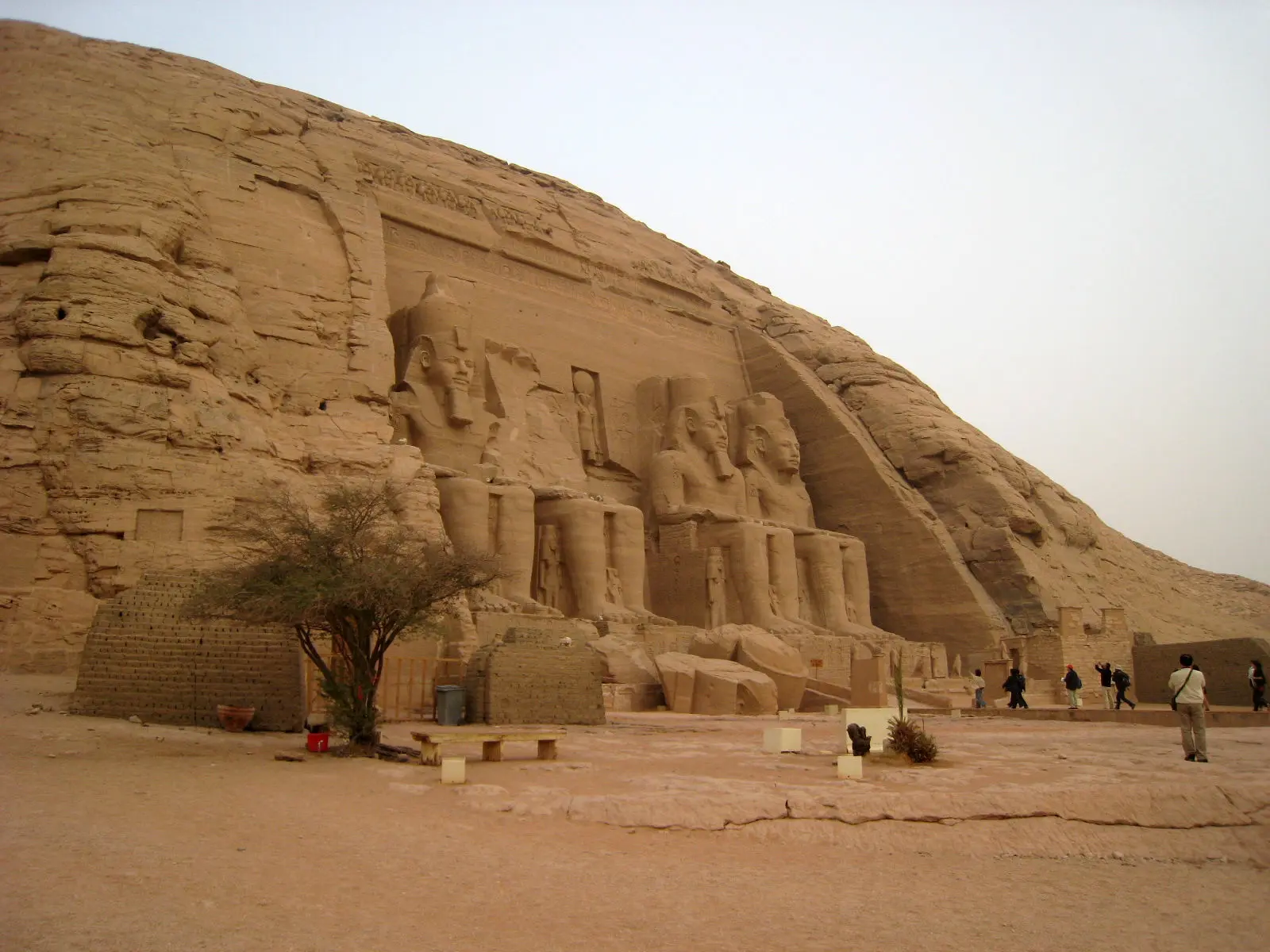
The centrepiece of the entire stop. Four colossal seated statues of Ramesses II guard the entrance to a rock-cut temple stretching 60 metres into the cliff. Inside, painted reliefs and pillared halls depict the Battle of Kadesh in extraordinary detail. The inner sanctum aligns with the sun twice a year in a feat of ancient engineering that survived the relocation intact.
4
Temple of Nefertari
Immediately adjacent to the main temple, this smaller but beautifully preserved structure was dedicated to Ramesses II's favourite queen and the goddess Hathor. The colossal statues of Nefertari standing equal in scale to her husband were radical for their era. Interiors are vibrant with colour and less crowded than the main temple.
5
UNESCO Relocation Exhibition at the Visitors' Centre
A small but genuinely fascinating display explaining how both temples were cut into over 1,000 blocks and moved 65 metres uphill and 200 metres back from the original cliff face between 1964 and 1968. Even if you are not an archaeology enthusiast, the engineering story is remarkable.
Show 2 more things to do in Abu Simbel
6
Lakeside Walk and Photography
The path between the tender landing and the temple entrance offers unobstructed views across Lake Nasser — a vast, blue, surreally calm reservoir set against orange desert escarpments. Early morning light is exceptional for photography. This walk takes almost no time but rewards those who slow down before the crowd arrives.
7
Private Licensed Guide at the Site
Hiring a licensed guide at the entrance for a private or semi-private tour adds genuine depth to the hieroglyphic reading, battle scene interpretation, and the astronomical alignment of the inner sanctum. The difference between walking through independently and having expert narration is significant at a site this dense with meaning.
Book with the ship, or on your own?
Booking independently
- Often noticeably cheaper than the ship’s version of the same tour.
- Smaller groups and local operators, with traveler reviews you can read before you pay.
- Free cancellation on most tours, usually up to 24 hours before.
When the ship’s excursion makes sense
- Short port calls or long transfers where the timing is tight.
- Tender-only stops where getting ashore can run late.
- The ship waits for its own delayed excursions — it won’t wait for independent ones, so leave a buffer before all-aboard.
Going independent? Compare tours in Abu Simbel → — the best-reviewed ones sell out first.
We may earn a commission when you book through our links, at no extra cost to you — it’s how we keep these guides free.
Check The Port Traffic
Cruise Ships in Port
Once you have your shore plan, use the schedule to see how busy the harbour will be on your date, plus the ships, lines, and published call windows.
Sun
Mon
Tue
Wed
Thu
Fri
Sat
1
2
3
4
5
6
7
8
9
10
11
12
13
14
15
16
17
18
19
20
21
22
23
24
25
26
27
28
29
30
31
Quiet (1–2)
Busy (3–4)
Packed (5+)
0 scheduled calls
October 9, 2026
No scheduled cruise ship calls were found for this date selection. Pick a highlighted day on the calendar above, widen the range, or search for a different ship or line.
Port Overview
Abu Simbel is not a port in any conventional sense. There is no town to explore, no marina, and no terminal building. Ships on Lake Nasser itineraries anchor offshore and tender passengers directly to a landing area a short walk from one of ancient Egypt's most spectacular monuments. The two rock-cut temples of Ramesses II and Nefertari, relocated stone by stone in the 1960s to save them from the rising waters of Lake Nasser, are the reason every single person goes ashore here. Nothing else competes.
The tender process on Lake Nasser cruises tends to be well-organised by the specialist river cruise lines operating here — Viking, Uniworld, AmaWaterways, and others. That said, factor tender time into your planning. You are likely to lose 20–30 minutes each way, which compresses a port call that may already be three to four hours into something closer to two and a half hours of actual shore time. Move with purpose.
Ashore you will find a site entrance, a handful of souvenir stalls, a basic café, and a visitors' centre that explains the UNESCO relocation project. That is essentially it. The value here is entirely in the temples themselves, and they deliver. If you have even a passing interest in ancient history, Abu Simbel is worth every minute of the heat and logistics involved.
Is It Safe?
Abu Simbel is a safe and well-managed UNESCO site. The main genuine risk is heat exhaustion — summer temperatures at this latitude regularly exceed 40°C and there is almost no shade outside the temple interiors. Carry significantly more water than you think you need, wear a sun hat, and do not underestimate the exposure even on a short walk. The site interior chambers are cooler but air circulation is limited when groups are inside.
The vendors outside the gate can be persistent, but a firm and polite decline is effective. There is no significant security concern for tourists here beyond the standard Egyptian archaeological site environment, which is well-patrolled.
Accessibility & Walkability
The path from the tender landing to the temple entrance is paved and relatively flat, making the initial approach manageable. However, the site itself involves sandy ground, uneven stone surfaces, and steps into the temple interiors. Wheelchair access into the inner chambers of the temples is not realistic. Visitors with limited mobility can still see and photograph the impressive external facades without entering. Contact your cruise line in advance if you need assistance with the tender boarding process, as embarkation on small tender craft can be physically demanding.
Outside the Terminal
There is no terminal. You step off the tender onto a basic dock or landing pontoon and almost immediately you are walking a flat lakeside path toward the site. The scale of the temples begins to register within the first two minutes of walking. A cluster of souvenir sellers and a small café appear near the entrance. It is not overwhelming — the site management keeps the commercial area reasonably contained. Your first decision is simple: go straight to the temples.
Local Food & Drink
Do not expect a meal ashore at Abu Simbel. There is a basic café near the site entrance selling drinks, packaged snacks, and simple Egyptian fare, but it is not a lunch destination. The cruise lines operating on Lake Nasser are well aware of this and typically schedule port calls to avoid meal service clashes, returning passengers to the ship for lunch or dinner. Eat before you go ashore, bring snacks if you tend to need them, and most importantly bring far more water than you expect to drink in the heat.
Shopping
The souvenir market outside the site entrance sells papyrus prints, small Ramesses figurines, cartouche jewellery, and the standard Egyptian tourist repertoire. Quality varies enormously and bargaining is expected. If you want a memento, a small cartouche pendant or miniature statue is practical and easy to carry. Do not expect anything unique or high-quality at this location — the dedicated souvenir shops in Aswan or Luxor offer far better selection and craftsmanship.
Money & Currency
- Currency
- Egyptian Pound (EGP)
- USD Accepted?
- Yes
- Card Payments
- Cards are generally not accepted at the small vendors outside the temple. Some larger ticket counters may accept them but do not rely on it.
- ATMs
- No ATMs at Abu Simbel's lakeside site. Draw cash in Aswan before the voyage or use ship facilities.
- Tipping
- Tip guides 50–100 EGP per person for a half-day. Site attendants who help with directions or photos often appreciate 10–20 EGP.
- Notes
- Bring small denomination Egyptian pounds and a small amount of USD as backup. Rates at remote sites are not favourable for currency exchange.
Weather & Best Time
- Best months
- October to February — tolerable heat, clearer skies, pleasant afternoons
- Avoid
- June, July, August — extreme heat regularly exceeds 40°C and makes temple visits genuinely uncomfortable and potentially dangerous
- Temperature
- Lake Nasser cruise season runs roughly October to April. Expect 20–30°C in cooler months, rising sharply toward April.
- Notes
- Even in winter months, midday sun at Abu Simbel is intense at this southern latitude. Sun protection is not optional.
Airport Information
- Airport
- Abu Simbel Airport (ABS)
- Distance
- Approximately 5 km from the temple site
- Getting there
- Taxi from the airport to the site; most cruise passengers do not use this airport as Lake Nasser itineraries typically embark in Aswan
- Notes
- Abu Simbel Airport has limited scheduled service, mainly short hops from Aswan. It is primarily used by day-trip visitors flying from Aswan rather than cruise passengers. Aswan International Airport (ASW) is the main gateway for cruise embarkations.
Getting Around from the Port
Walking from tender landing
The tender dock is a short flat walk from the site entrance — roughly 5 to 10 minutes on a paved path along the lakeside. No transport needed for most visitors.
Site tuk-tuk or golf cart (when available)
Occasionally operators offer short motorised transfers between the landing area and the site entrance for passengers with mobility needs.
Cruise line organised excursion
All major lines offer guided group excursions that handle tendering, entry fees, and guiding. Useful if you want interpretation baked in.
Details last checked April 2026
Planning a cruise here?
Viking River Cruises, Uniworld, AmaWaterways & more sail to Abu Simbel.
Practical Tips for Cruise Passengers
- Get off the tender as early as possible — the temple facade in the first hour after opening is significantly less crowded than mid-morning when overland tour buses arrive.
- Bring at least 1.5 litres of water per person from the ship; the on-site café charges considerably more and may run low during busy periods.
- Wear closed-toe shoes with a grip sole — sandy paths and polished stone inside the temples can be slippery, and sandals are uncomfortable on hot ground.
- If you want the famous photograph of all four Ramesses II statues without people in it, position yourself early and slightly to the right of centre on the main approach path.
- The sound and light show at Abu Simbel is only accessible to visitors staying overnight ashore — it is not relevant for cruise day visitors, so do not factor it into your plans.
- Confirm tender departure times with your ship before going ashore; missing the last tender at a remote site like this is a serious problem with no easy backup option.
Frequently Asked Questions
Ships anchor on Lake Nasser and passengers are transferred to shore by tender. Factor in 20–30 minutes each way in your shore time planning.
Yes. Once ashore, the site entrance is a short walk from the tender landing and you can purchase entry and hire a local guide independently. There is no obligation to use the ship's organised excursion.
Older children with an interest in history and the stamina for heat will find it genuinely impressive. Toddlers and very young children will struggle with the heat, terrain, and pace. Pushchairs are not practical at the site.
Two hours covers both temples comfortably including the visitors' centre. Three hours is relaxed. More than three hours and you will run out of things to see before you run out of port time.
The inner sanctum of the Great Temple of Ramesses II — specifically the four seated deity statues at the far end — is the defining moment of the visit. Do not skip it to spend extra time at the souvenir stalls.
Find cruises to Abu Simbel, Egypt
Compare sailings and book with no fees — best price guaranteed.
We may earn a commission when you book through our links, at no extra cost to you — it’s how we keep these guides free.
✉ Sailing to Abu Simbel? Get your port-day plan
Tell us your sail date and we’ll email you a short Abu Simbel plan about 60 days out — when the good excursions start selling out — plus a final checklist 2 weeks before. Two emails, then done. We’ll send one note to confirm it’s really you — unsubscribe anytime.
Africa & Middle East
View All
More Africa & Middle East Ports
Africa & Middle East

Africa & Middle East

Africa & Middle East
