Viking Hathor
Times not published
Itinerary: 11 Nights Africa Cruise (11 nights)
Egypt
Ships anchor in the Nile River and tender passengers to the west bank landing.
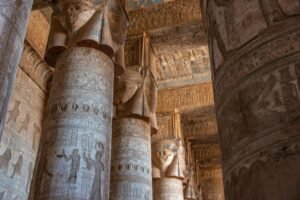
One of Egypt's best-preserved Ptolemaic temples, dedicated to the ram-headed god Khnum. The hypostyle hall has stunning painted astronomical ceilings and intricate column carvings. Because it sits below street level in a large excavation pit, it has an almost theatrical quality — you descend into it from the modern town above.
Watching your ship navigate the Esna Lock from the sun deck is genuinely one of the more memorable moments on a Nile cruise. The lock is tight, ancient-feeling, and the whole process — including local boat vendors pulling alongside — is completely unique. No need to go ashore for this one.
The covered souk running from the quay toward the temple is a genuine working market — spices, textiles, galabiyyas, cheap souvenirs, and local food stalls. It's not curated for tourists and that's the point. Budget 20-30 minutes even if you don't buy anything.
Pull up a plastic chair at one of the small ahwas (Egyptian coffeehouses) near the bazaar. Order a tea or fresh juice, watch town life, and decompress before heading back. Genuinely cheap and a good reset after vendor-heavy streets.
A short stroll along the corniche near the mooring gives a quieter perspective on the river and town away from the bazaar chaos. Best done early morning if your ship is moored overnight.
Book with the ship, or on your own?
Booking independently
When the ship’s excursion makes sense
We may earn a commission when you book through our links, at no extra cost to you — it’s how we keep these guides free.
Esna sits on the west bank of the Nile about 55 km south of Luxor, and most Nile river cruise itineraries pass through it not just as a sightseeing stop but because every ship must transit the Esna Lock — a narrow, centuries-old lock chamber that raises or lowers vessels to match water levels. This lock transit can take anywhere from 30 minutes to several hours depending on queue, so your actual time ashore is dictated by operational logistics, not the itinerary booklet.
The town itself is small, dusty, and refreshingly un-touristy compared to Luxor or Aswan. The main draw is the Temple of Khnum, a well-preserved Ptolemaic-Roman temple that sits in a pit about 9 meters below the current street level — the town literally grew up around it over two millennia. The covered bazaar street leading from the quay to the temple is lively, genuine, and sells everything from spices and galabiyyas to plastic souvenirs.
Expect vendor attention from the moment you step ashore. It's part of the experience and rarely threatening, but if you're not in the mood to say 'no thank you' repeatedly, stay on board. For those who do go, Esna rewards a short, focused visit and punishes anyone who over-plans it.
Esna is generally safe for tourists. The main nuisance is persistent vendor pressure, both dockside and along the bazaar street. This is not dangerous — it's a sales tactic — but first-timers can find it overwhelming. A calm, firm 'no thank you' and keep walking usually suffices.
A notable quirk: during lock transit, local vendors in small boats pull alongside your ship and attempt to throw goods on deck, conducting negotiations by shouting up at passengers. This is entertaining to watch but buy nothing unless you're happy with the price as-is — returning items mid-lock is genuinely complicated.
Keep valuables out of sight in the bazaar and watch your bag in crowded areas. There is no serious crime pattern targeting tourists here, but basic urban awareness applies.
The walk from the quay to the temple involves uneven cobblestones and a narrow, busy market street. The temple itself sits below street level and is accessed via steps — there is no ramp access into the excavated pit. Wheelchair users will find the town largely inaccessible beyond the quay area. The lock viewing from the ship deck is an excellent accessible option for those who prefer not to go ashore.
Stepping off your ship at Esna puts you immediately into a working Egyptian town. There's no terminal building, no formal welcome area — just the quay, the lock infrastructure, and within seconds, vendors. The bazaar street begins almost at the gangway. It's chaotic in the best sense: noise, color, spice smells, and a queue of locals watching the lock. Give yourself 30 seconds to orient, pick the direction of the temple, and walk with purpose.
Food options in Esna are limited and most cruisers eat on board. That said, street food near the bazaar is legitimate and inexpensive — look for fresh-squeezed sugarcane juice, ful medames (stewed fava beans), and flatbread from bakeries. There are small local restaurants but they're aimed at Egyptian customers, not tourists, and menus are rarely in English. If you have dietary restrictions or food sensitivities, eat on the ship. If you're happy to point and try, street snacks are perfectly safe and very cheap.
The bazaar street is Esna's entire shopping scene. Galabiyyas (traditional robes) are genuinely decent value here compared to Luxor. Spices, essential oils, and papyrus products are also common. Prices are always negotiable — open with roughly half what's quoted and work from there. Avoid buying anything from vendors on boats during the lock transit unless you are completely happy with the price, since you have zero recourse once the lock gates close.
The quay to the Temple of Khnum is a straightforward 10-15 minute walk through the bazaar street. Almost everything worth seeing is within this corridor.
Available near the quay for short town trips. Good for those who want to cover more ground or have mobility concerns.
Three-wheeled motorized taxis are common and cheap for short hops around town.
Details last checked April 2026
Check The Port Traffic
Once you have your shore plan, use the schedule to see how busy the harbour will be on your date, plus the ships, lines, and published call windows.
Times not published
Itinerary: 11 Nights Africa Cruise (11 nights)
Planning a cruise here?
Viking River Cruises, Uniworld, AmaWaterways & more sail to Esna.
Most do, because every southbound and northbound Nile cruise ship must physically pass through the Esna Lock regardless of the itinerary. Whether you get meaningful shore time depends on how long the lock queue takes and your cruise line's schedule.
Typically 1.5 to 3 hours, though this varies widely based on lock wait times. Some ships moor overnight at Esna, giving much more flexibility. Confirm your schedule with your cruise director before planning anything.
If you're interested in the temple or want a real Egyptian market experience, it's worth 90 minutes ashore. If you've already seen multiple temples and find vendor pressure exhausting, the lock transit from the deck is perfectly satisfying.
It's a genuine local trade tradition, but prices are inflated and you have no ability to return or negotiate after the fact. Treat it as entertainment rather than shopping unless you see something you'd pay any price for.
Not strictly — the temple is small enough to explore independently and there are some English-language information panels. A knowledgeable guide adds real context to the ceiling astronomy carvings, but it's not essential for a casual visit.
Find cruises to Esna, Egypt
Compare sailings and book with no fees — best price guaranteed.
We may earn a commission when you book through our links, at no extra cost to you — it’s how we keep these guides free.
Tell us your sail date and we’ll email you a short Esna plan about 60 days out — when the good excursions start selling out — plus a final checklist 2 weeks before. Two emails, then done. Unsubscribe anytime.